London's Victoria and Albert Museum has unveiled a landmark new exhibition that promises to reshape public understanding of one of history's most notorious figures. 'Marie Antoinette Style' is the UK's first major showcase devoted to the 18th-century French queen and only the third ever staged outside of France. Its mission is ambitious: to move beyond the simplistic caricature of a decadent spendthrift and reconsider whether her villainous image was ever truly deserved.
From Austrian Archduchess to French Queen
The exhibition begins by introducing Marie Antoinette in her youth. Visitors first encounter a portrait of the 22-year-old queen, painted by her favoured artist Élisabeth Vigée Le Brun, in a powder-pink room with chequered floors inspired by Versailles. The journey then transports guests back to 1770, when a 14-year-old Marie Antoinette, born Archduchess Maria Antonia of Austria, arrived at the French court.
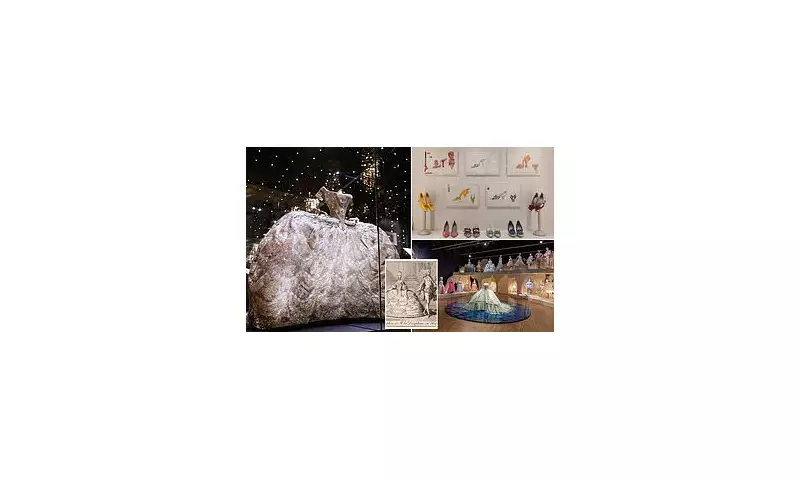
A grand, mirrored gallery bathed in light reveals the extravagant world she entered. It is filled with whimsical gowns featuring exaggerated skirts adorned with elaborate florals, embroidery, and cascading ruffles. It is important to note that these dresses were not the queen's own, but represent the styles she popularised. A standout piece is a detailed brocaded silk wedding gown, threaded with silver, worn by Hedwig Elisabeth Charlotte of Holstein-Gottorp for her 1774 marriage.

The exhibition delves into the lesser-known story of Marie's own wedding. Aged just 14, she participated in a proxy wedding in Austria, with her brother standing in for the groom, Louis Auguste. This meant she entered France as a married woman. However, her formal wedding dress, made in Paris to estimated measurements, was too small. With no spare fabric for alterations, Marie walked down the aisle at the Royal Chapel of Versailles in a gown that could not fully close, revealing her corsetry underneath.
A Legacy of Style and Scandal
The exhibition does not shy away from the queen's controversial reputation. It explores how she became synonymous with excess, criticised for lavish spending while France faced severe financial hardship—a reputation that earned her the cruel nickname 'Madame Déficit'. Her iconic, towering hairstyles, created by hairdresser Monsieur Léonard and stylist Rose Bertin, are displayed alongside fabric swatches and decorative fans.
For jewellery enthusiasts, there is a dazzling array of diamond necklaces and brooches. Many of Marie's personal jewels, smuggled out of France and held by her only surviving child, Marie Thérèse, are on public display for the first time since her death. The exhibition, which runs until 22 March 2026, also features rare objects that have never before left Versailles.
A notable and fitting collaboration sees the exhibition sponsored by luxury footwear designer Manolo Blahnik, who has created an exquisite collection inspired by the queen's style, displayed in the final gallery.
The Tragic Final Act
The tone shifts dramatically for the exhibition's final chapter. An eerie red corridor leads to a room documenting the queen's imprisonment and execution in 1793, aged 37. This poignant space features sketches of her captivity, her final prayer book, a guillotine blade, and a medallion containing locks of her hair. The centrepiece is her white linen prison chemise—the only complete garment of the queen on display—its stains serving as a hauntingly real connection to her brutal end.
The exhibition culminates by celebrating Marie Antoinette's enduring influence on fashion, a powerful reminder that her story is one of both profound style and profound tragedy. 'Marie Antoinette Style' at the V&A offers a nuanced, object-rich narrative that challenges visitors to look beyond the myth and see the woman.