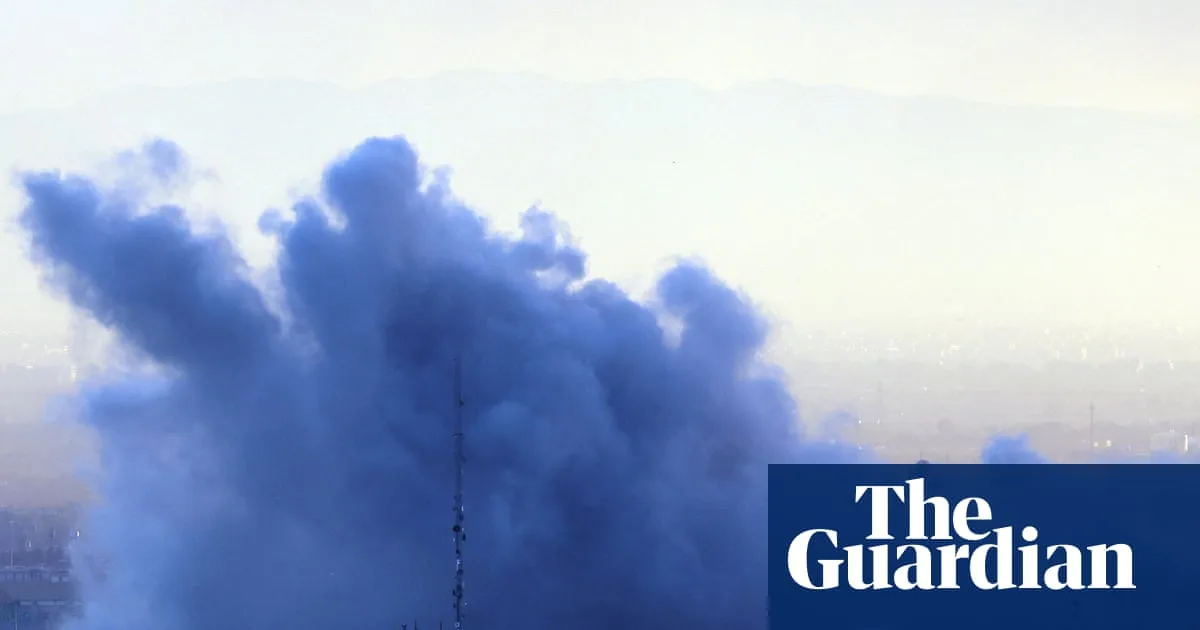
Israel has carried out a wave of airstrikes on Iranian security targets and Hezbollah in Beirut as Tehran threatened the “complete destruction of the region’s military and economic infrastructure”, as the rapidly escalating war entered its fifth day and reached as far as the Indian Ocean off Sri Lanka.
The Israeli military said it had hit buildings in Iran belonging to the Basij, the volunteer police arm of the Islamic Revolutionary Guard Corps (IRGC), and buildings belonging to internal security forces. Police stations and IRGC headquarters in the Kurdish regions of north-western Iran were also razed by strikes, Kurdish media reported.
The regional dimension of the conflict continued to expand, as Iran struck Gulf states and Hezbollah fired on Israel and Cyprus. Turkey said Nato air defences had intercepted a ballistic missile heading towards its airspace. Saudi Arabia also said on Wednesday night it had intercepted three cruise missiles, and the US said it had sunk an Iranian warship in the Indian Ocean. Sri Lankan authorities said at least 80 people had been killed and 23 rescued.
The death toll in Iran has soared, as estimates of those killed by strikes in the five days of war rose to between 1,045 and 1,500 people. The US defence secretary, Pete Hegseth, on Wednesday signalled a longer time frame for the conflict than has previously been floated by the Trump administration, saying it could last eight weeks but that the US has the munitions and the equipment to beat Iran in a war of attrition.
It came as the IRGC said it would continue to hit US allies across the region. Qatar’s prime minister, Sheikh Mohammed bin Abdulrahman Al Thani, on Wednesday condemned Iran’s attacks on Gulf states in a call with Tehran’s foreign minister – the first high-level contact since the Islamic republic launched its missile and drone campaign – and accused it of seeking to “harm its neighbours and drag them into a war that is not theirs”.
Israel issued an evacuation order for all of Lebanon south of the Litani river, which constitutes roughly a quarter of the country. The order was unprecedented and larger in scope than any Israel had previously given, even at the height of its 13-month war with Hezbollah in 2024. Despite the regional escalation, US and Israeli officials said the war was so far going better than they expected, but it was unclear what the end goal of their campaign was as they had offered contradictory aims.