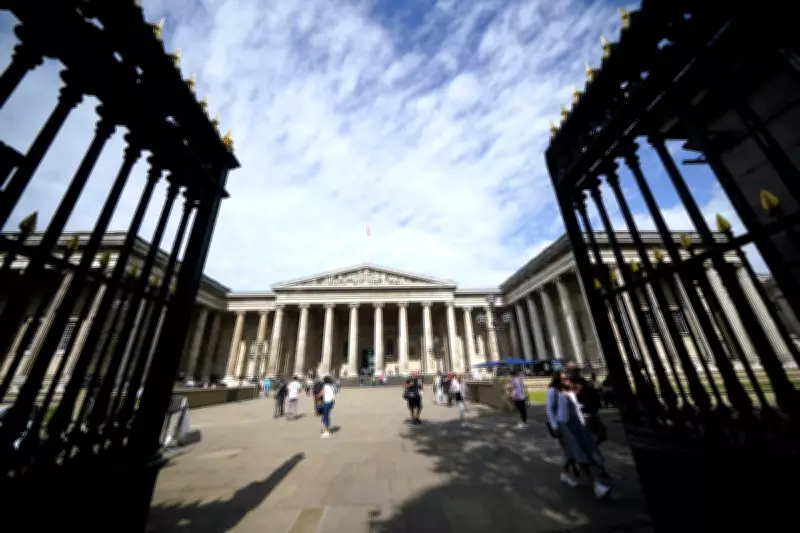
The British government is facing mounting anger over controversial plans to introduce entry fees for international tourists at some of England's most prestigious national museums. The proposal, which would mark a significant shift from the free admission policy established in 2001, has been branded as "unethical" by campaigners and nations seeking the return of cultural artefacts taken during the colonial era.
Backlash Over Proposed Tourist Charges
Last month, the government announced it would collaborate with the museum sector to explore the potential benefits of charging overseas visitors. Officials suggested such fees could provide crucial financial support for the arts, with an update on this consultation expected before the end of the year. However, this initiative has ignited fierce criticism from multiple quarters.
Free admission to UK national museums and galleries was originally introduced by then-Labour Prime Minister Tony Blair in 2001, with the explicit goal of making culture more accessible to everyone. The current proposal represents a dramatic departure from this long-standing principle of open access.

Restitution Demands Intensify
The timing of this proposal has proven particularly contentious, coming amid escalating global calls for museums to return artefacts to their communities or countries of origin. Despite some limited efforts to address this complex historical issue, numerous cultural objects and human remains taken during Britain's colonial period remain housed in institutions across Europe.
Prominent examples include Greece's long-standing claim to the Parthenon Sculptures, commonly known as the Elgin Marbles, which have been displayed at the British Museum for over two centuries. Nigeria continues to seek the return of the Benin Bronzes, another collection held by the British Museum that the institution has defended as enabling millions of visitors to understand interconnected world cultures.
International Condemnation Grows
Ghana's foreign minister, Samuel Okudzeto Ablakwa, has raised serious concerns about the "fairness" of charging foreign visitors to view artefacts while restitution discussions remain ongoing. Ghana has numerous regalia and cultural objects in British institutions, making this proposal particularly sensitive.
Eric Phillips, vice chair of the Caribbean Community's reparations commission, which represents fifteen member states including Jamaica and Barbados, has been unequivocal in his condemnation. "Why should we have to pay to see our heritage?" Phillips questioned, describing the proposed fees as fundamentally "unethical."
Arley Gill, chairman of Grenada's national reparations committee, emphasized that priority should be given to returning artefacts to their "rightful owners" rather than implementing new financial barriers.
Compounding Existing Inequalities
Open Restitution Africa (ORA) has highlighted how Africans and others already face significant obstacles when attempting to access artefacts taken from their countries and held in Western museums. These barriers include stringent visa requirements and substantial travel costs that make such visits prohibitively expensive for many.
"Introducing entry fees further compounds these inequalities," ORA stated, arguing that the proposal would create additional financial hurdles for those seeking to connect with their cultural heritage.
The U.S.-based non-profit Restitution Study Group has suggested that a fee exemption for visitors from countries with outstanding restitution claims would represent a "meaningful gesture" of goodwill during ongoing negotiations.
The British government has declined to comment on the mounting criticism surrounding the museum fee proposal, leaving many questions unanswered about how the consultation will proceed and whether restitution concerns will be adequately addressed.