Theatre Reviews: Four Productions Spanning Comedy, Drama, and Inspiration
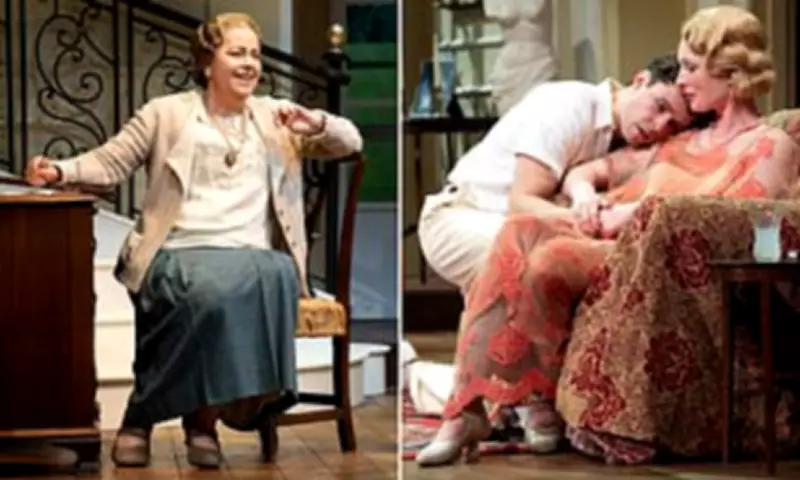
Parenting styles have transformed dramatically over the centuries. In Noel Coward's era, a century ago, society was shifting from strict moral guidance to the more anxious relativism seen today. This evolution provides rich comedic material, as demonstrated in Coward's early work Easy Virtue, currently directed by Sir Trevor Nunn at the refurbished Arts Theatre in Cambridge.
Easy Virtue: A Battle of Morals and Generations
Greta Scacchi stars as Mrs Whittaker, a matriarch fiercely proud of her moral standards. She is horrified to discover her son Johnnie, played by Joseph Potter, has returned from the French Riviera married to Larita, portrayed by Alice Orr-Ewing. Larita is a blonde divorcee two decades older than Johnnie, with a reputation for loose hips and even looser morals. While Johnnie's sisters are thrilled by the new family member, Mrs Whittaker perceives Larita as a direct threat to her cherished values.
Written when Coward was just twenty-six, the play cleverly frames itself as a conflict over the essence of true love. However, the more engaging struggle is the fight for moral authority. Mrs Whittaker finds little support from her reasonable Colonel husband, played by Michael Praed in a performance so subdued it seems he is conserving his voice for another role.

The narrative's weakness lies in Johnnie's character as a privileged but naive country bumpkin, clearly outmatched by Larita's worldly sophistication. Their relationship feels inevitably doomed, stretching credibility on stage. This would typically be a minor flaw in Coward's comedies, but here it slightly undermines his earnest exploration of love.
Despite this, Scacchi delivers a hilarious portrayal of a parent on the verge of a breakdown. Orr-Ewing embodies every mother's worst fear, adorned in Cartier and Chanel while delivering icy one-liners. Nunn directs with his usual flair, though his avoidance of caricature occasionally dampens the comic tension. This production remains a delightful experience with bold performances throughout, and hopes are high for a future transfer.
Easy Virtue continues at the Arts Theatre in Cambridge until March 7.
Evening All Afternoon: Exploring Motherhood and Loss
In a more serious vein, Evening All Afternoon examines the meaning of motherhood through two women: art student Delilah and the older spinster Jennifer. Both have never been mothers but have each lost their own. Written by Anna Ziegler, known for Photograph 51, the play brings them together when Jennifer marries Delilah's father, John.
Following her mother's sudden death, Brooklyn-born Delilah, played by Erin Kellyman, is an angry teenager with a mane of ginger curls. Jennifer, portrayed by Anastasia Hille, is also grieving her mother's loss, presenting as a timid, introverted figure who speaks in rambling, self-deprecating sentences. Despite Delilah's icy resistance, Jennifer attempts to connect with her stepdaughter, enduring significant hostility and navigating her own awkwardness.
A curious absence is John, the husband and father, who remains unseen. His existence feels almost mythical, yet he is the reason these women are united. The acting delves deeply into each character's emotional isolation, with Hille full of nervous tics and Kellyman brimming with sorrow and rage.
Director Diyan Zora and designer Basia Binkowska create a minimalist staging in a sea of blue, using just two chairs, a few trinkets, and a short ladder to evoke the women's worlds. Delilah remarks that art's greatest achievement is depicting regular people doing regular things, and Ziegler accomplishes this with tenderness and grace.
Evening All Afternoon is at the Donmar Warehouse until April 11.
Bird Grove: Victorian Parenting and George Eliot's Early Life
Bird Grove presents the story of George Eliot, born Mary Ann Evans, during her youth in Coventry before she gained fame as the author of Middlemarch. Elizabeth Dulau plays the intellectual Mary Ann, who manages the household for her retired estate manager father, portrayed by Owen Teale.

Alexei Kaye Campbell's play spends over an hour on Mary Ann's foolish suitor Horace, suffering from diarrhoea, before abruptly shifting when Mary Ann refuses to attend church with her father, declaring her desire to live truthfully. Her father issues an ultimatum: get her coat or move out, finally injecting drama into the narrative.
Campbell attempts to frame the slow start as drawing-room comedy, but it falls flat. Teale brings a warm, stubborn presence to the father role, while Dulau resembles Eliot but delivers solemn monologues on basic feminism and religion's social control in Victorian society, which can feel tedious.
Sarah Woodward provides relief as Mary Ann's tutor-turned-mentor, adding comic and moral nuance. However, the father-daughter conflict fizzles out in Anna Ledwich's static production on Sarah Beaton's elegant blue set. The play offers little insight into how this period influenced Eliot's writing or her later adventurous life in London, though it does provide a glimpse into Victorian parenting approaches.
Bird Grove runs at the Hampstead Theatre until March 21.
The Boy Who Harnessed The Wind: A Story of Innovation and Struggle
In a drought-stricken Malawian village, a starving hyena, played by Shaka Kalokoh, symbolizes the desperation as locals plant seeds and pray in vain. The title reveals the outcome: a thirteen-year-old boy named William, portrayed by Alistair Nwachukwu, uses a library book and scrap materials to build a wind turbine, generating electricity to pump water to parched crops.
Based on William's memoir and adapted from Chiwetel Ejiofor's award-winning film, Lynette Linton's production is vibrant and energetic. Yet, it lacks dramatic tension and excitement. The story feels oversimplified, with exaggerated performances, such as the grating headmaster, and underwritten scenes. Even the climactic moment when the windmill operates results only in a trickle of water, missing an opportunity for a powerful impact.
Tim Sutton's African-inspired music, featuring harmonies, drumming, and ululations, creates a terrific atmosphere, though the melodies are not particularly memorable. One song cleverly progresses from doubt to hope, driving the narrative forward. The silent performances from the hyena and William's dog, brought to life by Yana Penrose, provide genuine theatrical momentum.
Sifiso Mazibuko plays William's father, Trywell, whose hymn-like number expresses his dedication to the land, while Madeline Appiah as William's mother highlights the tension between tradition and innovation. Ultimately, the applause is for William's remarkable achievement rather than the production itself, which feels loud but underwhelming.
The Boy Who Harnessed The Wind continues at the Swan Theatre in Stratford-upon-Avon until March 28.