Olympic Visitors Granted Exclusive Access to Leonardo da Vinci's Hidden Masterpiece
In a remarkable cultural initiative timed with the Milan Cortina Winter Olympics, visitors to Milan are being offered an exceptionally rare opportunity. For a strictly limited period, they can witness the ongoing restoration of a long-hidden wall and ceiling painting by the Renaissance master, Leonardo da Vinci.
A Brief Window into History
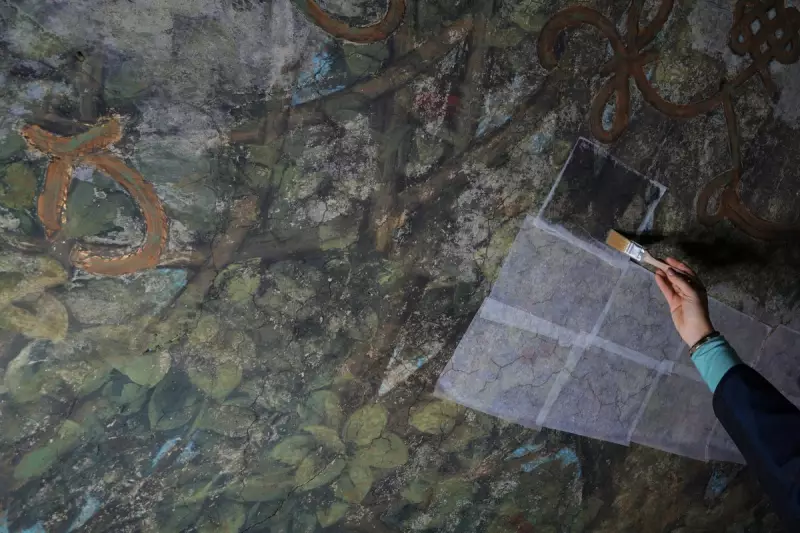
Milan's cultural authorities have announced that from February 7th to March 14th, 2026, the public will be permitted to climb the towering six-metre scaffolding erected in the Sala delle Asse within the historic Sforza Castle. This provides a unique chance to observe conservators at work on Leonardo's vast, unfinished pergola painting, which depicts intricately intertwined flowering branches. After this brief viewing window, the site will be closed again for approximately eighteen months to allow the delicate restoration to be completed without further public disturbance.
The Turbulent History of a Lost Work
The painting's story is one of political upheaval and artistic loss. Historical records confirm Leonardo began the work in 1498 but was forced to abandon it and flee Milan following the French invasion. "After that date it was covered over, hidden," explained Luca Tosi, heritage curator at Sforza Castle. The castle itself was converted into military barracks under French rule, and the artwork was concealed beneath layers of plaster, remaining lost for centuries.

It was only rediscovered in the early 1900s, when restorers removed the plaster. However, in an attempt to revive the masterpiece, they extensively repainted areas to match what they believed was Leonardo's original vision. "As a result, Leonardo scholars no longer recognized them as a true Leonardo, but rather as a repainted Leonardo, somewhat a fake, to use a popular term," Tosi added, highlighting the complex authenticity issues surrounding the piece.
Meticulous Modern Restoration Techniques
The current, painstaking conservation effort aims to rectify past interventions and preserve Leonardo's fragile original work. Restorers are employing a gentle, non-invasive technique using Japanese rice paper and demineralised water to carefully draw out damaging salts that have seeped into the walls over centuries.
"The hardest part is that Leonardo’s painting is very delicate, there are some liftings, there are more fragile parts and therefore the work must be done centimetre by centimetre, with the utmost attention and care," Tosi emphasised, describing the incredibly slow and precise nature of the task.
A Testament to Leonardo's Enduring Legacy
Beyond its artistic value, the painting is celebrated as a profound example of Leonardo's insatiable scientific curiosity. Tomasso Sacchi, Milan's top culture official, noted that the detailed study of leaves and plant species within the work provides further evidence of the master's interdisciplinary genius.
"It’s a thrill to know another Leonardo and to experience this extraordinary dedication to various forms of knowledge by this fundamental figure in our history," Sacchi stated, framing the viewing opportunity as a deeper connection to the Renaissance polymath's legacy. This unique access, set against the backdrop of the Olympic flame burning in nearby Sempione Park, merges contemporary global sport with an unparalleled glimpse into Italy's unparalleled artistic heritage.