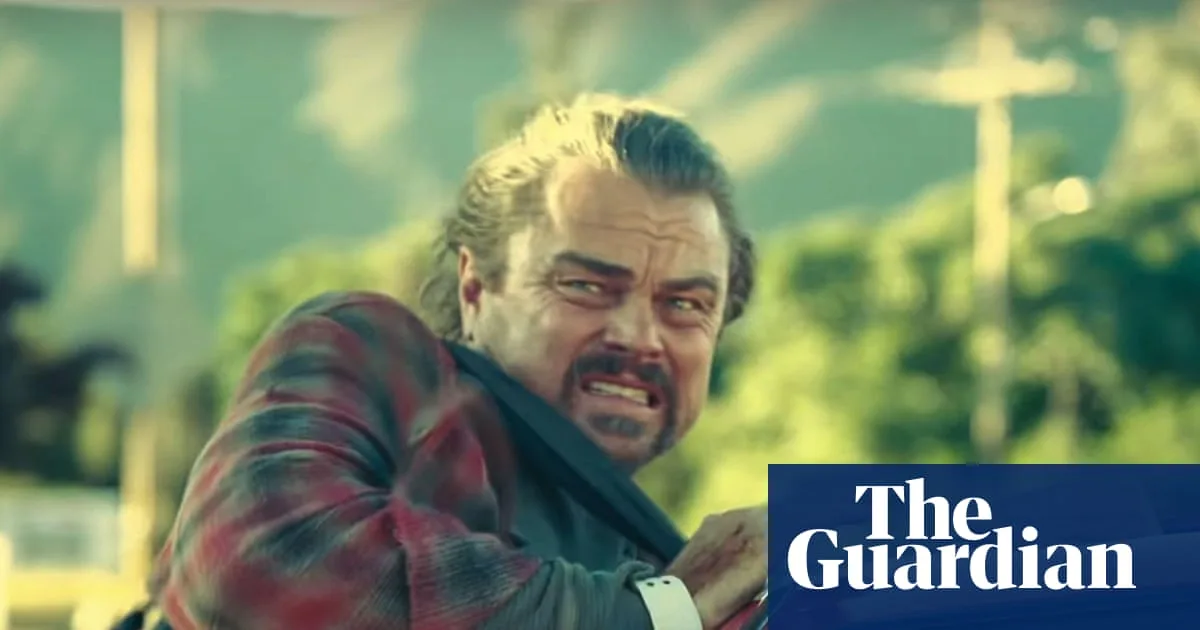
Paul Thomas Anderson’s latest film, One Battle After Another, is a chaotic clash between a demented regime and ragtag freedom fighters that is both cartoonish and deadly serious. The movie, freely adapted from Thomas Pynchon’s 1990 novel Vineland, updates the story for the 2020s, careening from migrant detention camps to sanctuary cities as it uncovers a Christian Nationalist cell within the US federal government. The self-styled “Christmas Adventurers” are on a mission to make America great again, with one character stating, “If you want to save the planet, you always start with immigration.”
Leonardo DiCaprio stars as Bob, a former firebrand turned burnt-out stoner who is forced to act when his daughter Willa (Chase Infiniti) is captured. The film is political to its fingertips, hard-wired to the present and anticipating the tenor of Donald Trump’s second term. Jonny Greenwood’s jittery score sets the pace, and the story feels volatile, playing like a melody made from atonal notes. While the Golden Globes classify it as a comedy, it is also always deadly serious, with Sean Penn’s bumptious baddy Colonel Lockjaw being cartoonish in the style of real-life figures like Gregory Bovino, the Border Patrol commander who led his goons into Minneapolis.
One Battle After Another is not a straightforward comedy or a party political picture. Its sympathies lie with the underdogs and guerrilla fighters for social justice, but it acknowledges that the struggle is exhausting and the battle lines have blurred. The vexed question of Willa’s parentage echoes Mark Twain’s Pudd’nhead Wilson, exploding the red and blue state divide. The film insists that the real America is marbled and mixed, and the future looks like Willa.

Oscar winners don’t have to be timely, but it helps, especially this year when the stakes are high. One Battle After Another is not Anderson’s best film, nor is it the runaway favourite for Best Picture, but it is the right film for the moment: a rollicking, lawless epic that Hollywood used to produce regularly but now looks almost unique. It might be the last great American whale.