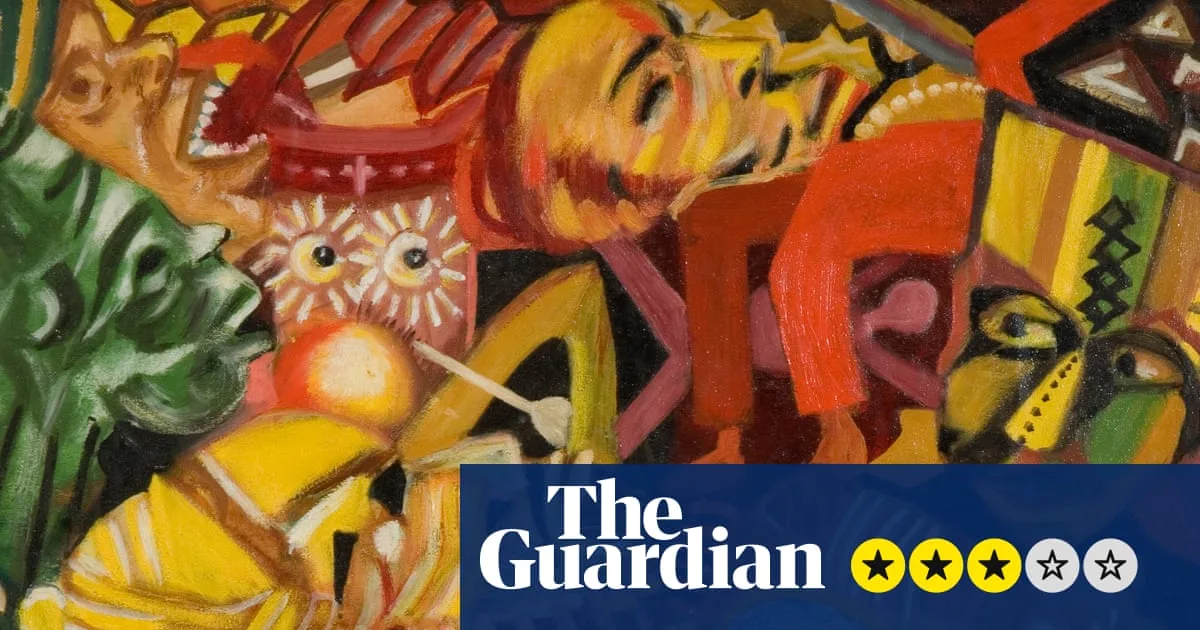
Tate Modern's latest exhibition, Nigerian Modernism: Art and Independence, attempts to chart a century of the country's turbulent history through its art. The sprawling show, which runs until [date not provided], traces modern art from British colonial rule to the end of the 20th century, focusing on individual artists and groups. However, the ambitious scope often feels overwhelming, with critics questioning whether modernism can adequately capture Nigeria's complex past.
The exhibition opens with European-style academic portraiture by Aina Onabolu and Akinola Lasekan, alongside carved wooden door panels from 1910-14 depicting a British officer carried in a sedan chair with shackled prisoners. Nearby, photographs by Jonathan Adagogo Green show the deposed king of Benin on a British yacht, highlighting the photographer's complicity in colonial narratives. These works set the stage for a journey through Nigeria's fractured history.
A central figure is Ben Enwonwu, described by the late curator Okwui Enwezor as 'arguably Africa's first art star'. His carved figures of newspaper readers, commissioned for Nigerian independence in 1960, appear to transform into wings. Enwonwu's varied career includes paintings of Eid celebrations, a portrait of Queen Elizabeth II, and watercolours of naked dancing women titled Black Culture and Negritude. His sculpture Anyanwu stands outside the Nigerian National Museum and at the UN in New York.

The exhibition devotes a room to the Zaria Art Society, formed in 1960 by rebellious students who rejected Eurocentric curricula. They co-founded the Mbari Club with German publisher Ulli Beier. Works from this period, such as Uche Okeke's violent depictions of a Christian convert unmasking an Igbo dancer, and Demas Nwoko's Nigeria in 1959 showing uneasy colonial officers, reflect a raw urgency. The latter painting, with looming Nigerian soldiers, feels like a premonition of future conflicts.
Later sections include large-scale photos of 1960s European modernist architecture in Lagos and Highlife album covers, accompanied by a playlist by DJ Peter Adjaye. While the exhibition is fascinating, its sprawling nature can be frustrating, leaving viewers to grapple with the question of what modernism means in the Nigerian context.