A brother and sister unearthed a first-hand account detailing one of the most important and devastating days in Liverpool's history. Phil Jones and his sister Lesley had been sifting through their late mum's belongings in Formby when they discovered a handwritten account from their great-grandmother that dates back to December 1940.
After the death of their mum Barbara, in July, the siblings faced the daunting task of having to sift through her belongings, many of which had been carefully stored away in her office at her home. It was while doing so that they came across an envelope with a handwritten account from their great-grandmother, Florence Walters (née Clarke), in which she details the destruction caused by the Blitz on December 21 1940 on and around her street, in a report entitled 'My worst blitz'.
A personal account of the Blitz
The sounds, fear and destruction created by the dropping of bombs from Hitler's war machine became a part of daily life for people in the city, especially those living near the strategically important docks. Florence's account is dramatic but also matter-of-fact about the danger, and every day heroism of the people who knew death could come from the sky at any time.
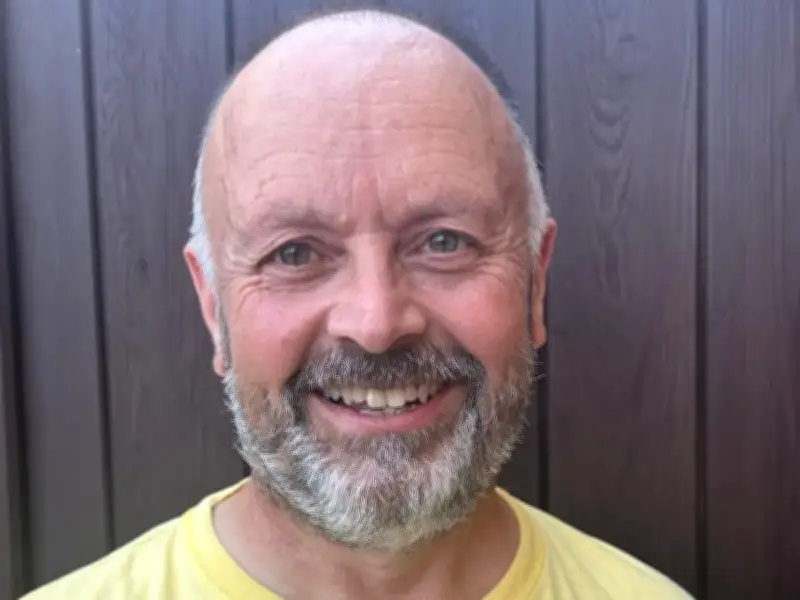
Phil, 58, told the ECHO: "She talks about being thrown to the floor with her eyes and mouth full of dirt and you realise, 'Oh hang on a minute, this is this isn't just a story. It's not a film. It's right there, it becomes much more visceral.' It brings it home that this is actually something that people experienced.
"It's not a polished account that you might read in a book or see in a film. There's the spelling mistakes, it's just so personal. It definitely takes you right there."
Danger and heroism in Seaforth
Florence's account starts with the sound of sirens ringing around her home on Harrowby Road, Seaforth, where she was living with her husband, Charles, and daughter, Dorothy. Soon after, while she is about to take refuge in an air-raid shelter, a bomb hits and she is thrown into a corner leaving her covered in dirt.
As her account continues, she helps direct four evacuees to safety at the nearby Congregational Church which was being used as a makeshift hospital and paints a heartbreaking picture of the turmoil that surrounded Gordon Road, as she refers to herself as being like "a lost soul in a wilderness of ruin".
Impact of the Christmas Blitz
Outside of London, nowhere in the country was bombed as intensely as Liverpool during WWII. The climax of the destruction in Liverpool came between December 20 and December 22 1940, a three day period which has since been dubbed the 'Christmas Blitz'.
As well as causing substantial damage to the city's dock network, many residential streets and major city centre buildings were permanently damaged. Crosby Beach is still known as Blitz Beach today because so much rubble from destroyed houses was dumped there during the war, and can still be seen more than 80 years later.
During the Blitz, it is estimated that over 80% of homes in the area were affected, leaving long-lasting damage. The streets mentioned in Florence's account were likely collateral damage in the efforts to damage or destroy Gladstone Dock.
A legacy of selflessness
Despite growing up with very little information of what their great-grandmother was like, Phil said that the selfless attitude she portrays in her account is something that has been passed down generations.
He said: "My gran, Florence Minnie Le Breton and then my mum did an awful lot for others. My mum was a Guide captain, and throughout her life she'd done stuff for the Guides and Scouts, and fundraised. She did very much put herself out there for the benefit of others. You can see where she got that trait of helping people from."
While, like everyone else, Phil has grown up learning about the Blitz, reading his great-grandmother's account has given him a new perspective. He said: "It was strange because you realise how close it was to us not being here. She describes bricks in the kitchen and a tree at the corner being blown up just as they got to the bottom of the shelter. It was weird to know how easily things could have been different."