A Guardian and a Thief: Survival and Morality in a Climate-Ravaged Kolkata
Megha Majumdar's second novel, A Guardian and a Thief, presents a gripping moral thriller set in a future Kolkata where climate change has wrought devastating consequences. The story unfolds over what is meant to be the final week before a woman known as Ma leaves the city with her family, having secured prized "climate visas" to the United States.
A City Transformed by Environmental Catastrophe
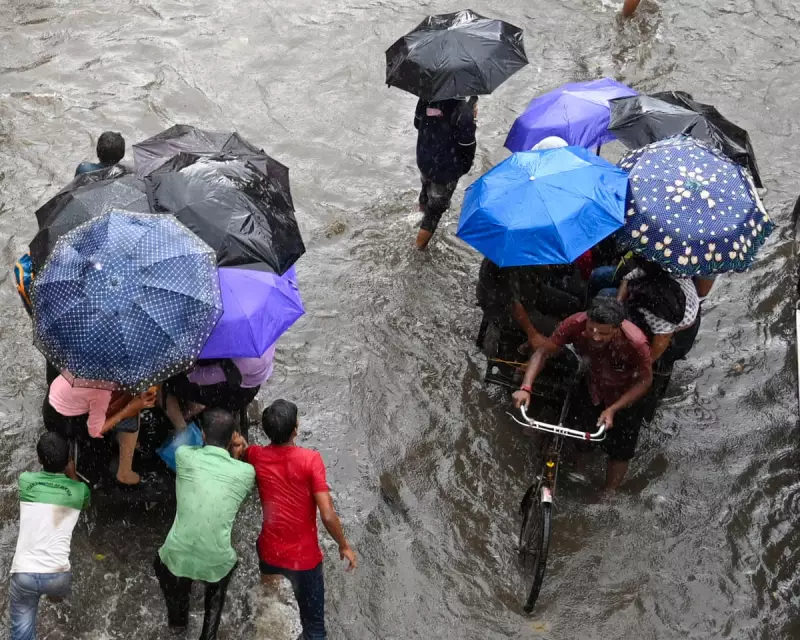
In Majumdar's vision, floods and extreme heat have turned Kolkata into a city of persistent food shortages. Black marketeers hoard essential items like eggs, fruit, and vegetables, while fish—once a cornerstone of Bengali cooking—has vanished entirely. The terrifying spectre of famine looms, illustrating how climate change has propelled the city backward into a precarious past. Notably, the urban landscape appears almost entirely smartphone-free, marking a stark departure from the technological themes of Majumdar's acclaimed debut, A Burning.
The Central Conflict: Guardian Versus Thief
The title characters are Boomba, a young man referred to only by his nickname, and Ma, a woman who manages a homeless shelter. Each perceives themselves as a guardian and the other as a thief, creating a dynamic where the reader is invited to observe how circumstances transform guardians into thieves and vice versa. For years, Ma has stolen food from the shelter she runs, justifying her actions as necessary to care for her elderly father and infant daughter—a thief only because she is a guardian.

However, as she prepares to depart Kolkata, Boomba—a new shelter resident who has witnessed her theft—breaks into her home. He takes not only the stolen food but also her purse, which contains her family's passports and the climate visas that represent their ticket to America. This pivotal event sets the stage for a narrative that explores profound moral ambiguities.
Majumdar's Distinctive Prose Style
Majumdar employs what Martin Amis termed "vow-of-poverty prose," though it might more accurately be described as vow-of-efficiency. This approach involves:
- The eradication of semicolons, run-on sentences, wordplay, and digression
- A faultlessly clear third-person voice that avoids free indirect style
- A truly minimal degree of social and historical context
These elements are sacrificed in pursuit of intense narrative focus, resulting in a pace reminiscent of a thriller. However, the drama derives primarily from escalating moral stakes rather than conventional suspense.
Strengths as Moral Critique
By minimizing cultural and historical exposition, Majumdar avoids the narrative clunkiness that often accompanies attempts to explain India to Western audiences. This liberation allows her to:
- Tell a story of universal moral interest
- Deliver a perceptive account of specifically Indian anxieties
- Brilliantly render the helplessness privileged Indians feel facing Western consular officials
- Illustrate how Indians divided by class fundamentally misunderstand each other
- Expose how the Indian rich use family claims to justify riding roughshod over others
The novel excels as an Indian moral critique, particularly in dramatising the elite's great fear: a world where they are forced to share resources and opportunities.
Limitations as Climate Fiction
Where the novel proves less successful is in its execution as climate fiction. By structuring the plot around the accidental theft of passports, Majumdar stretches plausibility at two crucial moments:
First, Boomba—a young man who has worked for years in the big city—demonstrates ignorance about the very existence of passports, even attempting to use one as a fan "to see if it served a cooling purpose." This degree of unworldliness seems inconsistent with his established character.

Second, the concept of "climate visas" itself raises questions. The book presents a world where large parts of Earth are uninhabitable, yet suggests the US might issue such visas depending on which political faction holds power. This portrayal pits "some Americans" who oppose climate immigration against "others" who welcome it, potentially trivialising Western fears of uncontrolled climate migration as merely the concerns of "some."
A Compelling Examination of Human Nature Under Pressure
Despite these limitations, A Guardian and a Thief offers a compelling examination of how environmental catastrophe exposes and exacerbates human frailties. Majumdar's efficient prose drives the narrative forward while leaving room for readers to grapple with complex moral questions. The novel may engage Western sympathies without necessarily troubling sleep, but it provides a thought-provoking perspective on how climate change intersects with social structures, class divisions, and personal ethics.
Ultimately, Majumdar's work invites reflection on what it means to be both guardian and thief in a world where survival increasingly demands difficult compromises, and where the line between morality and necessity becomes dangerously blurred.