Lisl Ponger's Danse Macabre: A Photographic Response to the Pandemic
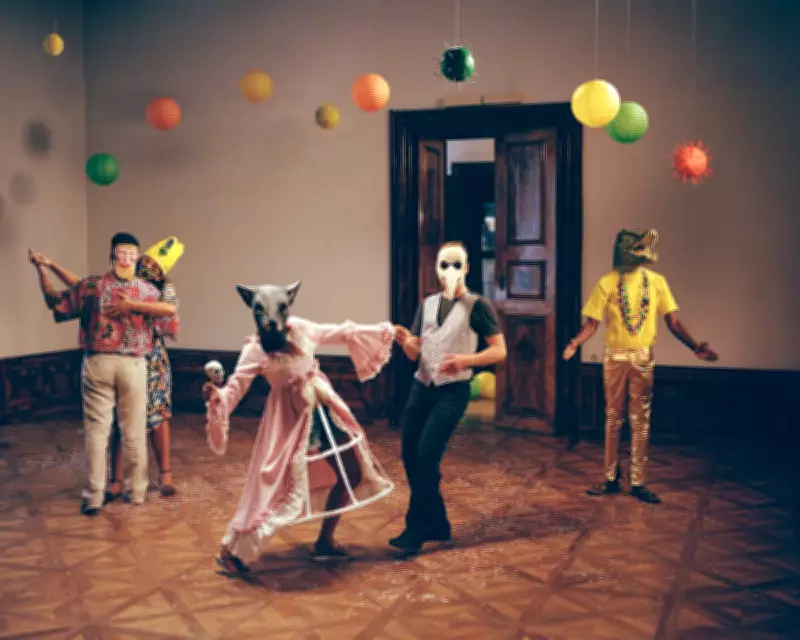
In the summer of 2021, amidst one of Europe's hottest recorded seasons, Austrian artist Lisl Ponger created Danse Macabre, a meticulously staged photograph that serves as a profound artistic commentary on the Covid-19 pandemic. The work, part of a diptych titled Masquerade, blends historical references, colonial critiques, and pandemic imagery into a single, captivating scene.
Inspiration and Symbolism
Ponger explains that the initial spark for the project came from the ubiquitous discussions about masks during the early days of Covid-19. This led her to explore the broader cultural history of masks, delving into research on Venetian plague outbreaks dating back to the 14th century and global pandemic narratives. The photograph features a central couple: a doctor in a traditional plague mask, still sold at Venetian carnivals, dancing with a rat, symbolising the rodent often blamed for historical plagues.
Subtle details enrich the narrative. Paper lamps hanging from the ceiling conceal tiny Covid-19 virus shapes, while the left side of the image references the Brazilian government's controversial handling of the pandemic under Jair Bolsonaro. Here, a woman in a yellow hat represents Indigenous communities, dancing with a man wearing a mask of Pedro de Alvarado, a Spanish conquistador known for atrocities in Guatemala, thus weaving in themes of colonialism and postcolonialism.

Global Social Distancing Interpretations
One of the photograph's most intriguing elements stems from varied global social distancing guidelines. Ponger discovered that different countries used unique analogies to communicate safe distances. In Austria, authorities suggested maintaining a baby elephant's length apart, while in Florida, the recommendation was to visualise a baby alligator. This inspired her to include a character in an alligator mask, transforming a public health gesture into a dance move within the composition.
Another dancer wears a face mask Ponger designed herself, featuring a virus pattern. She utilised an online platform to print it, and the company expressed interest in using her design commercially. This highlights the intersection of art and everyday pandemic life, where protective gear became both a necessity and a canvas for creativity.
Production Challenges and Artistic Philosophy
The shoot took place over two consecutive days at the University of Applied Arts in Vienna, requiring a polished floor to evoke the ambiance of a masked ball. Ponger opted for professional actors and dancers over friends, noting their superior ability to hold poses and convey physicality. The intense heat, exacerbated by studio lighting, made conditions gruelling, particularly for the model portraying the rat, who found the experience exhausting.
Logistical hurdles included a noise complaint from a neighbour due to a generator powering the lights. Police intervened but quickly dismissed the issue after inspecting the artistic setup. Ponger invited the complainant to view the work, but he declined, underscoring the occasional friction between creative endeavours and community concerns.
Broader Context and Artistic Approach
Danse Macabre is paired with Hidden Transcript, the other half of the diptych, which features carnival characters from Peru, New Orleans, Andalusia, and Trinidad. Together, they explore global traditions of masking and performance. Ponger's work is deeply informed by her interest in colonialism, and she aims to create visually arresting images that encourage deeper inquiry. She believes art must balance beauty with intellect, offering surfaces that intrigue and titles that prompt exploration without immediately revealing all layers of meaning.
Born in Nuremberg in 1947, Ponger has achieved significant recognition, including monographs from the Museum of Modern Art in Vienna and Charim Galerie Wien. Her advice to aspiring artists is to remain inquisitive, read extensively, and persevere. She is also associated with Hundred Heroines, a UK charity supporting women in photography, and her work is discussed in Semiotic Ghosts, a collection of essays published by Edition Zyphius.

Through Danse Macabre, Lisl Ponger not only documents a historical moment but also invites viewers to reflect on the interconnectedness of health, history, and human expression in times of crisis.