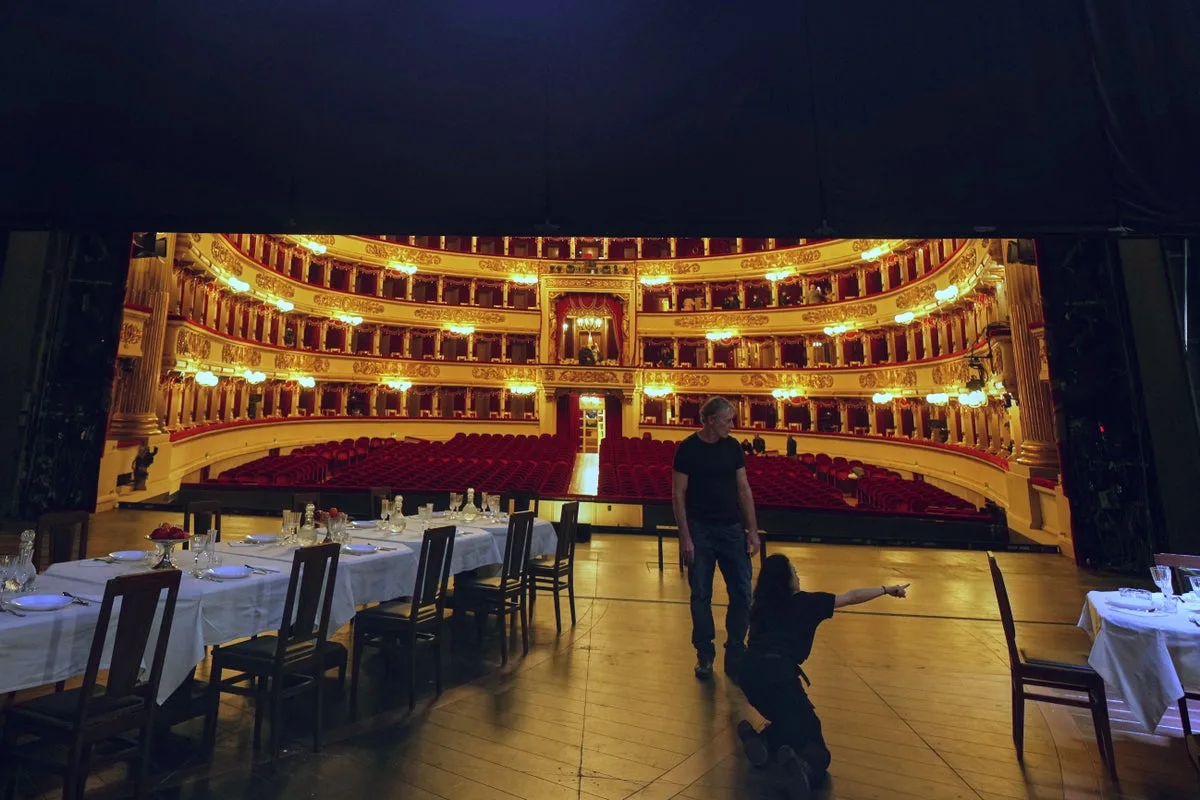
Milan's world-renowned Teatro alla Scala has defiantly opened its gala season with a Russian opera for the second time since Moscow's 2022 invasion of Ukraine. The theatre's leadership is staunchly defending the decision to programme art above political conflict.
A Defiant Opening Night
On Sunday, 7 December 2025, La Scala's music director Riccardo Chailly conducted Dmitry Shostakovich's "Lady Macbeth of Mtsensk" for the prestigious season premiere. The event, a highlight of the European cultural calendar, attracted luminaries from across the worlds of culture, business, and politics.
This marks the second Russian opera to open the season since the war began, following 2022's production of "Boris Godunov." However, unlike the previous premiere which drew protests from the Ukrainian community, this year's opening was met with a planned flash mob demonstration for peace, organised by the Italian left-wing party +Europa.
Artistic Merit Versus Political Protest
The party announced a demonstration outside the theatre to "draw attention to the defense of liberty and European democracy" and to support the Ukrainian people. They emphasised that Shostakovich's work itself critiques the abuse of power, making it a fitting choice. Due to security concerns, authorities moved the planned protest from the square facing La Scala to a location behind City Hall.
La Scala's new general manager, Fortunato Ortombina, robustly defended the artistic choices. "Music is fundamentally superior to any ideological conflict," he stated. "Shostakovich, and Russian music more broadly, have an authority over the Russian people that exceeds Putin's own."
Riccardo Chailly, who began working on this production with stage director Vasily Barkhatov two years ago, called the opera "a must." He noted it is only the fourth time the challenging work has been staged in La Scala's long history.
The Production and Its Stars
American soprano Sara Jakubiak made her highly anticipated La Scala debut in the formidable title role of Katerina. She described the role, which involves singing 47 high B flats in one night and portraying a murderess, as a huge challenge. "You go, 'Oh my gosh, how will I do this?'" she said, but praised the collaborative process with Chailly, known for his studious approach.
Director Vasily Barkhatov made a significant creative decision, shifting the opera's setting from a 19th-century village to a cosmopolitan Russian city in the 1950s—the end of Stalin's regime. For Barkhatov, this period defines the characters' mentality, framing the story as a personal tragedy rather than a purely political tale.
The opera itself has a tumultuous history. Composed in 1934, it critiques the condition of women under Stalin and was blacklisted in 1936 after the Soviet leader attended a performance. That year marked the beginning of the Great Purge, a campaign of intense political repression.
Despite the tragic narrative arc, Barkhatov sees the story as a "weird … breakthrough to happiness and freedom," while sombrely noting that many die on that journey. As the curtain rose in Milan, the performance stood as a powerful testament to art's enduring, and contentious, voice in times of global strife.