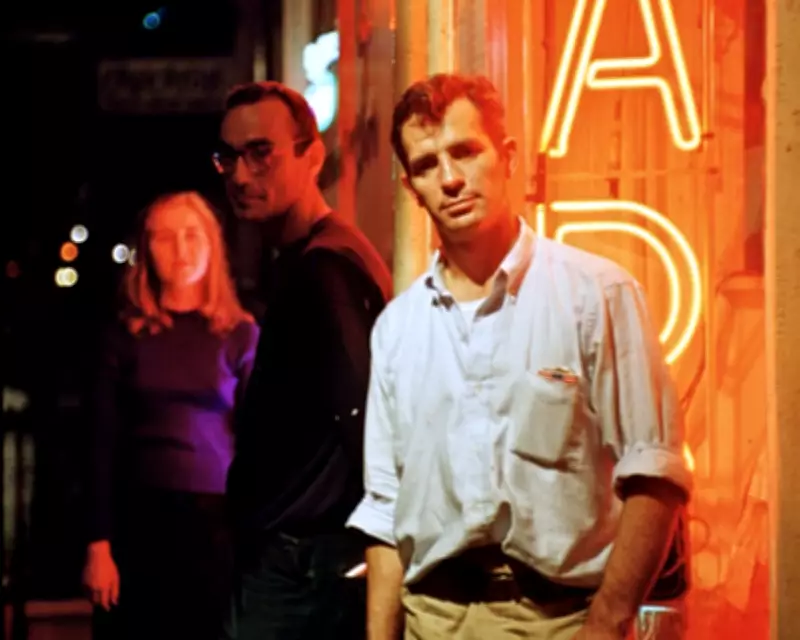
Kerouac's Unseen Archive Illuminates Private Life in New York Exhibition
A new exhibition titled Running Through Heaven: Visions of Jack Kerouac at New York's Grolier Club is set to rehumanise the iconic Beat writer, showcasing previously unseen letters and personal artefacts that peel back the layers of his public persona. This intimate display coincides with the upcoming auction of Kerouac's original 37-metre-long scroll of On the Road, adding a poignant dimension to the exploration of his legacy.
Unveiling the Man Behind the Myth
Curated by collector and historian Jacob Loewentheil, the exhibition features correspondence from Kerouac's years at Columbia University, primarily written to a friend in his hometown of Lowell, Massachusetts. These letters capture a young Kerouac as he navigated the transition from small-town life to the vast metropolitan expanse of New York. Loewentheil notes that the correspondence reveals early experiments with what would later become his signature spontaneous prose technique, offering a glimpse into the formative stages of his literary voice.
In these personal writings, Kerouac expressed a firm belief in his future fame, anticipating that his letters would be scrutinised by posterity. He was very sure that he was going to be a great writer, Loewentheil explains, but he was deeply concerned with how others perceived him. This duality underscores the tension between his public image and private self.

Personal Artefacts and Literary Relics
The exhibition includes a range of personal items that challenge the romanticised image of Kerouac as a perpetual vagabond. Among the displays are:
- Kerouac's glass ashtray, still containing traces of cigarette ash, evoking the smoky ambiance of his creative process.
- A handwritten work schedule from April 1953, documenting his hours and pay as a brakeman, highlighting the working-class reality behind the literary mythology.
- His tobacco pouch, which retains coarse tobacco leaf and was likely carried in his pocket, offering a tangible connection to his daily life.
Loewentheil describes these objects as relics that puncture the road-vagabond stereotype, noting that Kerouac spent most of his time at home. However, he admits to feeling a sense of unease about owning such intimate items, acknowledging the invasive nature of preserving another person's physical possessions.
Navigating Privacy and Public Interest
The exhibition raises ethical questions about the display of private correspondence and personal effects. Loewentheil has carefully selected materials that reveal Kerouac's character without being unnecessarily intrusive, omitting graphic depictions of his college sex life to maintain a respectful balance. He also addresses Kerouac's use of objectionable language and antisemitic remarks, which present challenges for modern audiences.
One of the most debated aspects of Kerouac's life is his sexuality. While evidence from journals and letters suggests he may have been repressed or bisexual, Loewentheil resists categorising him, arguing that the desire to label him is a mistake. He emphasises that Kerouac's own uncertainties should be respected, allowing for some mystery in his personal struggles.
Spiritual Duality and Literary Legacy
The exhibition also explores the tension between Kerouac's Catholic upbringing and his later engagement with Buddhism. Items such as his rosary and mala beads illustrate this spiritual duality, reflecting the inner conflicts that shaped his worldview.
With the impending auction of the On the Road scroll, the timing of this exhibition feels particularly resonant. Loewentheil hopes the scroll will find a steward who values its significance as a foundational document of postwar American literature and ensures it remains accessible to the public. This concern echoes past criticisms, such as those from Carolyn Cassady, who argued that such artefacts belong in libraries rather than private collections.

Redefining Kerouac for a New Generation
Ultimately, Running Through Heaven seeks to separate the artist from the stereotype, presenting Kerouac as a complex individual rather than a mere icon of rebellion. Through his letters, Loewentheil believes we can soften the rugged, macho image often associated with Kerouac, revealing a more gentle and romantic figure. He had an enormous open heart, Loewentheil asserts, and on a certain level, he was too gentle and nice a person for the world he was in.
The exhibition not only revives interest in a 20th-century literary icon but also invites viewers to reconsider the boundaries between public myth and private reality. By showcasing these intimate artefacts, it offers a nuanced portrait of Kerouac that resonates with contemporary discussions about masculinity, privacy, and artistic legacy.