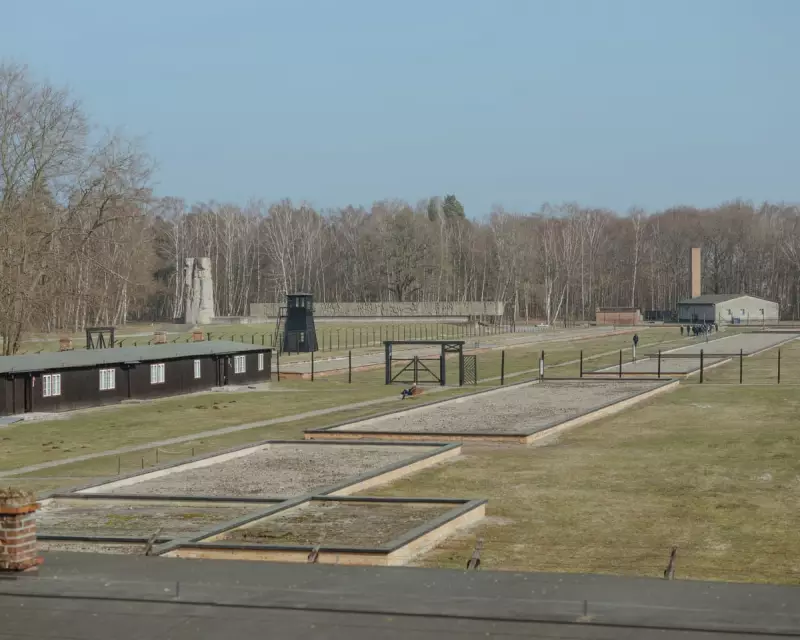
The release of the acclaimed film 'Zone of Interest' has not only captivated audiences but also unearthed deeply personal and troubling family histories, sparking a renewed and urgent debate about the role of museums in confronting dark chapters of the past. One such story involves a British individual who discovered their grandfather served as a guard at the Stutthof Nazi concentration camp during World War II, a revelation that has brought the ethical responsibilities of historical institutions into sharp focus.
Personal Revelation Meets Public History
This personal narrative, emerging in the wake of the film's exploration of complicity and morality, highlights how family secrets can intersect with broader historical truths. The individual's grandfather was stationed at Stutthof, a camp in occupied Poland where tens of thousands perished, including many Jews, Poles, and other persecuted groups. The discovery has prompted difficult questions about legacy, memory, and how such histories are preserved and presented to the public.
Museums Under Scrutiny
In light of this and similar stories, museums housing artefacts from Nazi camps, including Stutthof, are facing increased scrutiny. Critics argue that these institutions must do more to contextualise exhibits, avoid sanitising history, and address the complexities of perpetrator narratives. The debate centres on whether museums should merely display objects or actively engage visitors in critical reflection on themes like obedience, bystander behaviour, and the mechanisms of genocide.

Proponents of a more nuanced approach suggest incorporating personal testimonies, such as those from descendants of both victims and perpetrators, to humanise the historical record. This could involve audio guides, interactive displays, or dedicated sections that explore the moral ambiguities and personal consequences of involvement in such regimes.
The Impact of 'Zone of Interest'
The film 'Zone of Interest', which delves into the lives of a Nazi commandant's family living adjacent to Auschwitz, has been a catalyst for this discussion. By portraying the banality of evil and the compartmentalisation of horror, it encourages viewers to reflect on how ordinary people became complicit. This artistic interpretation has resonated with many, including those uncovering family ties to Nazi camps, pushing museums to reconsider their educational missions.
Experts in Holocaust studies note that films like this can bridge the gap between academic history and public understanding, making the past more accessible and emotionally resonant. However, they caution that museums must balance this with factual accuracy and sensitivity to avoid trivialising suffering.
Ethical Challenges and Future Directions
The ethical challenges are manifold. Museums must navigate issues of representation, ensuring they do not inadvertently glorify perpetrators or reduce victims to statistics. There is also the question of how to handle donations or artefacts linked to individuals with Nazi pasts, as seen in cases where families seek to donate items without full disclosure of their origins.
Looking ahead, some institutions are exploring partnerships with filmmakers, historians, and community groups to develop more immersive and reflective exhibits. This could include temporary installations inspired by 'Zone of Interest', workshops on historical empathy, or digital archives that allow visitors to explore personal stories in depth.
Ultimately, the grandfather's story serves as a poignant reminder that history is not just a collection of dates and events but a living tapestry of human experiences. As museums evolve, their success may hinge on their ability to foster dialogue, challenge assumptions, and help society grapple with the uncomfortable truths that shape our present and future.