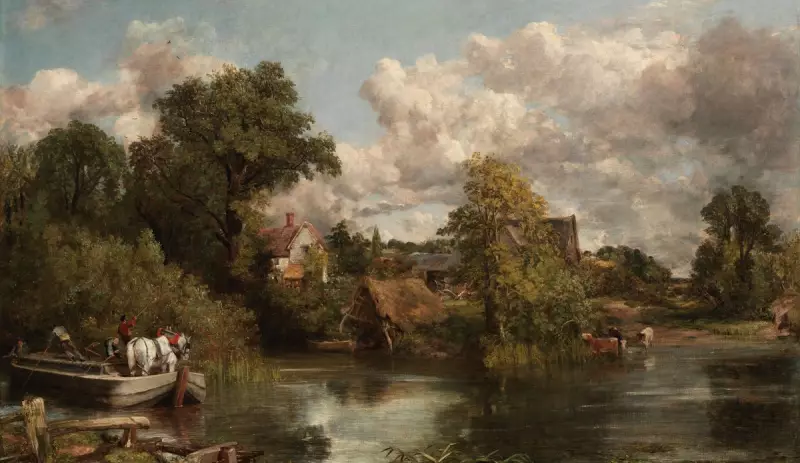
This winter, a landmark exhibition at Tate Britain will reignite the historic rivalry between two titans of British art: JMW Turner and John Constable. The show, titled 'Turner and Constable', runs from 27 November 2025 to 12 April 2026, and celebrates their contrasting visions, once described as "Turner's fire and Constable's rain". To mark the occasion, we embarked on a journey to the landscapes that fuelled their genius, from the serene water meadows of Suffolk to the dramatic Kent coastline.
Constable's Serene Suffolk: The Heart of 'Constable Country'
The journey begins on the River Stour in Dedham Vale, the pastoral idyll that shaped John Constable's vision. Gliding on an electric boat operated by the River Stour Trust, the scene is one of timeless tranquillity. Dragonflies skim the water, and fish dart below the surface. This is the very view known to millions not from reality, but from Constable's iconic "six-footer" canvases, most notably The Hay Wain and The White Horse.
Constable was born in East Bergholt on the Suffolk side of the river in 1776. A walk from the historic Sun Inn in Dedham, through water meadows bathed in sunshine, leads to Flatford Mill. This area, often mistaken for pure wilderness, was in fact a hub of proto-industrial activity. Constable's father, Golding Constable, was a wealthy merchant who used the river, improved by the 1705 River Stour Navigation Act, to transport and mill grain.

At Flatford, the iconic view of Willy Lott's cottage from The Hay Wain remains remarkably intact. Interestingly, the famous painting itself, created in Constable's London studio, has never been to Suffolk. That will change in 2026, when it travels to the Ipswich gallery as part of the Constable 250 celebrations, displayed alongside the artist's preparatory sketches.
A highlight of the Tate exhibition will be Constable's The White Horse, on loan from The Frick Collection in New York. This marks its first visit to the UK in almost two decades and showcases the artist's masterful, ominous grey skies.
Turner's Elemental Margate: Where Sky Meets Sea
From Suffolk's gentle valleys, the search for artistic inspiration heads south to the open skies and sea of Margate in Kent. JMW Turner first visited the resort aged 11 and painted over 100 works there, famously declaring its sky "the loveliest in all Europe".
Today, the Turner Contemporary gallery, a striking collection of steel and glass cubes by architect David Chipperfield, stands on the site of the boarding house where Turner stayed. It was here he began a romantic relationship with his landlady, Mrs Booth. From the gallery's vast first-floor window, visitors can share a view of the sea that Turner would have known, save for the addition of modern wind turbines.
The gallery is currently displaying Turner's extraordinary oil sketch The Waves Breaking on a Lee Shore at Margate, a vibrant, swirling study in light and colour that shows his move towards abstraction. This is part of a year-long programme of Turner celebrations in the town that began on 16 October.
For those inspired to try their hand, artist Molly Martin will be running Turner & Dreamlands Drawing Retreat Weekends from her base at Kindred House in spring 2026, encouraging visitors to see Margate through Turner's eyes.
A Rivalry For The Ages, Celebrated Anew
While Turner, the Covent Garden-born pioneer of light, is often seen as the forerunner to modernism, the Tate Britain exhibition promises to re-examine Constable's powerful, sometimes turbulent, response to nature. Their artistic duel defined an era.
This exploration of their source material reveals more than just pretty vistas. It uncovers the working landscapes, the industrial undercurrents, and the personal haunts that shaped two distinct yet quintessentially British artistic legacies. The upcoming exhibition offers a unique chance to see their iconic works side-by-side, before tracing their origins through the English countryside and coast.