Dame Tracey Emin Compares My Bed Installation to a 'Crime Scene'
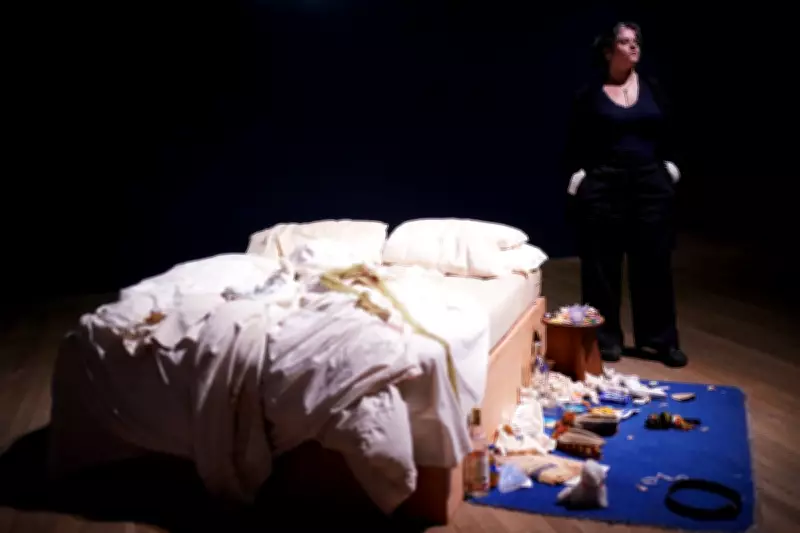
Artist Dame Tracey Emin has revealed that her controversial 1998 installation, My Bed, is akin to a 'crime scene' and necessitates the use of hazmat suits during its assembly and disassembly. The acclaimed British artist made these remarks in a recent interview, shedding light on the logistical and emotional complexities surrounding one of her most famous works.
Exhibition Details and Historical Context
My Bed is currently featured as part of the Tracey Emin: A Second Life exhibition at London's Tate Modern, which opened on Friday, 27 February 2026. This exhibition marks a significant retrospective, including pieces from her 1993 solo debut at White Cube and other notable installations like Exorcism Of The Last Painting I Ever Made (1996). The show is scheduled to run until August 31, offering visitors a comprehensive look at Emin's influential career.
The installation itself was inspired by a depressive episode during which Emin spent four days in bed. It consists of her own dishevelled bed, complete with stained sheets and surrounded by detritus such as used condoms, empty vodka bottles, and cigarette butts. Originally created over two decades ago, My Bed was nominated for the Turner Prize and remains a pivotal work in the Young British Artists movement.

Logistical Challenges and Preservation
In an interview on BBC's Ready To Talk with Emma Barnett podcast, Emin detailed the intricate setup process. She explained that the bed can only be displayed approximately every five years due to its fragility, and strict health and safety protocols are enforced. 'We have to wear those hazmat suits,' she stated, emphasizing the meticulous care required to handle the installation's components.
The artwork is stored with each item—from safety pins to apple cores—carefully bagged and organized in small pockets and boxes. Emin noted that only the Nurofen and headache pills have been replaced over the years, as concerns arose about potential misuse. Despite the bed being her original creation, she clarified that she no longer owns it; the Tate is now responsible for its preservation and identity.
Emotional Reflections and Personal Journey
Emin, who was diagnosed with bladder cancer in 2020 and underwent major surgery, shared poignant insights into her emotional state while reinstalling the bed post-illness. 'It's sad,' she reflected, contrasting her current experience with earlier installations when she was physically fitter. The process evoked deep questions about memory, identity, and the passage of time.
She elaborated, 'Who is this person? Am I that person? Is any part of me left still remaining in that bed? My spirit, my soul.' Emin described how each installation of the bed takes on a different character—ranging from sadness at the Tate to anger in Liverpool—highlighting its dynamic and powerful presence. 'The bed has its own power, its own way, its own life in a way,' she observed, underscoring the artwork's evolving emotional impact.
Legacy and Cultural Significance
As a member of the Royal Academy of Arts and a key figure in contemporary art, Emin's work continues to provoke discussion and analysis. My Bed stands as a testament to her raw, autobiographical style, challenging conventions and exploring themes of vulnerability and survival. The full interview episode is available on BBC Sounds, offering further insights into her creative process and personal reflections.