Adelaide's Literary Landscape Transformed as New Festival Emerges
In a remarkable display of community resilience, Adelaide's literary scene has witnessed the rapid birth of an entirely new festival just weeks after the controversial cancellation of the long-running Adelaide Writers' Week. The newly announced Constellations festival – affectionately dubbed "Not Writers' Week" by its creators – represents a grassroots response to what organisers describe as a profound disappointment for the city's cultural calendar.
From Cancellation to Creation: A Two-Week Transformation
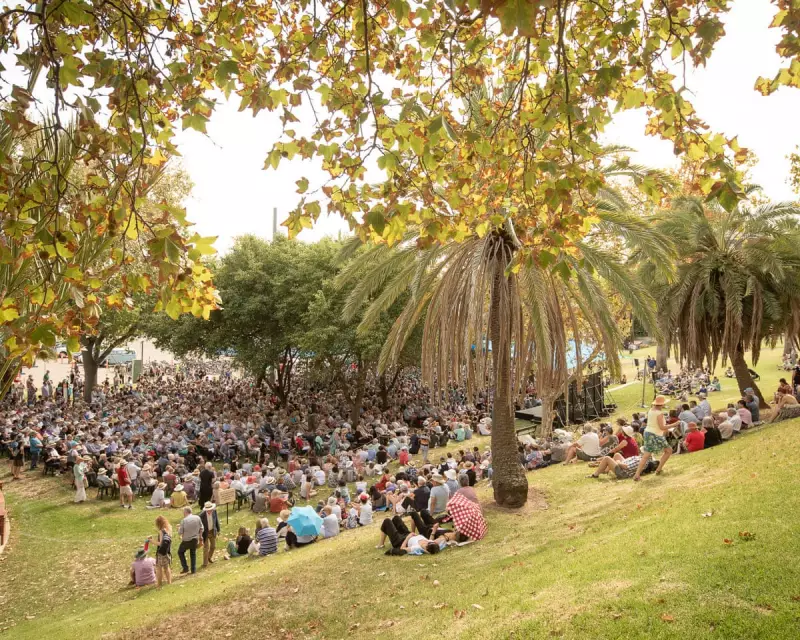
The dramatic sequence began when Adelaide Writers' Week, a free literary festival held annually in Adelaide's Pioneer Women's Memorial Garden since 1960, was abruptly cancelled following contentious board intervention. The cancellation came after Palestinian-Australian author and academic Randa Abdel-Fattah was disinvited in the wake of the Bondi terror attack, prompting more than 100 authors to withdraw from the event in protest.
"It's gone from a big disappointment and heartbreak to a really strong community response very quickly," says Jennifer Mills, Adelaide author and current chair of the Australian Society of Authors, who is among the organisers of Constellations. "I'm really proud of what we've managed to pull together in such a short timeframe."

Constellations: A Community-Led Literary Revolution
Described by Mills as an "umbrella festival", Constellations represents a fundamentally different approach to literary programming. Running from 28 February to 5 March – the same week originally scheduled for Adelaide Writers' Week – the festival will feature dozens of free events organised by what Mills calls "a loose coalition" of writers, publishers, and booksellers, supported by not-for-profit organisation Writers SA.
The festival's innovative structure invites bookshops, libraries, schools, and community venues across Adelaide and South Australia to propose and host their own literary events under the Constellations banner. Participants can either organise events independently or submit proposals to the festival committee, which will assist with securing authors, venues, and logistical support.
Financial Realities and Artistic Freedom
With guidelines stipulating that all events should be free to attend or operate on a donation basis, Constellations organisers are acutely aware of the financial implications for participating authors. "Festivals represent a really significant income for writers who, on average, earn $18,200 a year," Mills explains. "We're not in this for the money, but appearance fees are very meaningful to writers, as are book sales and professional connections."
Any profits generated will be prioritised for paying writers speaking fees, addressing what Mills identifies as a crucial gap left by Adelaide Writers' Week's cancellation. "We're not going to be able to replace all that income for authors, but we're going to do what we can," she acknowledges.
Municipal Support Without Government Funding
In a significant show of local support, Adelaide City Council convened a special meeting on 19 January, voting to provide council-owned buildings and public spaces as venues for Constellations events. However, the council rejected a proposal to provide up to $250,000 in funding – a decision that aligns with the festival's independent ethos.
"We're not receiving or asking for any funding from any level of government," Mills clarifies, emphasising the community-driven nature of the initiative. The festival instead relies on donations, volunteer efforts, and what Mills describes as "a massive community effort" involving numerous individuals contributing energy and expertise.
A Different Approach to Content and Controversy
Perhaps most significantly, Constellations represents a deliberate departure from the circumstances that led to Adelaide Writers' Week's cancellation. Festival guidelines explicitly state that participants should "create a safe space that celebrates writers and reading" while supporting "open discourse and the sharing of ideas."

When asked about how the festival would handle potentially controversial speakers, Mills is unequivocal: "Look, we're not going to be going back through people's social media. I don't have the time or energy for that ... we're not in the business of policing what artists can and can't say, and we don't think festivals should be either."
Volunteer Spirit and Future Hopes
The festival's rapid organisation has been made possible by what organisers describe as an outpouring of community support. "A lot of people are already putting their hands up to volunteer, which is really fantastic to see," Mills reports, noting that volunteers are needed for tasks ranging from venue setup to ushering and transportation.
Despite the considerable effort involved, Mills maintains that Constellations is not intended as a permanent replacement for Adelaide Writers' Week. "We really want to see AWW come back next year, better and stronger and with more artist engagement in the governance structure," she says. "We're not trying to replace it, or shut it down. It's a lot of work for a lot of people at the moment, but I think it's going to be a really positive thing for the city to see."
As major events are set to be announced next week, Constellations represents not just a literary festival, but a statement about community resilience, artistic freedom, and the enduring importance of cultural gatherings in urban life. "It's not just the writers who miss out," Mills reflects on Adelaide Writers' Week's absence. "It's the audiences, it's the booksellers, it's the city as a whole that misses out." With Constellations, Adelaide's literary community has taken matters into its own hands to ensure that doesn't happen.