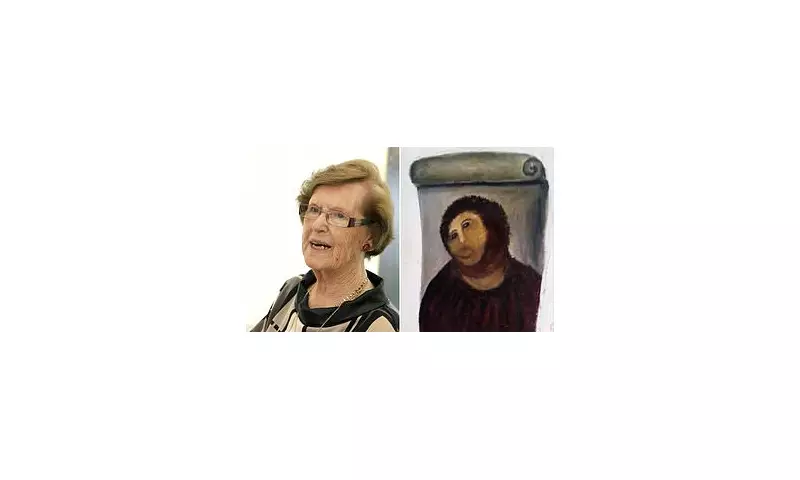
Cecilia Gimenez, the Spanish woman whose well-intentioned but disastrous attempt to restore a century-old fresco of Jesus Christ captivated the world and spawned the infamous 'Monkey Christ' meme, has died at the age of 94.
The Restoration That Shocked the World
In August 2012, Gimenez, a devout parishioner and amateur art enthusiast, took it upon herself to restore the 'Ecce Homo' fresco by Elías García Martínez in the Sanctuary of Our Lady of Mercy church in Borja, northeastern Spain. The original work, painted around 1930, depicted Christ crowned with thorns but had deteriorated significantly due to humidity, causing the paint to flake.
With what the local mayor later described as 'the best intentions', Gimenez attempted to repaint the delicate facial features. The result, however, was a transformation so drastic it became an instant global sensation. The face of Jesus was rendered unrecognisable, with many observers comparing the new visage to a hairy monkey or a hedgehog. The image was swiftly dubbed 'Monkey Christ' or 'Potato Jesus' online.

From Mockery to Unlikely Tourist Boom
The botched restoration sparked international outrage and became a fixture of late-night television comedy. It ignited fierce debates about amateur interventions in cultural heritage preservation. Gimenez initially faced intense criticism and publicly apologised for her work.
Yet, in an unexpected twist, the notoriety turned the once-quiet town of Borja into a major tourist destination. Thousands flocked to see the bizarre artwork, generating significant revenue. Money from ticket sales was directed to the Sanctuary of Mercy Foundation, funding improvements to the church's facilities and supporting its elderly residents, including Gimenez herself in her final years.
A Complex Legacy
Borja's mayor, Eduardo Arilla, confirmed Gimenez's death in a Facebook post, paying tribute to her as a 'great lover of painting from a young age' and acknowledging her generosity and dedication to the church. Her legacy is uniquely twofold: she is remembered both for a catastrophic artistic endeavour and for the unprecedented economic and cultural attention it brought to her community.
The fresco, originally a modest devotional piece, was catapulted to global fame. Gimenez's act, born from pious motivation, ultimately raised profound questions about art, restoration, and the unpredictable nature of viral fame in the digital age. She is survived by one son.