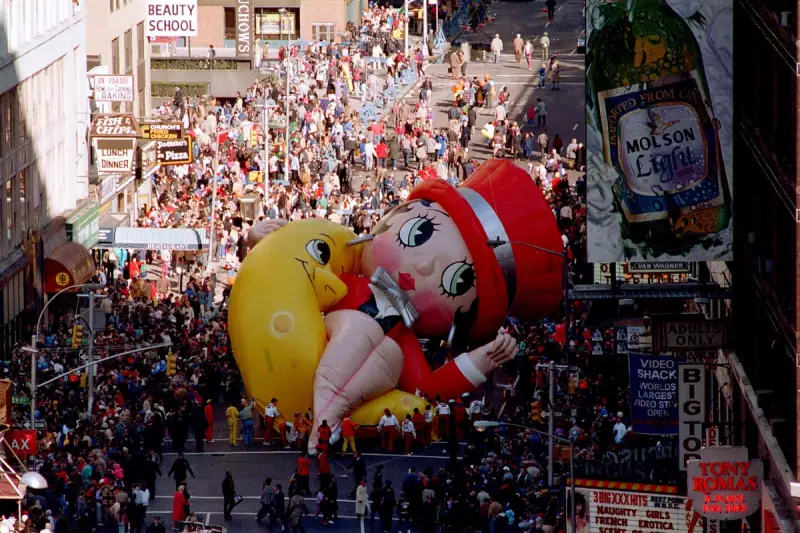
As the clock strikes midnight on New Year's Day 2026, a significant tranche of 20th-century culture will be liberated from copyright restrictions. The iconic cartoon flapper Betty Boop and the beloved comic strip character Blondie Boopadoop will lead the charge into the public domain in the United States, joining the ranks of Mickey Mouse and Winnie the Pooh.
Cartoon Icons and Comic Strip Legends Become Public Property
This annual shift occurs when works reach the end of their 95-year copyright term under US law. From 1 January 2026, creators will be free to use, adapt, and repurpose these classic characters without seeking permission or making payments. According to Jennifer Jenkins, a law professor and director of Duke's Center for the Study of the Public Domain, this year's batch is notable for its "sheer familiarity."
Betty Boop's entry is based on her first appearance in the 1930 animated short "Dizzy Dishes," where she debuted as a curious hybrid—a recognisable flapper with poodle ears and a black nose. Owned by Fleischer Studios and released by Paramount, her character was partly inspired by singer Helen Kane, the "Boop-Oop-a-Doop Girl." Jenkins humorously suggests the early, canine-like Betty offers rich ground for new stories, quipping, "She was bitten by a radioactive dog."

However, a crucial legal distinction remains. While the specific early cartoons enter the public domain, the Betty Boop trademark held by Fleischer Productions stays firmly in place, meaning commercial merchandise will still be controlled.
Similarly, the first appearances of Chic Young's newspaper comic strip "Blondie" from 1930 will become public. The strip, which follows the carefree flapper Blondie Boopadoop and her beau Dagwood Bumstead, evolved into a long-running domestic comedy and remains in syndication today.
A Trio of Iconic Detectives and Literary Heavyweights
The public domain expansion in 2026 isn't limited to cartoons. It opens the vaults to three legendary fictional detectives who first solved cases in 1930:
- The teenage sleuth Nancy Drew, introduced in "The Secret of the Old Clock" by Mildred Benson (writing as Carolyn Keene).
- The hard-boiled private eye Sam Spade, from the full novel version of Dashiell Hammett's "The Maltese Falcon."
- The elderly amateur detective Miss Marple, making her first appearance in Agatha Christie's "Murder at the Vicarage."
Significant literature also joins the list, including William Faulkner's "As I Lay Dying" and the iconic "Elson Basic Readers" that introduced generations to reading through Dick and Jane.
Golden Age Films and Timeless Tunes
The year 2026 will see a host of classic films become freely usable. The Marx Brothers' seminal comedy "Animal Crackers" enters, alongside German masterpiece "The Blue Angel" (starring Marlene Dietrich) and two early Oscar winners for Best Picture: "All Quiet on the Western Front" and "Cimarron." This marks the beginning of a decade that will see a flood of Golden Age Hollywood titles become public property.
The soundtrack to this cultural release features some of the Great American Songbook's most enduring standards. Four George and Ira Gershwin classics—including "Embraceable You" and "I Got Rhythm"—will enter the public domain, along with "Georgia on My Mind" and "Dream a Little Dream of Me."
Since 2019, each new year has brought a fresh bounty of cultural works into the public realm, ending a 20-year drought caused by copyright extensions. For advocates of a robust public domain, 1 January 2026 will be another day of celebration, unlocking a vibrant slice of Depression-era creativity for the world to reinterpret and reinvent.