Historic Scrapbook of Unseen Wartime Photographs Comes to Light
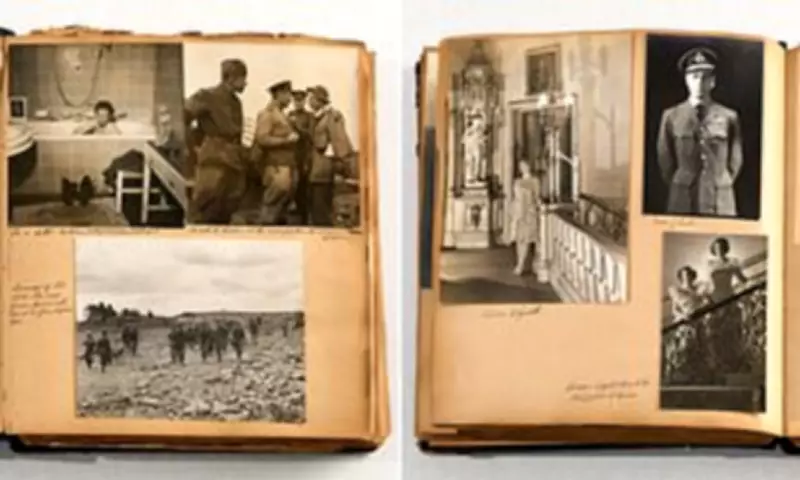
A remarkable cache of previously unseen photographs documenting the wartime era by celebrated twentieth-century photographers Sir Cecil Beaton and Lee Miller has been revealed for the very first time. The extraordinary collection, known as the 'Miller-Beaton scrapbook,' contains numerous unpublished images that provide a fascinating visual record of the Second World War's conclusion and its immediate aftermath.
The Compiler and His Legacy
The album was meticulously compiled by Roland Haupt, who worked as a darkroom printer at British Vogue during the 1940s. Haupt developed photographs for both Beaton and Miller during their assignments for the prestigious magazine. This incredible book, which spans from 1943 to 1949, also includes some of Haupt's own photographic work, creating a unique personal archive of this pivotal historical period.
The artefact has never been publicly displayed before and contains some of the earliest known prints of Miller's most iconic wartime images. This includes an alternative version of her infamous photograph taken in Nazi leader Adolf Hitler's bathtub within his vacant Munich apartment in April 1945. Many of these images were printed by Haupt himself in Vogue's London darkroom, with the album representing his personal collection of favorite prints from those he was commissioned to process.

From Private Hands to Public Institution
Following Haupt's death in the early 1960s, the scrapbook remained with his family until photography dealer Michael Hoppen acquired it directly from his relatives. This acquisition has now brought this astonishing wartime photographic record into a public collection for the first time through the University of Oxford's Bodleian Libraries.
Haupt wrote in the book's introduction: 'This is the story of my favourite photographer Lee Miller - Vogue war correspondent - she followed the American army from the beaches of Normandy, five days after D-Day, up to the final entry into Berlin and after that she continued her journey visiting countries that had been occupied, having many exciting experiences - these are a few of the beautiful pictures she sent back.'
Lee Miller's Wartime Journey
Miller began her career as a fashion model in her native New York during the 1920s before moving to Paris, where she established herself as both a fashion and fine art photographer. When the Blitz commenced in 1940, Miller was living in London, which marked the beginning of her photojournalism career. She soon became Vogue's official war photographer, embedded with the US Army as an accredited war correspondent.
At the start of her tenure with the magazine, Miller printed her own photographs in the darkroom. However, in 1940, she trained her assistant Roland Haupt to take over this responsibility, freeing her to focus on her frontline photographic work. The newly uncovered album contains several pivotal moments from her wartime photography career, including additional shots of Hitler's Munich residence.
Iconic Images and Their Stories
The infamous bathtub photograph, actually taken by fellow photographer David E. Scherman, has been described by Miller's son Antony Penrose as his mother 'sticking two fingers up at Hitler.' Penrose revealed that Miller had walked across Hitler's bathroom floor with her boots still covered with the filth from Dachau concentration camp, which she had just visited to document.
Other significant images in the collection show American troops destroying Hitler's Alpine retreat in Berchtesgaden (known as the Eagle's Nest), German soldiers surrendering to the US Army, and the liberation of both Dachau and Buchenwald concentration camps. The album also contains an arresting photograph of two captured and beaten SS Nazi paramilitary officers.
Cultural Figures and Wartime Society
Miller's varied artistic connections are evident in a photograph showing her, wearing her army uniform, in conversation with painter Pablo Picasso in his Paris studio. The scrapbook also contains remarkable portraits of numerous cultural figures from the era, including German actress Marlene Dietrich, American dancer Fred Astaire, and British playwright Noel Coward.

Cecil Beaton's Wartime Contributions
Roland Haupt also worked as an assistant to Cecil Beaton, who collaborated with Miller at Vogue and Harper's Bazaar during the same period. The British photographer was stationed in North Africa during the 1940s, where Allied forces eventually achieved victory. The scrapbook contains Beaton's photographs showcasing the surreal, stark beauty of the desert landscape alongside images documenting the physical extremes endured by military personnel.
Alongside these Saharan frontier photographs, the album includes several shots Beaton took in London, featuring subjects ranging from theatre sets to newspaper cuttings. Additional notable images include photographs of the late Queen Elizabeth II when she was still Princess Elizabeth with her sister Princess Margaret, Wallis Simpson (the Duchess of Windsor), and Sarah Churchill (second daughter of former Prime Minister Winston Churchill).
Historical Significance and Future Access
Richard Ovenden, head of the Bodleian Library, and Helen Hamlyn, director of Oxford University Libraries, stated: 'The acquisition by the Bodleian marks an important step in preserving this unique album for scholarship and in enriching our understanding of the role of photography in documenting the Second World War. Much research remains to be undertaken on the album, which is a highly unusual record of the relationship between a darkroom technician and two great photographers.'
Now part of the Bodleian's permanent collection, the scrapbook will undergo careful conservation and cataloging procedures before being made available to researchers. The library has additionally indicated that it 'plans to explore opportunities for public display and wider access' to this historically significant photographic archive.