Anne Imhof: Navigating the Turbulent Waters of Contemporary Art and Fashion
"Revolutions don't happen inside a museum," declares Anne Imhof, one of Germany's most significant contemporary artists, during a revealing interview about her evolving career. This statement encapsulates her complex relationship with the art establishment as she transitions from avant-garde darling to a figure facing increasing scrutiny for her commercial collaborations.
From Venice Triumph to New York Criticism
Just a few years ago, Imhof represented the pinnacle of contemporary art success. Her 2017 Venice Biennale installation Faust, which transformed the German pavilion into what critics described as a "catwalk show from hell," earned her the prestigious Golden Lion award. The work featured menacing Dobermans, performers in black sportswear, and a raised glass floor that created an atmosphere of surveillance and unease, perfectly capturing the cultural anxieties of the 2010s.
However, her 2025 New York exhibition at the Park Avenue Armory, titled Doom: House of Hope, received markedly different treatment from critics. Several prominent publications described the work as "a bad Balenciaga ad" and questioned whether the artist had become too comfortable with commercial partnerships. When confronted with this criticism during our interview, Imhof's initially enthusiastic demeanor shifted noticeably, with her responses becoming shorter and more guarded.

The Fashion Collaboration Controversy
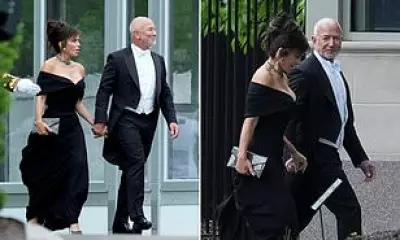
Imhof's increasing involvement with the fashion industry has become a particular point of contention. After years serving as a muse for Balenciaga designer Demna, she created a lockdown-era show for Burberry in 2020 and later staged a "battle of the bands" performance sponsored by Nike. More recently, she appeared with her partner in a Valentino advertising campaign, prompting German newspaper Welt to suggest her career was becoming "a cautionary tale of what happens to artists who get into bed with the fashion industry."
When asked about the "Balenciaga ad" comparison, Imhof becomes visibly defensive. "Do you want to say I'm dated as an artist?" she challenges, before explaining her perspective on artistic responsibility. "I think I have a responsibility towards my work and the people I work with, not to make political statements just to make pieces more desirable."
New Directions and Philosophical Foundations
Imhof's latest exhibition, Fun ist ein Stahlbad (Fun is a Steel Bath) at Porto's Serralves Foundation, represents a deliberate shift in her artistic approach. Unlike her previous immersive installations, this show features deliberately uninviting sculptures, including an empty black metal swimming pool and a grid of crowd-control barriers. The title references philosopher Theodor Adorno, whose ideas about art's role in exposing societal damage have clearly influenced Imhof's current thinking.
"The viewer confronts a sculpture that already embodies control rather than being guided through it," Imhof explains. "The body becomes a site of thought, movement a form of intelligence – that is inherently political." This represents a significant evolution from her earlier work, which was often celebrated for its Instagram-friendly aesthetics and immersive qualities.
Defending Artistic Autonomy in Commercial Spaces
Perhaps the most revealing aspect of our conversation concerns Imhof's defense of her commercial collaborations. "When I talk about mimicry," she says, referring to her strategy of working within powerful systems, "I mean a strategy for staying alert within powerful systems, including social structures, as a means of survival."
She rejects the notion that fashion and art represent separate moral universes, arguing instead that both involve "labour, production, and circulation that aren't fully transparent." For Imhof, the crucial question becomes one of agency: "who makes decisions, who is involved, and whether the work can maintain its critical position while moving through these systems."

Music as Another Frontier
Adding another dimension to her multifaceted career, Imhof has recently released her debut album WYWG (short for "Wish You Were Gay"). The music, which she describes as containing songs mostly written in the early 2000s, shows influences ranging from Genesis P-Orridge to Black Flag, with some tracks recalling the Velvet Underground's austere catchiness.
"I think there is a need or a desire of mine to make my work accessible," she says of her musical venture. "I don't think the future of art lies in making it into some elite bubble." This statement seems particularly significant given the criticism she has faced for allegedly compromising her artistic integrity through commercial partnerships.
Looking Forward with Philosophical Rigor
Throughout our conversation, Imhof returns repeatedly to questions of artistic autonomy and political engagement. While acknowledging that "art isn't political – on the contrary," she maintains that her goal is "not to politicise my art, or to justify it in that context, to monetise or profit on that."
Her reference to Adorno's philosophy in her Porto exhibition suggests a deepening engagement with theoretical frameworks that question art's relationship to society. Yet she remains committed to creating work that engages with popular culture, even as she navigates the complex terrain between critical art and commercial collaboration.
As Imhof continues to evolve as an artist, her journey raises fundamental questions about contemporary art's relationship with commerce, criticism, and cultural relevance. Whether viewed as a cautionary tale or a model of artistic adaptation, her career trajectory offers a compelling case study in how artists navigate the shifting expectations of the art world and broader culture.