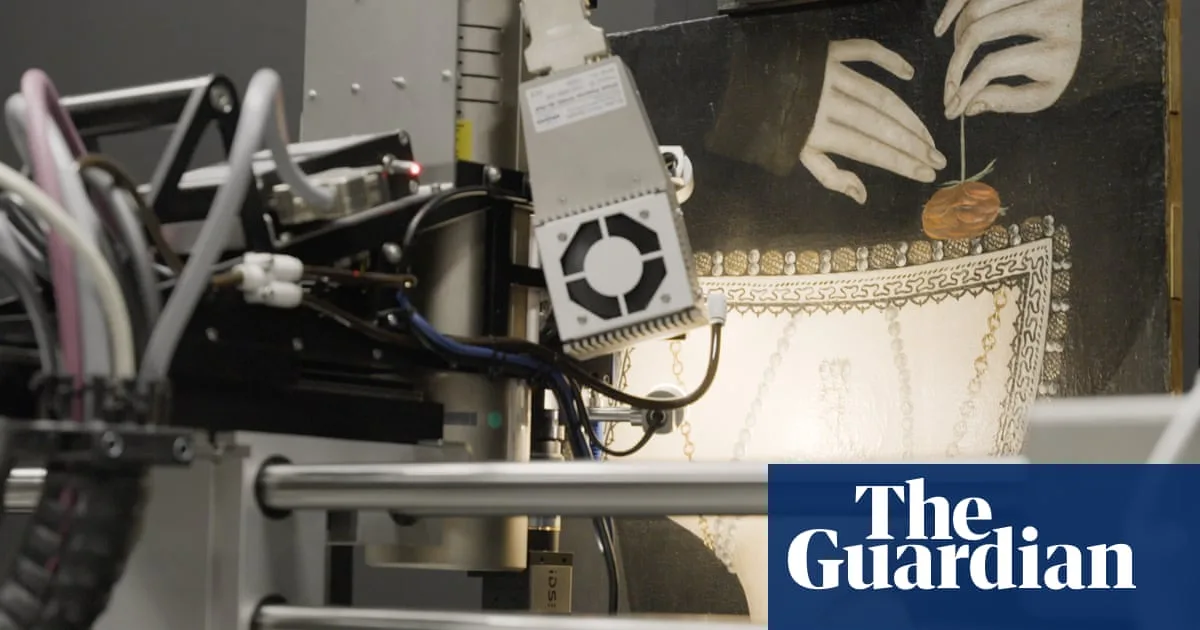
Scientific analysis of a portrait of Anne Boleyn at Hever Castle in Kent has revealed a hidden underdrawing that historians believe was intended to counter claims that Henry VIII's second wife was a witch with a sixth finger. The portrait, known as the Hever 'Rose' portrait, dates from around 1583, during the reign of Anne's daughter, Elizabeth I.
Infrared technology uncovered a discarded triangular form beneath Anne's right arm, suggesting the artist initially used a standard 'B' pattern before altering the composition to show Anne holding a red rose with her hands and fingers clearly visible. Dr Owen Emmerson, assistant curator at Hever, said the portrait acts as a 'visual rebuttal' to hostile rumours and a defence of Anne and Elizabeth's legitimacy.
The myth of a sixth finger was propagated by Nicholas Sanders, a 16th-century Catholic activist who sought to undermine Elizabeth I. Helene Harrison, author of a 2025 book on Anne Boleyn, had previously suggested the portrait's prominent hand display was a response to such claims. She described the new evidence as 'amazing'.
Kate McCaffrey, another assistant curator at Hever, said the analysis provides 'very strong evidence of a visual rebuttal of a very specific myth of witchcraft and six fingers'. She added that the portrait likely reflects Elizabeth's attempt to reclaim her mother's legitimacy during a period of political and religious anxiety.
The oak panel was dated using dendrochronology by Ian Tyers, while infrared reflectography and material analysis were conducted at the Hamilton Kerr Institute, University of Cambridge. The portrait will feature in an upcoming exhibition at Hever titled 'Capturing a Queen: The Image of Anne Boleyn'.