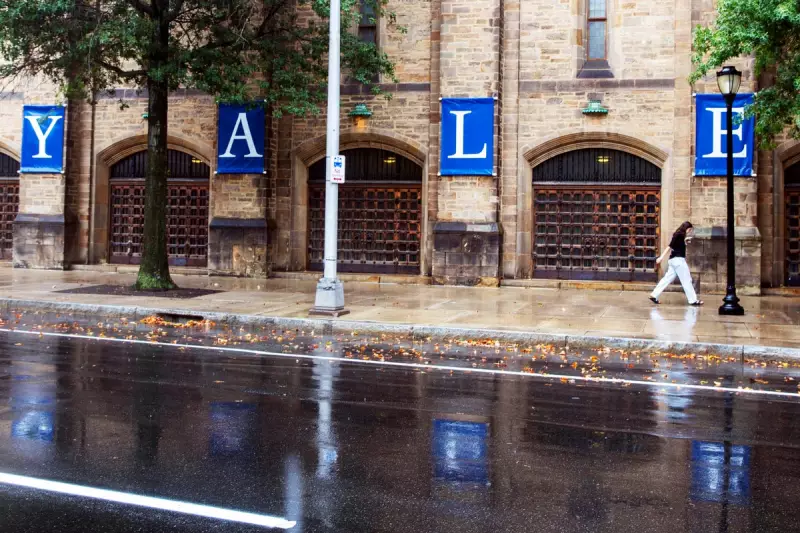
Yale University has announced a significant expansion of its financial aid programme, eliminating tuition and associated costs for all new undergraduate students from families with annual incomes below $100,000. This transformative policy change, which takes effect for students entering in the autumn of 2026, represents a major commitment to socioeconomic diversity at one of the world's most prestigious institutions.
Expanding Access to Elite Education
The Ivy League institution revealed on Tuesday that it will completely waive tuition and other mandatory expenses for incoming undergraduates whose families earn less than $100,000 per year. This substantial increase from the previous threshold of $75,000 means that nearly half of all American households with school-aged children will now qualify for comprehensive financial support at Yale.
Progressive Financial Support Structure
Under the newly implemented framework, Yale has established a tiered system of financial assistance:

- Complete cost waiver for families with annual incomes under $100,000
- Tuition-only waiver for families earning between $100,000 and $200,000 annually
- Enhanced support packages for all qualifying students regardless of background
Provost Scott Strobel emphasised the strategic importance of this initiative, stating: "This strategic investment is central to our mission to educate exceptional students from all backgrounds. The benefits are evident as these talented students enrich the Yale campus and go on to serve their communities after graduation."
Joining a National Trend
Yale becomes the latest elite university to implement substantial financial aid reforms, following similar moves by peer institutions including Harvard University, Princeton University, the University of Pennsylvania, and the Massachusetts Institute of Technology. Last autumn, Harvard introduced a nearly identical policy while Penn established free tuition for families earning less than $200,000 per year.
Addressing Diversity Challenges
This wave of financial aid expansion comes in response to changing admissions landscapes, particularly following the Supreme Court's rejection of affirmative action in college admissions. Many selective institutions have increasingly focused on socioeconomic diversity as a means to maintain campus diversity while complying with legal requirements.
While many universities reported record numbers of low-income students enrolling last autumn, several institutions simultaneously experienced decreases in the proportion of Black and Latino students. Yale's enhanced financial aid programme represents a concerted effort to address these complex diversity challenges through economic accessibility.
Broader Implications for Higher Education
The policy shift at Yale reflects growing recognition within elite higher education that financial barriers represent significant obstacles to creating truly diverse academic communities. By substantially expanding financial support, Yale aims to attract exceptional students who might otherwise be excluded from consideration due to economic circumstances.
This development signals a potential turning point in how prestigious universities approach admissions and financial aid, with increasing emphasis on removing economic barriers rather than simply providing partial assistance. The long-term impact on campus diversity, student experiences, and educational outcomes will be closely monitored by educators and policymakers nationwide.