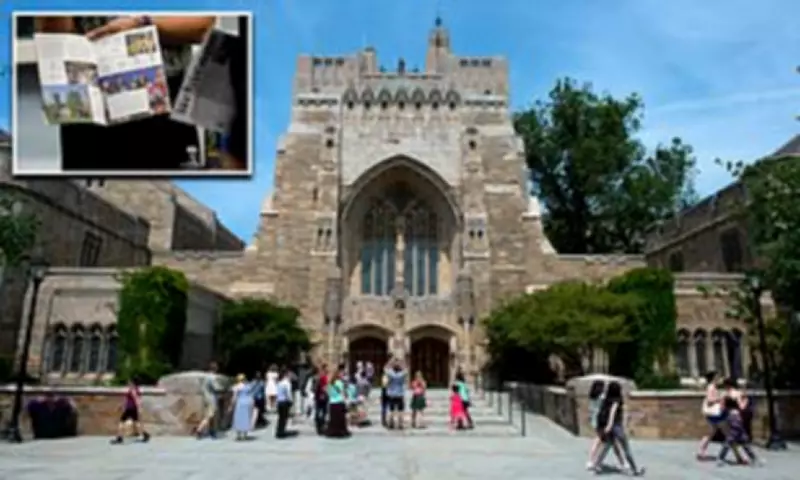
In a landmark move for higher education accessibility, Yale College has unveiled transformative financial aid policies that will significantly reduce costs for middle and upper-middle income families. The prestigious Ivy League institution will eliminate tuition entirely for undergraduate students hailing from households with annual incomes below $200,000.
A Bold Step Towards Affordability
This generous initiative, set to commence in the 2026-27 academic year starting next fall, represents a substantial investment in making a Yale education more attainable. University Provost Scott A. Strobel emphasised the broader benefits of this approach, stating that 'these talented students enrich the Yale campus and go on to serve their communities after graduation.'
Remarkably, this policy shift means that students from over eighty percent of American households would now qualify for tuition-free education at one of the nation's most elite universities. The impact is particularly profound for families earning less than $100,000 annually, who will receive comprehensive coverage of all attendance expenses including housing, meal plans, and textbooks alongside tuition.

Comprehensive Cost Coverage
Currently, the total estimated cost for an undergraduate student at Yale stands at approximately $98,000 annually. This substantial figure breaks down into several components:
- Tuition fees constituting the majority at $72,500
- A supplementary student activity fee of $185
- Housing and food expenses totalling $21,600
- Books, course materials, and personal expenses estimated at $3,700
For nearly half of American families, these daunting costs will now be completely covered under Yale's new financial aid framework. Jeremiah Quinlan, Dean of Undergraduate Admissions and Financial Aid, reinforced the institution's commitment, declaring that 'cost will never be a barrier between promising students and a Yale College education.'
Student Advocacy and Institutional Response
The policy change follows sustained advocacy from student leaders who have campaigned throughout the past year for tuition-free options for middle and upper-middle class families. Micah Draper, a member of the class of 2028, acknowledged the progress while calling for further improvements, including the reinstatement of two previously discontinued summer grants.
Draper highlighted the institution's substantial resources, noting 'With an endowment of over $40 billion, I don't see why we can't have robust financial aid policies.' Indeed, Yale's endowment was valued at $44.1 billion last June, positioning it among America's most financially secure educational institutions.
Implementation and Eligibility Considerations
While the new policies promise significant relief for many families, university officials have clarified certain limitations. The financial aid offers are primarily designed for households with typical asset portfolios. Dean Quinlan explained to the Wall Street Journal that families with 'outsized asset portfolios' might receive different financial aid determinations even with qualifying income levels.
Kari DiFonzo, Yale's Director of Undergraduate Financial Aid, brings personal perspective to these changes as a former first-generation, low-income college student. He acknowledged the often overwhelming nature of navigating university economic assistance, adding that 'these new policies will make it easier for more families to quickly understand their cost.'
Context and Comparison Within Higher Education
Yale's initiative aligns with a growing trend among elite American universities to address middle-class affordability concerns. Several peer institutions have implemented similar measures:
- Harvard University now provides tuition-free education for undergraduates from families earning below $100,000 annually
- Harvard also waives tuition for students from households making $200,000 or less
- The Massachusetts Institute of Technology has offered tuition-free education for undergraduates with families earning under $200,000 since last year
This collective movement represents a significant shift in how prestigious institutions approach financial accessibility beyond traditional need-based aid models.

Current Student Impact and Future Expansion
Among Yale's current undergraduate population of 6,740 students, more than 1,000 already attend tuition-free under previous policies. Fifty-six percent of the student body qualifies for need-based financial assistance. The new measures build upon existing support for lower-income families, who have not been required to pay tuition for incomes below $150,000 since last year.
Concurrently with these financial changes, Yale College has been gradually expanding its undergraduate intake, adding approximately 100 students annually since last fall as part of broader enrollment growth initiatives.
The university's comprehensive approach to affordability, combining expanded financial aid with increased enrollment opportunities, signals a renewed commitment to diversifying access to elite higher education while maintaining academic excellence.