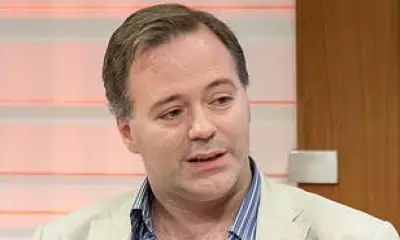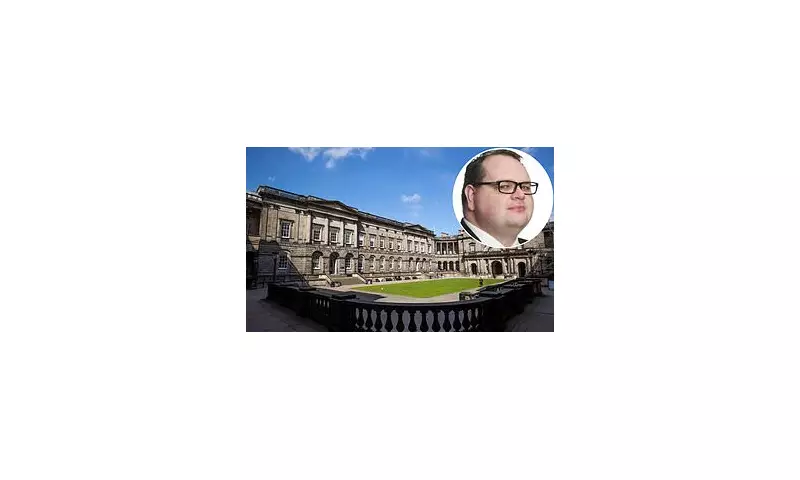
A senior academic leader has issued a stark warning that the financial foundations of Scotland's prestigious university sector are crumbling. Professor Sir Peter Mathieson, Principal of the University of Edinburgh, has declared the current funding model for Scottish higher education is 'not sustainable' and places institutions in 'danger'.
The Unsustainable Cost of 'Free' Tuition
Professor Mathieson's warning comes from the front lines. His own university has faced industrial action over a stringent programme of £140 million in efficiency savings. The financial strain is sector-wide, highlighted by the severe difficulties at the University of Dundee, which have thrown its future into question. The core issue is the Scottish Government's policy of covering tuition fees for Scottish-domiciled undergraduates, with the annual fee capped at £1,820.
This creates a stark disparity. While a student from Balerno pays nothing, one from Blackpool is charged £9,790 per year, and an international student from Beijing would face a fee of £38,900 for the same four-year Structural Engineering with Architecture programme at Edinburgh. Consequently, Scottish students are the least financially valuable to universities but the most expensive for the Scottish exchequer, leading to caps on domestic student numbers.

This results in a hard truth: the 'free' tuition policy forces universities to reject qualified Scottish applicants in favour of wealthier overseas students who cross-subsidise the system. 'Robbing Peter of his place to get paid by Paul’s parents,' as the argument goes, cannot continue without risking institutional collapse.
Proposals for a New Funding Equilibrium
While not advocating a full return to upfront tuition fees, Professor Mathieson has proposed alternative solutions to inject financial stability. His primary suggestion is a 'graduate repayment' scheme, where graduates contribute to the cost of their education once they are in work and earning above a certain threshold. Alternatively, universities could charge upfront fees for students from wealthier families.
Another controversial but pragmatic idea is to maintain free tuition for degrees in STEM subjects and other fields with clear market value, while introducing fees for humanities and social sciences. This would reflect the differing market value of the qualifications, though with provisions to support low-income students to study these culturally vital disciplines.
The principal argues that taxpayer money must be spent more wisely, suggesting that an overemphasis on university degrees has come at the expense of further education colleges that provide practical skills. 'We are not a country capable of free universal provision of everything that might be wished for,' he contends, emphasising the need for fiscal prudence and moral justice in allocating limited public resources.
The Political Challenge and a Long-Overdue Reckoning
Implementing such changes would be politically fraught, challenging a deep-seated 'culture of free' in Scotland. Professor Mathieson's intervention echoes the brave but career-damaging speech made by former Scottish Labour leader Johann Lamont over a decade ago, in which she questioned the sustainability of universal, taxpayer-funded benefits.
The sector itself must also accept that being a university is 'not a licence to generate cash from overseas students'. Over-reliance on international fees has contributed to migration concerns and must be balanced against national interests. The ultimate compromise, as in all government policy, lies in balancing academic excellence with affordability, confronting the limits of state resources, and recognising the role of individual responsibility.
The warning from Edinburgh's principal is a clarion call for an honest, long-delayed conversation about the future of Scottish higher education, before financial realities force a much more damaging resolution.