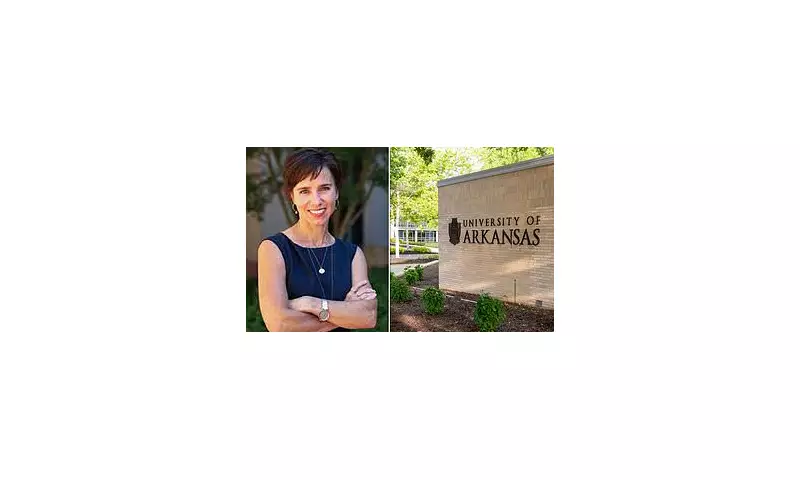
The University of Arkansas has abruptly withdrawn a job offer to a prominent legal scholar set to become the new dean of its law school, following intense political pressure over her views on transgender rights.
A Swift Appointment and a Sudden Reversal
On 9 January, university officials announced the appointment of Emily Suski, a professor and associate dean at the University of South Carolina Joseph F. Rice School of Law, as the next dean of the University of Arkansas School of Law. The appointment was due to take effect on 1 July.
Provost Indrajeet Chaubey praised Suski's "extensive experience in leadership roles" and her work establishing medical-legal partnerships to support children's health. Documents revealed she had been offered a five-year contract with annual compensation of $350,000.

However, by Wednesday, the university performed a dramatic U-turn. In a statement, officials said they had "decided to go a different direction" after receiving "feedback from key external stakeholders," while maintaining they held Professor Suski in "high regard."
Political Pressure and a Clash of Ideologies
The catalyst for the reversal quickly emerged. Arkansas State Senator Bart Hester, a Republican, told local media he had lobbied the university to rescind the offer. His primary objection centred on Suski's support for transgender athletes.
Hester cited Suski's signature on an amicus brief supporting a lawsuit challenging West Virginia's law that bans transgender girls from participating on girls' sports teams. He argued this stance was inconsistent with Arkansas law, which was the first US state to ban gender-affirming care for minors.
Hester also expressed concern over Suski's support for President Joe Biden's nomination of Ketanji Brown Jackson to the Supreme Court, noting she was among 850 professors who signed a letter urging confirmation. "It's scary that this person might have had influence on the next generation," Hester stated.
Allegations of Unconstitutional Interference and a Chilling Effect
The move sparked immediate backlash from others who saw it as political overreach. Democratic State Representative Nicole Clowney claimed several legislators had threatened to withhold university funding if Suski's hiring proceeded.
"I am still gathering information, but based on what I've learned so far, it seems clear that what happened is a horrifying, unprecedented and absolutely unconstitutional abuse of state power," Clowney posted on Facebook.
She argued the decision was based solely on differing political views, not professional competence, and would "irrevocably undermine morale" and "frighten anyone considering moving to Arkansas to work at the U of A."
Hester denied directly threatening funding but suggested the legislature would be less inclined to support a university acting against "the will of the people of Arkansas."
The decision drew support from Governor Sarah Huckabee Sanders, whose spokesman called it a "commonsense decision," and from the state's Attorney General, Tim Griffin.
The American Civil Liberties Union of Arkansas condemned the action. Executive Director Holly Dickson said it "sends a chilling message to every faculty member: stay silent or risk your career" and damages the law school's credibility as an institution of "independent thought."
Fallout and an Uncertain Future
In a statement, Emily Suski said she was "disappointed and hurt" and had been informed the decision was "not in any way a reflection of my qualifications" but the "result of influence from external individuals."
Her expertise lies in education law, health, poverty, and Title IX. She will not now succeed Cynthia Nance, whose term as dean ends on 30 June, after which she returns to a faculty role. The search for a new dean must begin again, leaving the prestigious position in limbo and raising profound questions about political influence and academic freedom in American higher education.