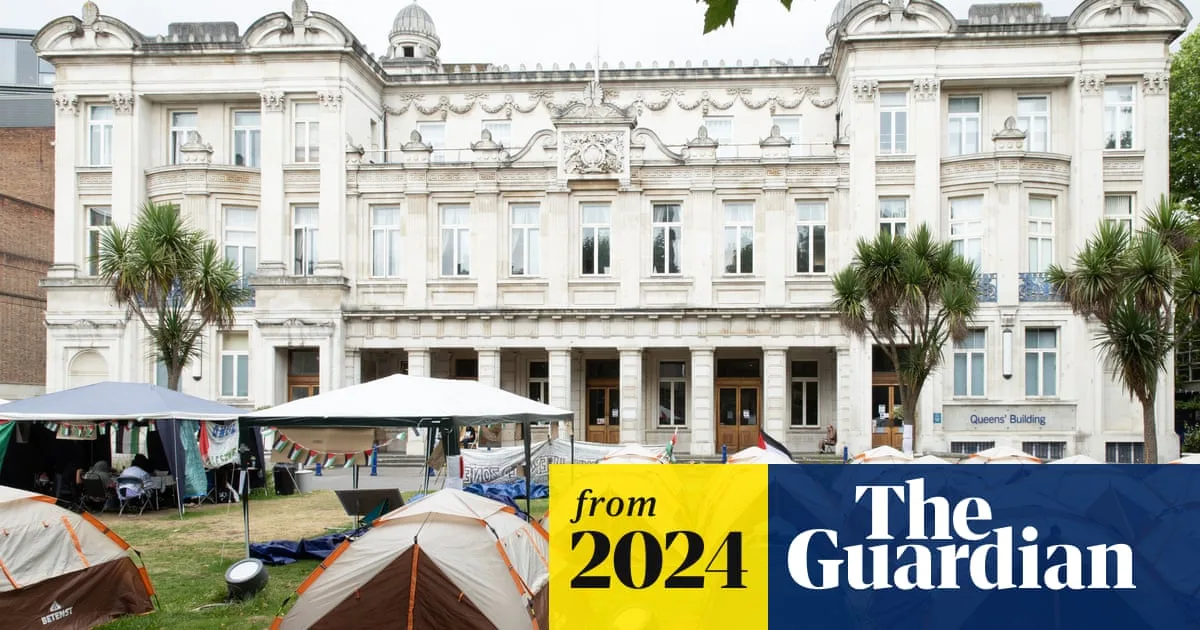
Student encampments protesting the war in Gaza at UK universities are winding down over the summer, with only about a dozen of the 36 sites that existed at the end of May still active. The decline is attributed to hostile university administrations, waning numbers, and legal actions to evict protesters.
At several remaining sites, including Bristol, London, and Birmingham, protesters are fighting legal battles to stay. The University of Nottingham recently appealed to the courts for a possession order to clear its encampment of about 10 tents. The High Court is set to rule next week on orders sought by Nottingham and Birmingham universities, while a county court declined Bristol University's request, scheduling further hearings later this month.
At Queen Mary University of London (QMUL), around 20 students have been camping since May. A Palestinian student involved said, "I think it's disgusting that they decided to take us to court before even making an effort to talk things out with us." The protesters demand QMUL sever ties with companies like Barclays and BAE Systems. A university spokesperson cited health and safety risks as the reason for legal action, stating, "The serious nature of the health and safety risks has given us no option but to take legal action."
Some universities have shown sympathy. Reading University agreed to cut financial ties with Barclays in response to protests. Vice-Chancellor Prof Robert Van de Noort praised protesters for acting "respectfully and calmly" but urged them to go home, saying, "Having the right to protest is important, but there comes a point when our students should be getting on with something else."
The encampments have also caused controversy at the School of Oriental and African Studies (Soas), where union members voted no confidence in Vice-Chancellor Prof Adam Habib after he was accused of insulting a student at the encampment. A Soas spokesperson defended the university's approach, stating they are proud of working with the community to maintain dialogue.