Students are frequently described as grappling with a 'never-ending cost-of-living crisis', often forced into debt, relying on parental support, living at home, or taking on part-time work just to afford basic necessities. This raises a compelling question: are contemporary undergraduates genuinely facing harsher financial pressures than their predecessors, or is the pursuit of higher education inherently fraught with economic challenges?
A Historical Price Investigation
To explore this, the Daily Mail conducted a detailed analysis, comparing the cost of everyday essentials in the 1970s against today's prices. The investigation spans items from a dozen eggs and a loaf of bread to a pint of beer, shedding light on how inflation has reshaped student budgets over the decades.
University Funding Then and Now
In the 1970s, university funding faced significant cuts, with grants averaging around £380 before rising to £1,430 by 1980. These reductions led many school leavers to skip sixth form, fearing they wouldn't secure a university place. Fast forward to today, and students contend with mounting debt and maintenance loans that often fall short of actual living costs.

A recent survey by the National Union of Students (NUS) reveals that more than half of parents are stepping in, providing at least £200 monthly to help cover their children's expenses. This parental intervention highlights the ongoing financial strain within the student community.
Essential Item Price Comparisons
Do today's prices diverge dramatically from those of the 1970s? Consider a loaf of bread: 56 years ago, it cost 10p, which inflation-adjusts to £1.28—merely 12p less than the current £1.40 price tag. Meanwhile, a kettle for a university flat in the Disco Era would have set you back a staggering £101.76 in today's money, compared to just £20 in 2026.
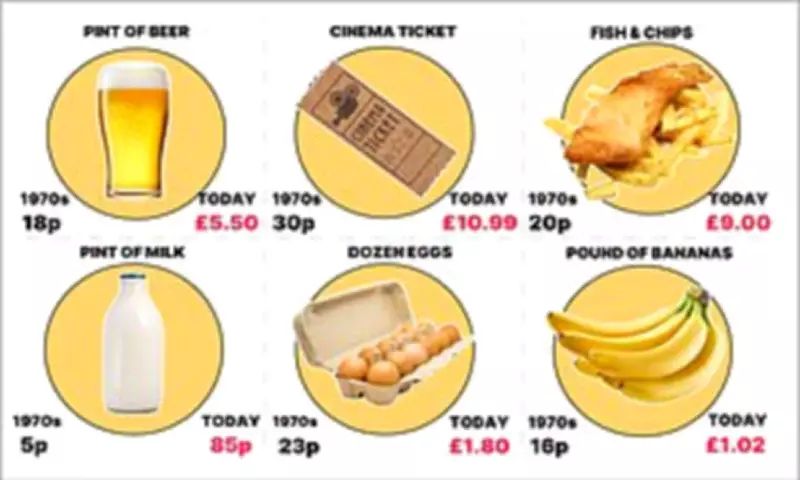
Here is a breakdown of key product costs from the 1970s versus today, based on averages from sources like Age UK and the Office for National Statistics:
- A pint of beer: 1970s: 18p (inflation-adjusted: £2.30); Now: £5.50
- A loaf of bread: 1970s: 9-10p (inflation-adjusted: £1.28); Now: £1.40
- A tin of Heinz beans: 1970s: 7-8p (inflation-adjusted: £1.02); Now: £1.45
- Cornflakes: 1970s: 11p (inflation-adjusted: £1.41); Now: £2.50
- Eggs: 1970s: 23p (inflation-adjusted: £2.94); Now: £1.80
- Bananas: 1970s: 16p (inflation-adjusted: £2.05); Now: £1.02
- A notebook: 1970s: 2p to 10p (inflation-adjusted: £1.28); Now: Up to £15
- Fish and chips: 1970s: 20p (inflation-adjusted: £2.56); Now: £9
- TV licence: 1970s: £12 (inflation-adjusted: £153.60); Now: £174.50
- A cinema ticket: 1970s: 30p to 50p (inflation-adjusted: £6.40); Now: £10.99
- A kettle: 1970s: £7.95 (inflation-adjusted: £101.76); Now: £20
- 20 cigarettes: 1970s: 26p (inflation-adjusted: £3.33); Now: £14.75
- Pint of milk: 1970s: 5p (inflation-adjusted: £0.64); Now: 85p
- Margarine: 1970s: 23p (inflation-adjusted: £2.94); Now: £3.50
- Shampoo: 1970s: 20p to 50p (inflation-adjusted: £6.40); Now: Up to £25
- Coffee: 1970s: 32p (inflation-adjusted: £4.10); Now: £4.99
- 24" TV: 1970s: £67 (inflation-adjusted: £857.57); Now: £99 to £200+
Weighing the Evidence
The data reveals a mixed picture. While some items, like bread and beans, show modest inflation-adjusted increases, others, such as beer, fish and chips, and notebooks, have seen substantial price hikes. Conversely, products like eggs, bananas, and kettles are cheaper today when adjusted for inflation.
This analysis prompts a deeper reflection: do students today truly have it worse, or are the struggles simply different? With rising debt and parental support becoming more common, the financial landscape has evolved, but historical comparisons suggest that affordability challenges have long been part of the student experience.

Ultimately, the decision rests with you. Explore these price comparisons further to gauge whether modern students face unprecedented hardship or if the cost of education has always demanded sacrifice.