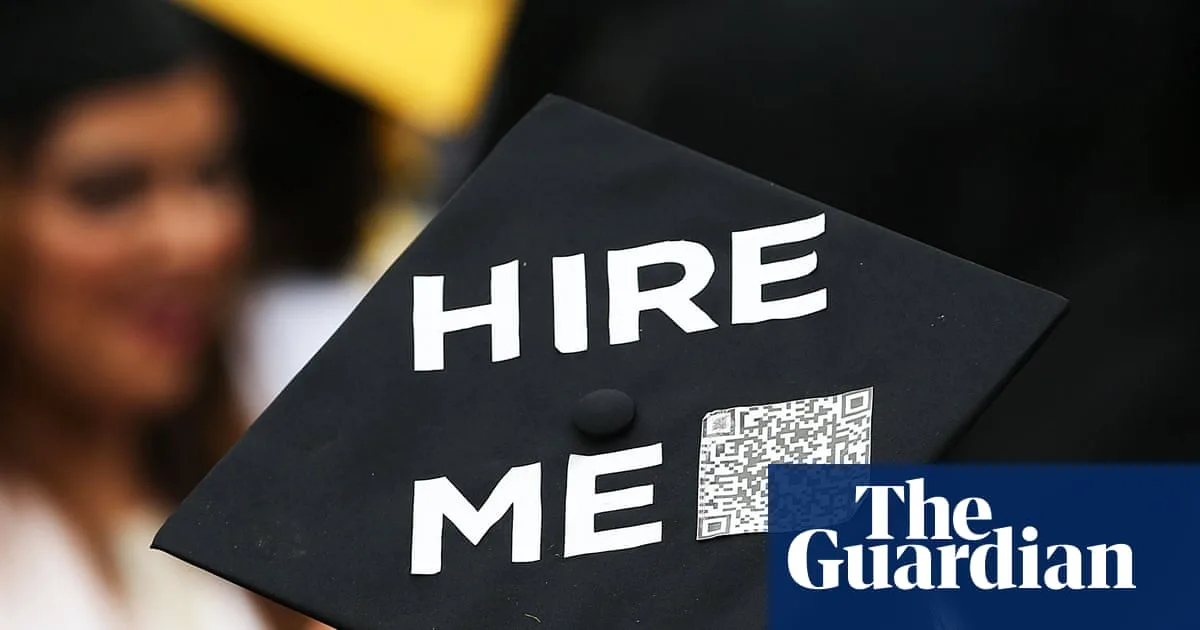
American college graduates are encountering the most challenging entry-level job market since the pandemic, with the underemployment rate reaching 42.5% – its highest level since 2020. Many are struggling to secure roles as opportunities tighten, artificial intelligence reshapes recruitment, and employers demand more experience.
Among those affected is Gillian Frost, a 22-year-old majoring in quantitative economics and government at Smith College in Massachusetts. Since September, she has applied to more than 90 positions, only to be ignored by nearly a quarter of employers and rejected automatically by around 55%. Despite receiving about ten interviews, Frost said the lack of communication from companies has left her feeling helpless, particularly as she prepares for a market simultaneously affected by AI, a tight labour market and US involvement in war.
For Jeff Kubat, a 31-year-old accounting master's student in Minnesota, the problems are compounded by employers' unwillingness to train candidates. After spending eight years in accounts payable at a construction company, Kubat returned to university for further study. He has found that even in small-town Minnesota, employers are extremely specific about their requirements, and there is a 'dearth of willingness' to develop workers with transferable skills. He is now considering lowering his salary expectations, observing that hiring has fallen to levels seen during the Covid-19 pandemic, with openings emerging only from staff departures rather than genuine growth.

Other graduates point to the growing role of automated hiring systems. A 25-year-old New York University graduate in media and communications said many entry-level roles demand three to five years of experience, which is impossible for new graduates. She described having to tailor each résumé with keywords to satisfy algorithmic screening, calling it 'aggravating and exhausting' but a necessity. Another graduate, Anna Waldron, a 22-year-old from Portland studying political science and journalism at Loyola University Chicago, said she applies via platforms like LinkedIn and Handshake, as well as directly on company websites, but has yet to see results.
The cumulative effect, graduates say, is a dispiriting search in which persistence does not necessarily pay off. As Frost noted, no one knows how to prepare for the 'unique conflux of events' – a tight job market, AI disruption and global conflict – that defines the current moment.