Trump Administration Intervenes in New York Mascot Dispute
The Trump administration has launched a significant intervention to preserve Native American mascots in New York schools, directly challenging state regulations that mandated their removal. This federal-state clash has ignited fierce debate about cultural representation, civil rights, and educational policy.
Federal Challenge to State Ban
At the heart of the controversy is the Connetquot Central School District on Long Island, which changed its mascot from the Thunderbirds to the T-Birds following New York's 2022 prohibition on Native American imagery without tribal consent. The state education department implemented this rule to eliminate what it deemed demeaning or offensive depictions of Indigenous people.
However, the Department of Education's Office for Civil Rights has now accused the district of violating Title VI of the Civil Rights Act. Federal officials argue the name change occurred "solely because it originates from Native American symbolism" while mascots referencing other ethnic groups remain permitted.

"We expect the District to do the right thing and comply with our resolution agreement to voluntarily resolve its civil rights violation and restore the Thunderbirds' rightful name," stated the OCR in a January 22 release. "The Trump Administration will not relent in ensuring that every community is treated equally under the law."
Divergent Perspectives on Cultural Representation
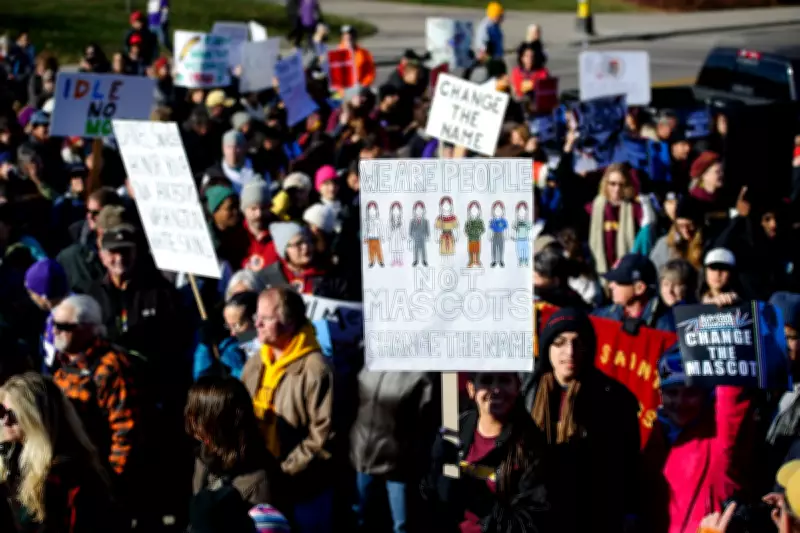
The administration's position has drawn sharply contrasting reactions from Native American communities and activists. John Kane, a Mohawk activist who supported the original state ban, described the federal intervention as "absurd" to The Hill.
"Part of what McMahon and Trump are suggesting is that somehow they are discriminating against Native people by removing the mascots—when we're the ones who called for it," Kane remarked. He dismissed the distinction between "Thunderbirds" and "T-Birds" as inconsequential, calling it "a mockery."
Conversely, the Native American Guardians Association supports the administration's stance. President Becky Clayton-Anderson questioned why Native American representation should be singled out when other cultural references remain unchallenged.
"When we look at other cultures, we can talk about even the Fighting Irish or the Patriots... we would never ask them to remove their representation," she told The Hill. "So NAGA's stance is that you're not going to discriminate against one group, unless you are going to discriminate against all groups..."
Broader Context and Historical Precedents
This confrontation represents the latest chapter in a longstanding national debate about Native American imagery in educational and sporting contexts. Between 2022 and 2023, approximately 16 schools altered their mascots according to the National Congress of American Indians, reflecting a broader trend across multiple states.
Several professional sports teams have undergone similar rebranding, including the Washington Commanders and Cleveland Guardians, both abandoning Native American-themed names amid criticism. President Trump has publicly called for these teams to revert to their former identities.
The administration's mascot preservation effort aligns with its broader policy agenda against what it terms "woke" initiatives. In March, President Trump signed an executive order titled "Restoring Truth and Sanity to American History," aiming to eliminate "partisan ideology" from federal institutions and combat "historical revision."
Public Opinion and Generational Divides
Polling data reveals significant divisions in public perception of Native American mascots. A 2021 Nielsen survey highlighted a substantial generational gap: while 62% of people aged 35-54 viewed such mascots as "honoring," only 30% of those aged 16-20 shared this perspective.
Interestingly, a 2016 Washington Post poll found that 90% of Native Americans were not offended by the Washington Redskins name, which was nevertheless changed to the Commanders in 2022. These conflicting statistics underscore the complexity of the issue and the difficulty in achieving consensus.

Ongoing Legal and Administrative Battles
The Education Department has referred the Massapequa School District case to the Department of Justice for potential Title VI violation investigation, indicating the dispute's escalation. State education department spokesman JP O'Hare accused federal authorities of making a "mockery" of civil rights law, questioning whose rights were violated by the Thunderbirds to T-Birds change.
President Trump previously expressed support for maintaining traditional mascots, writing on social media: "Forcing them to change the name, after all of these years, is ridiculous and, in actuality, an affront to our great Indian population."
As this cultural and legal confrontation continues, it raises fundamental questions about representation, discrimination, and who has the authority to determine what constitutes respectful treatment of Native American imagery in public institutions.