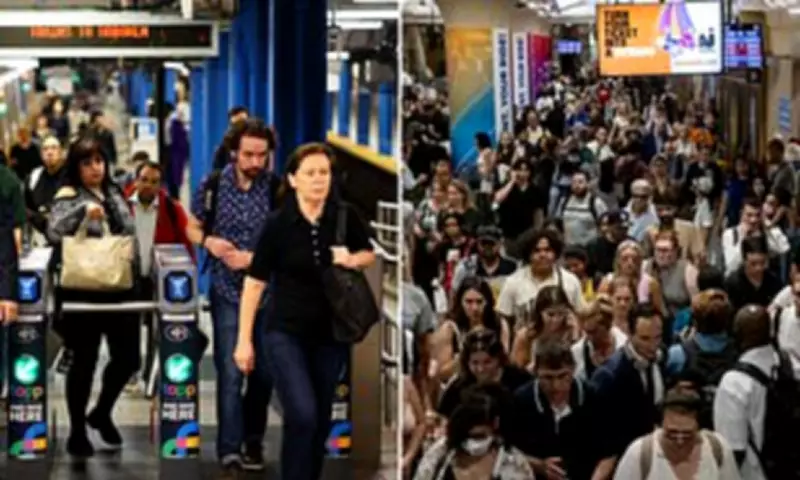
Millions of residents in New Jersey and New York have been instructed to work from home this summer as the FIFA World Cup is expected to drive train ticket prices to unprecedented levels. As the nation prepares for the 2026 FIFA World Cup, leaders in New York and New Jersey have urged commuters to work from home on specific days in June and July to avoid skyrocketing prices and limited train tickets.
Limited Tickets and Price Hikes
NJ Transit has warned commuters that only 40,000 round-trip tickets from Penn Station in Manhattan to MetLife Stadium in East Rutherford, New Jersey, will be sold per game. This limited availability is set to increase the price of a round-trip to approximately $150, up from the usual $12.90. The pricing hike was approved by Governor Mikie Sherrill, as the event is projected to cost NJ Transit around $48 million, according to NBC 4.
Official Advice for Commuters
Port Authority executive director Kathryn Garcia stated at a press conference on Friday: 'If you are not attending one of the events, please, if possible, work from home because the city will be incredibly congested and so will New Jersey.' She also discouraged the use of ride-sharing services and encouraged public transit use, noting that 'the back and forth is just going to be tough' as the area prepares for thousands of visitors descending on MetLife Stadium, which will host eight matches from June 13 to July 19.

Match Schedule and Traffic Concerns
The tournament kicks off with Brazil versus Morocco on June 13 at 6pm ET, followed by France versus Senegal on June 16 at 3pm ET, and Norway versus Senegal on June 22 at 8pm ET. Subsequent matches include Ecuador versus Germany on June 25 at 4pm ET, Panama versus England on June 27 at 5pm ET, and further rounds on June 30 at 5pm ET, July 5 at 4pm ET, and the World Cup Final on July 19 at 3pm ET. Foot traffic is expected to surge around Penn Station, as NJ Transit's section will be restricted to World Cup ticket holders for four hours before and three hours after each match.
Parking and Access Restrictions
The NJ Transit website warns: 'To reduce congestion and ensure safety, there will be no general spectator parking on stadium property on matchdays. Access to the stadium will be limited to official transportation options, and no private bus or charter operators will provide matchday service. Fans are strongly encouraged to plan ahead, purchase transportation in advance and follow official guidance.'
Financial Impact and FIFA's Role
FIFA is projected to generate around $11 billion from the summer event, according to government officials. State officials have called on FIFA to contribute to the substantial costs incurred by New Jersey and New York, but the soccer organization has stated that such contributions have never been part of the agreement with host cities, as reported by NBC 4.
Free Fan Fest Events Announced
New York City Mayor Zohran Mamdani, who has been critical of FIFA's ticket pricing, announced a series of free World Cup events across the city's five boroughs. Mamdani had previously condemned the costly ticket prices and pushed for more affordable options. In December, he stated: 'A $60 "supporter ticket" for 1.6 percent of seats isn't enough. Not when FIFA just set the highest ticket prices in World Cup history.' Ticket prices for group stage games ranged from $140 to $2,735, with final seats reaching around $10,000 and four tickets costing over $2 million.
Mamdani and Governor Kathy Hochul announced five free official FIFA Fan Fest events. Mamdani remarked that while the events were initially not intended to be free, 'the world's game should belong to the world.' The events include daily programming at Manhattan's Rockefeller Center from July 6 to July 19, Queens' USTA Billie Jean King National Tennis Center from June 11 to June 27, Staten Island University Hospital Community Park from June 29 to July 2, Bronx Terminal Market on June 13 and June 14, and Brooklyn Bridge Park from June 13 to July 19. Mamdani added: 'Every fan should be able to watch the greatest tournament on Earth without having to dip into their savings.'