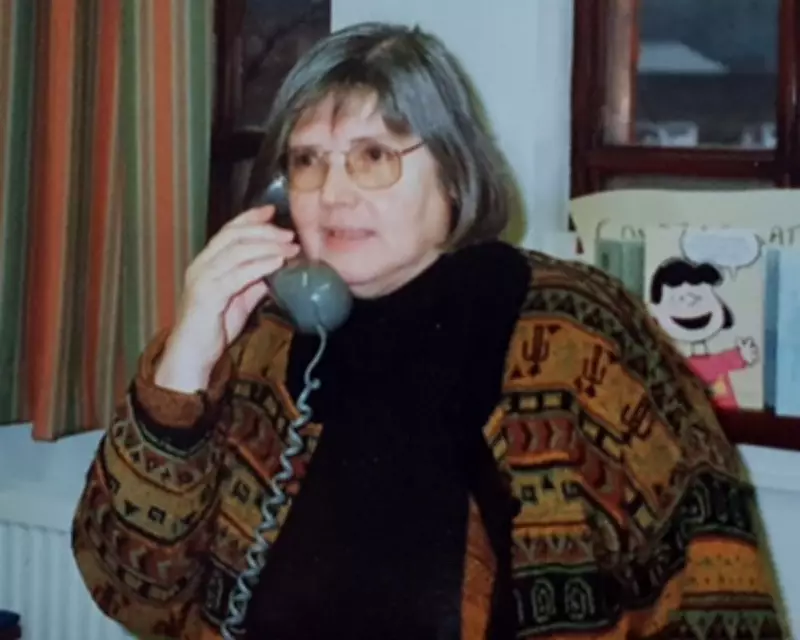
Ruth Lesser, a highly respected figure in the field of aphasia and speech therapy, has died at the age of 95. Her contributions to academic speech therapy organizations and her pioneering work in language processing assessment have left a lasting impact.
Academic Career at Newcastle University
Lesser joined the sub-department of speech at the University of Newcastle in the late 1970s, at a time when it was under threat of closure. She took charge, becoming senior lecturer in 1982, head of the department of speech in 1983, and professor of speech and language pathology in 1991. Under her leadership, the department gained national and international recognition. Upon her retirement in 1995, she was made professor emeritus and continued academic work for another decade.
Publications and Professional Roles
She authored more than 30 books, including Linguistics and Aphasia (1993) with Lesley Milroy, as well as numerous chapters, papers, and reviews. Lesser played a key role in academic speech therapy organizations, serving as vice-president of the International Association of Logopaedics and Phoniatrics from 1992 to 1995. In 1987, she was a founder of the British Aphasiology Society. The PALPA assessment, which she developed in 1992 with colleagues to measure language processing skills in people with aphasia, remains in use today and exemplifies her drive to make speech therapy an empirical science.

Early Life and Education
Born in Bradford, Ruth was the third of four children of Annie (née Bottomley) and Joseph Hird, both teachers from mining and weaving backgrounds. As a 16-year-old pupil at Grange grammar school, she demonstrated resourcefulness when sent on a trip to France. Despite her parents mistakenly putting her on a train to Edinburgh, she eventually arrived at her intended destination. Rather than accepting a place at Somerville College, Oxford, which would have required an extra year at school, she chose to study English at University College London. There she met her future husband, David Lesser, a fellow student. She decided to help him achieve as good a degree as possible so that he could support their future family in an era of pay inequality.
Personal Life and Later Years
They married in 1952 and moved to a smallholding near Nottingham, where David worked for the textile manufacturer Viyella. They had five children and moved to Felixstowe when David joined Fisons. In Suffolk, they were active in Liberal party politics, continuing this involvement when they relocated to Bristol and then to Newcastle. Ruth earned a degree in speech therapy at Newcastle University in 1971 and a PhD in psychology in 1976. She initially worked as a speech therapist for the local health authority at the Royal Victoria Infirmary before joining Newcastle University as a lecturer in the school of education in 1978. From the late 1970s, Ruth was limited by rheumatoid arthritis, but in retirement she continued to enjoy traveling, often with family members. She joined the local U3A and was active on social media. David died in 1985. Ruth is survived by her children, Tristram, Giles, Juliet, Tammy, and the author; 10 grandchildren; and 19 great-grandchildren.