UK Schools Face Knife Crisis as Children as Young as 7 Bring Blades to Class
Knife Crisis in UK Schools: Pupils as Young as 7 Carry Blades

Shocking Figures Expose UK's Knife Crisis in Schools

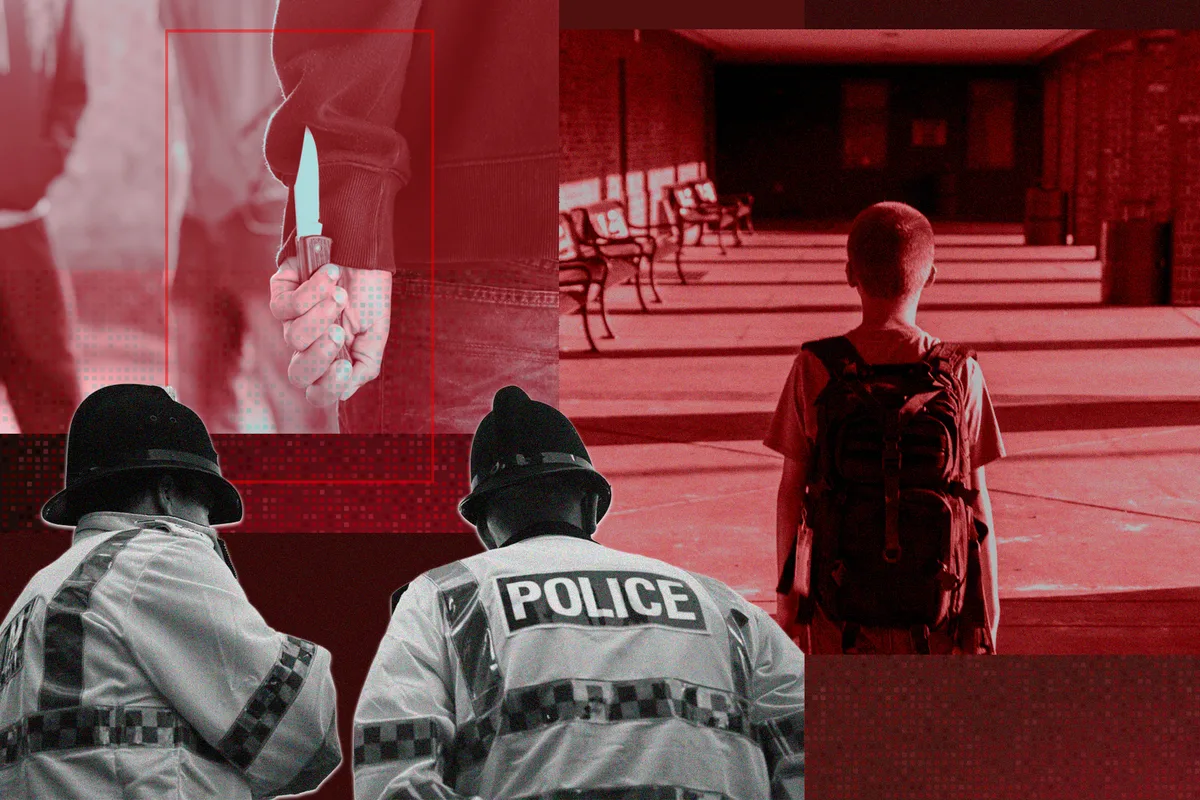
Pupils as young as seven years old have been caught taking blades to class, according to alarming new data that reveals the true scale of the United Kingdom's knife crisis within educational institutions. As the government establishes a national centre aimed at combating knife crime, exclusive figures obtained by The Independent show police recorded more than 700 knife-related offences at schools across England and Wales during the previous year.

Disturbing Incidents and Rising Numbers

The statistics, gathered from 26 of 42 police forces that responded to data requests, documented 748 recorded offences involving knives or sharp objects in schools during 2025. This represents a slight increase from 735 incidents in 2024, though it marks a decrease from the five-year peak of 879 offences recorded in 2022. Among these offences were 118 incidents of violence and 29 threats made with blades.

Perhaps most shockingly, twelve police forces provided information on suspect ages, revealing that 33 individuals were aged ten or younger. West Mercia Police recorded a knife possession offence involving a seven-year-old boy, while West Yorkshire Police documented two offences where eight-year-old boys were suspects for possessing knives or sharp instruments.

Wide Pickt banner — collaborative shopping lists app for Telegram, phone mockup with grocery list

A Mother's Tragic Perspective and Urgent Calls for Action

Caroline Willgoose, whose son Harvey was stabbed through the heart with a hunting knife at All Saints Catholic High School in 2025, described the figures as deeply concerning but unsurprising. "It's an emergency, and there needs to be change," Mrs. Willgoose stated emphatically. "I've received hundreds of messages from parents reporting that someone in their school, mostly primary schools, has taken a knife in and nothing's been done about it, or they've simply been transferred to another institution."

The grieving mother has renewed her call for metal detectors, commonly known as "knife arches," to be installed in schools to protect children. She accused some educational institutions of being "more worried about reputation and not scaring the parents" rather than implementing necessary safety measures.

Recent Violent Episodes Highlight the Problem

The statistics follow several high-profile incidents that have shocked communities across the nation. In February, a 13-year-old boy allegedly stabbed two boys in the neck at a secondary school in Brent. Just one month later, a 15-year-old reportedly attacked a girl with a knife at a school near Norwich. These episodes occurred despite an overall nine percent decrease in knife crime nationally during the year ending September 2025, according to Office for National Statistics figures.

Political Responses and Educational Challenges

Conservative shadow ministers advocate for a "zero tolerance" approach, suggesting that children excluded after being caught with knives should be removed from mainstream education. Chris Philp, Tory shadow home secretary, pledged to introduce stronger measures against violence and poor behaviour in schools if his party assumes government, including transferring pupils excluded for carrying knives to "more appropriate settings" such as Pupil Referral Units.

However, educational leaders emphasize the limitations facing schools. Pepe Di'Iasio, general secretary of the Association of School and College Leaders, acknowledged several "appalling and tragic events involving knives" but stressed that tackling the crisis requires "a more concerted, society-wide response." He cautioned that "there is a limit to what schools can be expected to do" and noted that extending on-site security would demand significant investment from already strained budgets.

Teacher Experiences and Safety Concerns

Educators themselves report feeling increasingly threatened within school environments. Vincent Uzomah, a former physics teacher who was stabbed in the stomach by a pupil at a Bradford school ten years ago, ultimately left the profession following the traumatic incident. Now a lecturer at the University of Salford, Mr. Uzomah reflected: "These incidents don't happen in every school, and they don't occur regularly, but when they do happen, they have an enormous impact. For me, it nearly ended my life, and I still get a shudder when I see a new case reported in the news."

Pickt after-article banner — collaborative shopping lists app with family illustration

He emphasized the need for "a greater focus on the attitude from home, the attitude in society" while implementing measures "to safeguard the lives of teachers and other students to ensure that it is a safe environment for all."

Government Initiatives and School Security Measures

In response to growing concerns, the government opened a new National Knife Crime Centre in London, where policing experts will target offenders who sell and distribute weapons online through what is often called the "grey market." Following the attacks at Kingsbury High School in Brent, education minister Georgia Gould indicated that ministers would examine security protocols in educational institutions.

Department for Education guidance recommends various security measures including CCTV surveillance, intrusion detection systems, strong perimeter fencing, and adequate security lighting to help prevent attacks. Some schools have already taken proactive steps; the Dudley Academies Trust in the West Midlands invested approximately £50,000 on knife arches for its four secondary schools. Chief executive Jo Higgins warned that schools failing to implement appropriate measures remain "vulnerable" to violence.

The Path Forward

As the debate continues between calls for stricter security measures and recognition of schools' practical limitations, the figures paint a troubling picture of weapons entering educational spaces. The Labour Party has established a target of reducing knife crime by fifty percent, while the current government spokesperson highlighted that "nearly 60,000 knives have already been taken off Britain's streets" as part of their mission to halve knife crime within a decade.

The crisis demands a multifaceted approach that addresses not only security within school premises but also the broader societal factors contributing to youth violence. With children as young as seven now involved in knife-related incidents at school, the urgency for effective solutions has never been greater.