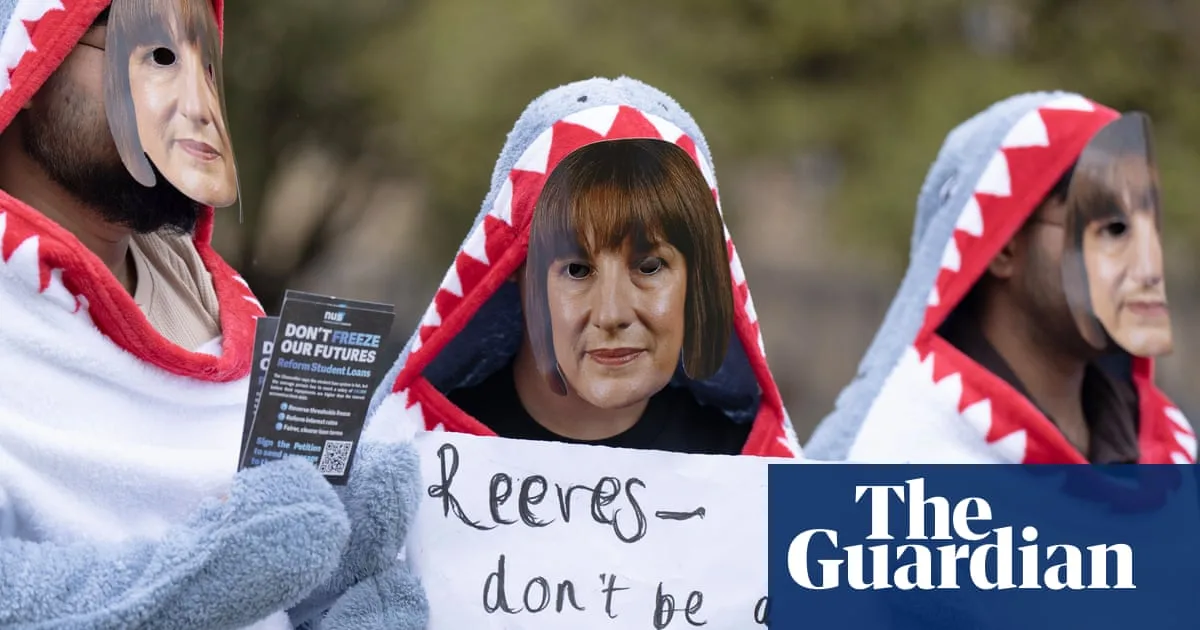
Protesters dressed as sharks and wearing Rachel Reeves face masks gathered outside the Houses of Parliament on Wednesday to express anger over changes to student loans and ballooning debt. The demonstration by members of the National Union of Students (NUS) characterised the chancellor as a loan shark after changes to university loan repayments.
Reeves announced in November’s budget that from April 2027 the salary at which graduates on plan 2 loans begin to repay their student debt will be frozen at £29,385 for three years, meaning many graduates will have to pay more. This group started courses in England and Wales between September 2012 and July 2023.
The NUS sharks sang and posed for pictures while relaying the size of their debts to reporters and urging the government: “Don’t freeze our futures.” Alex Stanley, vice-president for higher education at the NUS, said: “I borrowed £50,000 to go to Exeter and study politics. I graduated in 2023 and I’m already into £62,000 of debt [due to interest rates attached to the loan]. The problem is that you are 17 or 18 when you sign this contract. What we were told, the reassurances we were given when plan 2 started, no longer exist.”
The NUS is calling on the government to reverse the thresholds freeze and reduce interest rates. Amira Campbell, NUS president, said: “The current student loan system is freezing our future. How can graduates be trying to build our professional lives all while the chancellor is acting like a loan shark taking hundreds a month off our pay cheques while the interest grows even faster? As students we struggled with rent and bills, our parents stepping in to fill that void. And now as graduates we are living pay cheque to pay cheque while paying back hundreds, if not thousands, while the loans still grow. The chancellor should be looking for solutions rather than doubling down on a broken system.”
A government spokesperson said: “We recognise the concerns among borrowers. The fiscal situation this government inherited means we’ve had to make tough choices. Threshold freezes are part of the hard but fair decisions needed to protect taxpayers and students now and for future generations of students and workers. The student finance system is heavily subsidised by government, and lower-earning graduates will always be protected, with any outstanding loan and interest cancelled at the end of the repayment term.”