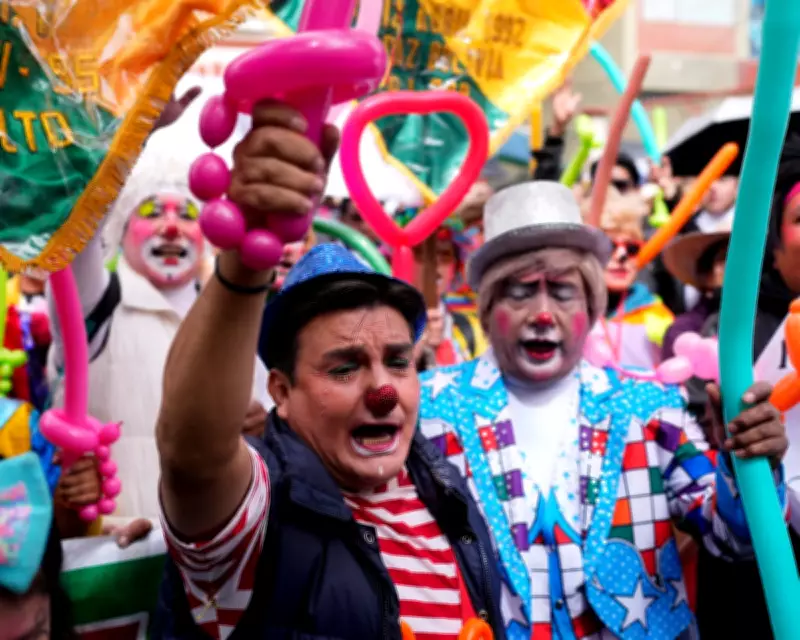
Bolivian Clowns Stage Colourful Protest Against School Party Ban
Dozens of clowns, adorned in full face paint and their iconic red noses, marched through the streets of La Paz on Monday to voice their opposition to a government decree that restricts extracurricular activities in schools. The new mandate, issued in February by the administration of recently elected President Rodrigo Paz, requires schools to comply with 200 days of lessons annually, effectively prohibiting them from hosting special events during regular teaching hours.
Economic Impact on Entertainment Workers
Wilder Ramírez, a leader of the local clown union known by his stage name Zapallito, emphasised the financial repercussions of the decree. "This decree will economically affect all of us who work with children," he stated, adding that "children need to laugh." His colleagues questioned whether Bolivia's education minister had ever experienced a childhood, highlighting the emotional and developmental importance of such festivities.
The clowns are frequently hired for school celebrations, including Children's Day on 12 April, to entertain pupils during breaks from their standard curriculum. The decree stipulates that celebrations can only be held voluntarily on weekends, not on regular school days, which the protesters argue will significantly reduce their employment opportunities.

Broader Coalition of Affected Workers
The protest saw a diverse coalition of workers joining the clowns, including tailors who craft costumes for children's cultural events and photographers who typically cover school celebrations. Together, they marched through the centre of La Paz, blowing whistles and setting off small fireworks to draw attention to their cause.
Elías Gutiérrez, a spokesperson for the Confederation of Artisanal Workers of Bolivia, expressed concern over the diminishing income prospects. "This decree will diminish our income, and with the economic crisis the country is going through, our future looks increasingly gloomy," he remarked.
Bolivia's Economic Context
Bolivia is currently facing its most severe economic crisis in decades, characterised by plummeting revenues from natural gas due to a sustained decline in production. The scarcity of US dollars has made imports more expensive in this landlocked nation, exacerbating financial hardships for many citizens, including the protesting entertainers.
Government officials have indicated that they will consider the clowns' critiques when drafting a decree for the 2027 school year. However, these assurances have provided little solace to the demonstrators, who carried signs accusing the government of "taking away smiles, and taking work away."
The protest underscores the intersection of education policy, cultural traditions, and economic survival in Bolivia, as workers in the entertainment sector fight to preserve their livelihoods amidst broader national challenges.