Austria Becomes Safe Haven for US Academics Fleeing Trump's War on Universities
Austria Offers Safe Haven for US Academics Fleeing Trump

Austria Emerges as Scientific Sanctuary Amid US Academic Turmoil

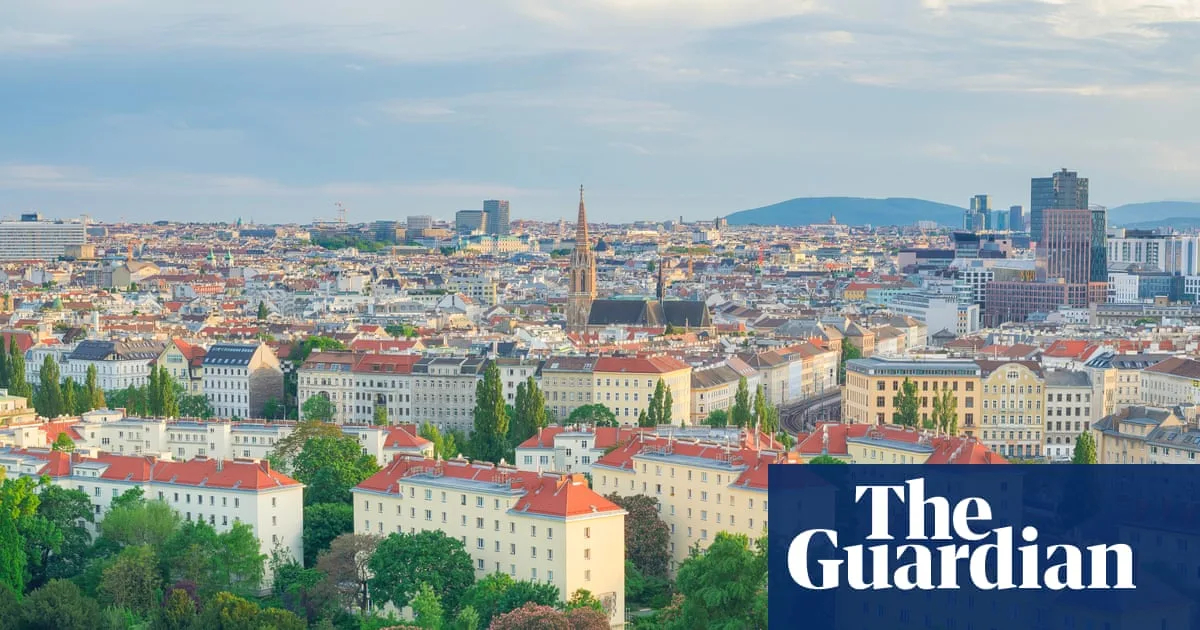
American academics are increasingly seeking refuge in Austria as the Trump administration wages a systematic war on universities and scientific research in the United States. This migration represents a significant brain drain from American institutions, with Austria positioning itself as a stable alternative for researchers facing ideological persecution and funding cuts.

Escaping Political Interference in Research

Wali Malik, a specialist in laboratory robotics, no longer worries about right-wing bureaucrats labeling his work as "woke" or facing government retaliation for following scientific evidence. Last spring, while working as a consultant for biomedical research labs in Boston, Malik was recruited to lead robotic infrastructure development at Aithyra, a Vienna-based life sciences research institution founded in 2024.

"I saw the writing on the wall," Malik explained, describing his decision to leave the United States. He witnessed friends and family affected by mass layoffs at the National Institutes of Health and National Science Foundation, while his own work slowed as federal grants were rescinded. "It took trust for the US to become a scientific powerhouse. It took 70 years – and was destroyed within six months."

Austria's Strategic Recruitment Initiative

Eva-Maria Holzleitner, Austria's Minister of Women, Science and Research, described America's self-inflicted attack on academia as both "really shocking" and a setback to the global scientific community. However, she recognizes this as an opportunity for Austria to establish itself as a safe haven for science and innovation.

Her ministry has launched an ambitious campaign to attract at least 50 American academics within a year. This includes:

  • A fast-track hiring initiative for professors
  • A fellowship program for early- and mid-career researchers
  • Special funds for students denied education due to ethnicity, gender, or civic engagement

The Trump Administration's Assault on Academia

The Trump administration has implemented sweeping changes that have fundamentally altered the American research landscape. All federally funded research must now reflect right-wing ideology and avoid discussions of race or gender. The administration has:

  1. Rescinded grants previously authorized by Congress
  2. Arrested and sought to deport students campaigning against US support for Israel
  3. Restricted on-campus support and gender-affirming care for transgender individuals

Recent scenes of masked federal agents seizing immigrants and US citizens from streets have further convinced foreign-born researchers they are no longer welcome in America.

European Response to American Brain Drain

Austria is not alone in capitalizing on America's academic dysfunction. Just weeks after Trump took office, three prominent anti-fascist historians from Yale University accepted positions at the University of Toronto. France's Aix-Marseille University received over 500 inquiries about its campaign to lure American academics.

On July 4, 2025, the Austrian Academy of Sciences announced its first fellowship program targeting academics at US institutions, using money originally seeded by the Marshall Plan. Two months later, it awarded 25 recipients €500,000 each.

"Thank Trump for this brain gain," declared Heinz Fassmann, the academy's president, highlighting the ironic benefit Austria derives from America's self-sabotage.

Researchers Describe Growing Climate of Fear

Alexander Lex, who studies human-computer interaction and data visualization, moved his lab from the University of Utah to Graz University of Technology last summer. An Austrian national who had worked in the US for over a decade, Lex began searching for positions in his native country before Trump's return to power.

"I think there is a big contraction happening in the US academic environment, partially because of hard facts, partially because of self-censorship and being worried," Lex explained. "Especially if you're in a more vulnerable position, people are taking less risks, and that's really bad for science."

Political Pressures Infiltrate Research Topics

Hussam Habib, who received his PhD at the University of Iowa, studies how algorithms and platform governance affect political polarization. Following the COVID-19 pandemic and Trump's false claims about the 2020 election, research addressing online misinformation has faced concerted attacks from the Republican party.

"Funding began to dry up," Habib recalled, "and peers began suggesting that I focus less on the political impacts of social media." After seeing a position advertised at the University of Graz, Habib applied and received one of the new fellowships designed for people leaving America.

While Habib hesitates to say he "dodged a bullet," he acknowledges: "Deep down, I know that I would have been very, very stressed" remaining in the United States.

Long-Term Implications for American Science

According to Alexandra Lieben, president of AsciNA (the association for Austrian scientists and scholars in North America), most of the organization's roughly 1,400 members have been affected by funding cuts. Even long-term US residents are now exploring exit plans.

"There was a real shock among everybody, and a paralysis that went along with that," Lieben noted. "That has subsided" as researchers actively seek alternatives outside America.

As Austria and other European nations welcome displaced American academics, the United States faces the prospect of losing its position as the world's premier destination for scientific research and innovation. The ideological war on universities may have consequences lasting far beyond the current administration.