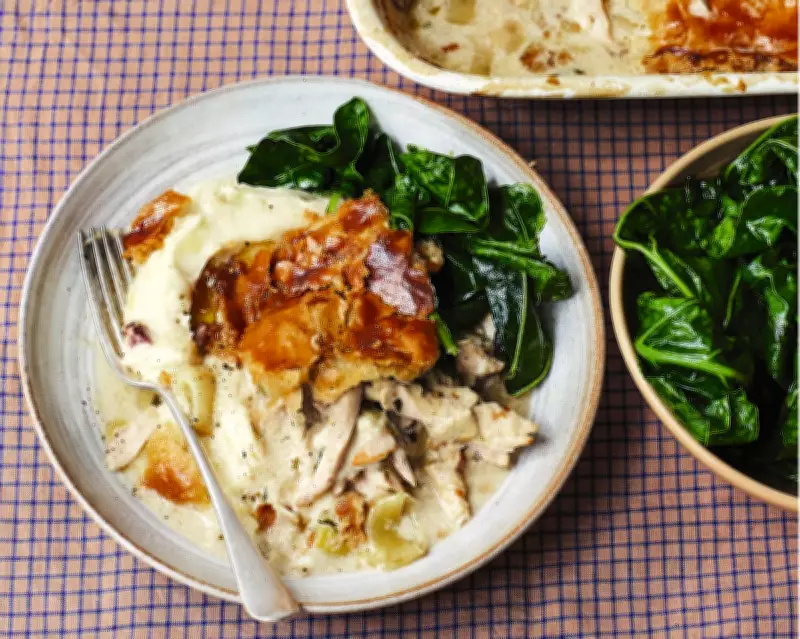
When I asked my grandma for her time-honoured chicken pie recipe, her WhatsApp reply was succinct: "Chicken, leek, flour, a few more ingredients." She wasn't being difficult; she had simply never written down a dish that was second nature. I knew I would have to make it many times to approach her standard, learning by watching as well as asking, and accepting that some elements would always elude me. That is the nature of a family dish — one that takes time, repetition, and love to master, with perfection remaining ephemeral.
The Elusive Perfection of Family Recipes
Food writer Jimi Famurewa describes his mother's exceptional jollof rice as a gift from "the jollof gods." He notes that she accepts that it won't be perfect every time, which is part of its specialness. His own attempts to replicate her rice have been frustrating. "Her 'recipe' is well intentioned but slightly useless. I can follow the method, but I never get the depth of flavour," he says.
Felicity Cloake, known for her 'How to cook the perfect …' series, agrees. "It's not until you come to make it yourself that you see what's not written down; that there are a few things not disclosed by grandma or whoever." Even when cooking from professional recipes, she finds she must cook them to discover "what might be missing, what can be changed and what is fundamental to the dish."

Adapting and Evolving Traditions
Jimi describes his jollof rice as a "Frankenstein's monster" of his mother's recipe plus his own rice-cooking principles. He has made peace with the idea that his version may never taste exactly like hers. Yet, when his children occasionally mistake his jollof for hers, he realises that the failure to replicate is often in our own heads. "We put these dishes on such a pedestal that the act of chasing down a particular sensation becomes a culinary white whale," he says. "The joy is in the journey of trying to get there."
Sophie Wyburd, author of Tucking In, believes that tweaking a family recipe can feel like a betrayal, but these recipes naturally update over time. "Maybe there is pork leftover as well as beef. Maybe I don't have pancetta so put some chorizo in there," she says. The key is identifying core traits that define the dish and what can withstand adaptation.
Embracing Imperfection and Change
Rachel Roddy, who has spent much of her career on handed-down Italian dishes, notes that "old recipes are changed every time you make them." She appreciates the Italian approach of outlining key principles and troubleshooting, which is more useful than perfect, detailed guidelines. Ingredients are in charge, she laughs. "I feel like I'm always trying to tame them."
Sophie adds that there are "rice gods, bread gods, pastry gods — there are roast chicken gods for sure. I must have roasted hundreds of chickens in my life, and only 25% have been perfect."
Creating Your Own Version
When I watched my grandma make her chicken pie, I learned her sauce uses leftover stock and dripping, and her pastry is half lard, half margarine — staples of her fridge that don't exist in mine. I realised her pie is so intertwined with her life that I have no choice but to create my own version. I can use real butter and heritage grain flour, and add butter beans to the filling. Keeping the tradition alive with a dish that works for my family is what matters.
Jimi suggests asking that friend or relative how they made that incredible dish, writing it down, and noting when you take it in other directions. "There's something to be said for building your own repertoire to pass on," he says, even if it becomes as arcane to the next generation as his mother's and my grandma's recipes are to us.
The ingredients will change, the methods may evolve, but the meaning and memories are not lost. They build with repetition and love. I am excited to make chicken pie for my daughter and to tell her about the woman I first learned it from: to teach her how to bring together flour and fat, handling it gently, and to say, "I learned this from your great-grandma."