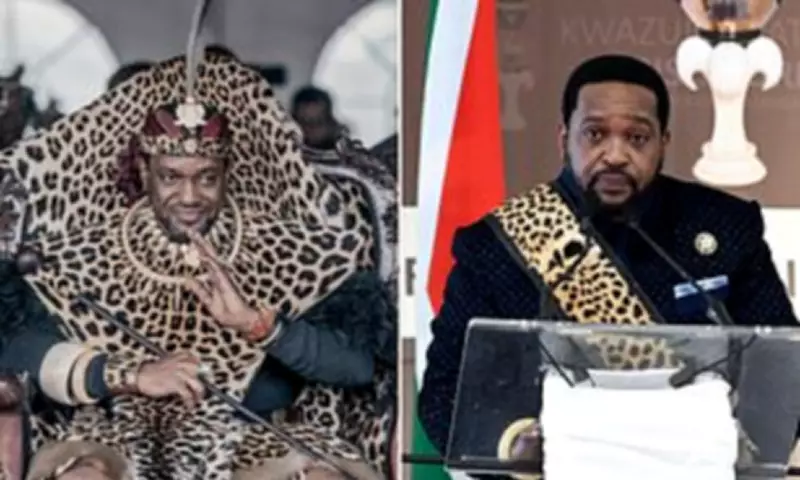
The Zulu monarch of South Africa has ignited a firestorm of controversy and outrage after publicly demanding that migrants depart the nation, employing offensive terminology and linking his remarks to recent violent unrest near his royal residence.
Monarch's Inflammatory Speech at Historic Commemoration
Speaking during a public event that commemorated the historic British defeat at the Battle of Isandlwana, King Misuzulu kaZwelithini directed harsh criticism towards migrants from neighbouring African countries. The 51-year-old traditional leader utilised a derogatory term for these individuals and explicitly stated they should be compelled to leave South Africa.
Although King Misuzulu holds no formal governmental authority, his pronouncements carry immense cultural and moral weight among South Africa's substantial Zulu population, which numbers approximately 12 million people. These communities regard him as a paramount custodian of tradition and a significant spiritual figure.

Linking Remarks to Recent School Violence in Durban
The monarch's contentious comments arrive just weeks after police authorities were forced to deploy water cannons and stun grenades to quell violent demonstrations at Addington Primary School in Durban, located within the KwaZulu-Natal province. This unrest erupted when anti-immigration campaigners alleged the school was prioritising places for children of migrants over South African pupils.
Local education authorities have firmly denied these allegations, stating there exists no evidence that immigration has created any shortage of school placements. Nevertheless, the incident has heightened existing social tensions surrounding migration within the region.
Controversial Statements on Relationships and Family
During his address, King Misuzulu specifically claimed that increasing numbers of South African women are forming relationships with foreign men. He presented a complex familial argument, stating that while any children born from these unions could rightfully remain in the country, the foreign fathers themselves must depart.
'What happened at Addington shows that we are being compromised by our sisters,' the king declared, referencing the school clashes. 'But what can we do, because their children are our nephews and nieces? However, we must sit down and discuss this. Even if my nephew or niece is born of a foreign national, that foreign national must leave, while my nephew or niece should remain.'
These statements were met with audible cheers and approval from sections of the gathered crowd, with the monarch reportedly laughing as he delivered them. He simultaneously urged calm and warned supporters against taking the law into their own hands, even while repeating his core demand for foreign nationals to exit.
Historical Context and Hypocrisy Allegations
Critics were swift to highlight the profound irony and potential hypocrisy within the king's remarks. They pointed out that his own mother originated from the neighbouring kingdom of Eswatini, and that one of his current wives also hails from there. This personal family history stands in stark contrast to his public condemnation of cross-border relationships.
Furthermore, the monarch's comments eerily echo those made by his late father, King Goodwill Zwelithini, who in 2015 told migrants to 'pack their belongings' and leave South Africa. Those earlier remarks were later formally ruled as 'hurtful and harmful' by the nation's official human rights commission.
Persistent Xenophobia as a Volatile National Issue
Xenophobic sentiment and violence have plagued South Africa for over a decade, with repeated outbreaks targeting migrants and foreign-owned businesses. This hostility remains a deeply volatile political and social issue, frequently fuelled by persistent claims that foreigners are usurping local jobs and disproportionately benefiting from public services.
The nation continues to grapple with one of the highest unemployment rates globally, currently hovering around 33 per cent. This dire economic backdrop provides fertile ground for anti-immigrant rhetoric to gain traction among frustrated populations, despite official denials of widespread resource displacement.

The Zulu king's latest intervention has therefore thrust the contentious issue of migration, tradition, and national identity back into the forefront of South Africa's public discourse, raising fears of further social division and potential unrest.