Middle East Conflict's Lifelong Scars on Millions of Children
The ongoing US-Israeli military campaign against Iran has inflicted a profound and lasting crisis upon millions of children across the Middle East, with alarming reports emerging of child soldier recruitment, mass forced displacements, and the tragic deaths of hundreds of minors. According to UNICEF, the United Nations agency for children, more than 340 children have been killed and thousands injured since the conflict escalated, as retaliatory bombings spread chaos throughout the region.
The most devastating single incident occurred on the first day of hostilities, when a US missile strike targeted a school in Iran, resulting in the deaths of at least 160 children and teachers. Israel's invasion of Lebanon, coupled with continued military operations in the occupied West Bank and Gaza, has significantly compounded the bloodshed. Across the Middle East, over 1.2 million children have been displaced from their homes, facing unimaginable hardships.
Catherine Russell, UNICEF's executive director, stated: "Children in the region are being exposed to horrific violence, while the very systems and services meant to keep them safe are coming under attack."

Forced Displacement and Humanitarian Crisis in Lebanon
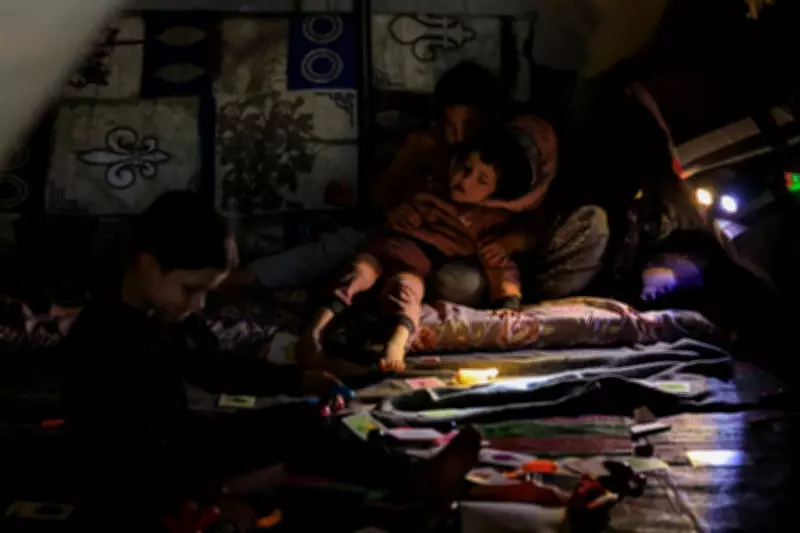
In Lebanon, Israeli bombing campaigns and displacement orders have forced more than 1.1 million people to flee, including nearly 400,000 children, as per a UNICEF assessment. Nearly 90% of these displaced individuals are living outside formal shelters, with many sleeping on streets or in makeshift encampments. Nidal Ahmed, 52, along with two of his children, resides in a tent in an impromptu settlement in Beirut's Biel district, a former nightclub area.
This marks Ahmed's second displacement; his home in Tyre was destroyed in an airstrike early in the Israel-Hezbollah conflict, and he later had to evacuate his brother's home in Beirut's southern suburbs under Israeli orders. Ahmed described the dire conditions, noting that his family often goes hungry, surviving on tea and bread, which is unsuitable for his eight-month-old daughter, Zahraa. After a month without income, he relies on irregular aid from local organisations.
The displacement conditions are described as humiliating, with makeshift tents offering little protection from the elements. Ahmed's children face severe psychological effects, such as his three-year-old son, Ahmad, who runs to hide at the sound of Israeli jets. Ahmed's wife and 17-year-old daughter remain hospitalised with critical injuries from the bombing, adding to the family's trauma.
Deaths and Violence in Palestine
Despite a ceasefire that has held for over five months, health officials in Gaza report at least 50 Palestinians killed by Israeli forces since the Iran conflict began, including child fatalities. The Gaza Strip, still reeling from 23 months of Israeli bombardment that resulted in tens of thousands of deaths and widespread destruction, has seen intensified insecurity. Save the Children estimates that over 20,000 children were killed in Gaza by late last year.
In the occupied West Bank, violence has escalated, with Israeli settlers and security forces killing at least three children since the start of the Iran war. One tragic incident involved the shooting deaths of two young Palestinian brothers, Mohammed, 5, and Othman, 7, who was blind and had special needs, along with their parents. Their brother, Khaled, 11, survived and reported being taunted and beaten by Israeli border police after the attack.
Child Soldiers in Iran
Reports from Human Rights Watch indicate that Iran's Islamic Revolutionary Guard Corps (IRGC) is recruiting children as young as 12 to guard security checkpoints, a practice condemned as a grave violation of children's rights and a potential war crime. An IRGC official confirmed a recruitment campaign with a minimum age of 12, prompting criticism from Bill Van Esveld of Human Rights Watch, who stated, "There is no excuse for a military recruitment drive that targets children." An 11-year-old Iranian boy was reportedly killed in an Israeli airstrike while assisting at a checkpoint.

Attacks on Education and Infrastructure
The US bombing of a primary school in Minab, Iran, on 28 February, which killed scores of young girls, has been labelled a grave violation of international law by UNESCO. Across the region, relentless attacks have damaged or destroyed critical infrastructure, including 316 medical centres and 763 schools in Iran alone. Save the Children reports that at least 52 million school-age children have had their education disrupted, with many forced into online learning or having none at all.
Ahmad Alhendawi, Save the Children's regional director, emphasised, "In every conflict, classrooms are usually the first to close and some of the last places to reopen. Every missed lesson deepens the scars of war."
Psychological Toll and Long-Term Impact
The conflict has exposed children to traumatic events, with prolonged violence and instability known to have lasting effects on brain development and mental health. In Iran, despite internet blackouts, satellite TV channels like Iran International are broadcasting segments to help parents address children's fears. Alhendawi concluded, "Every war is a war on children. Children are living in fear, caught in the crossfire of this adult war. Wars have laws and children must be off limits in every conflict."