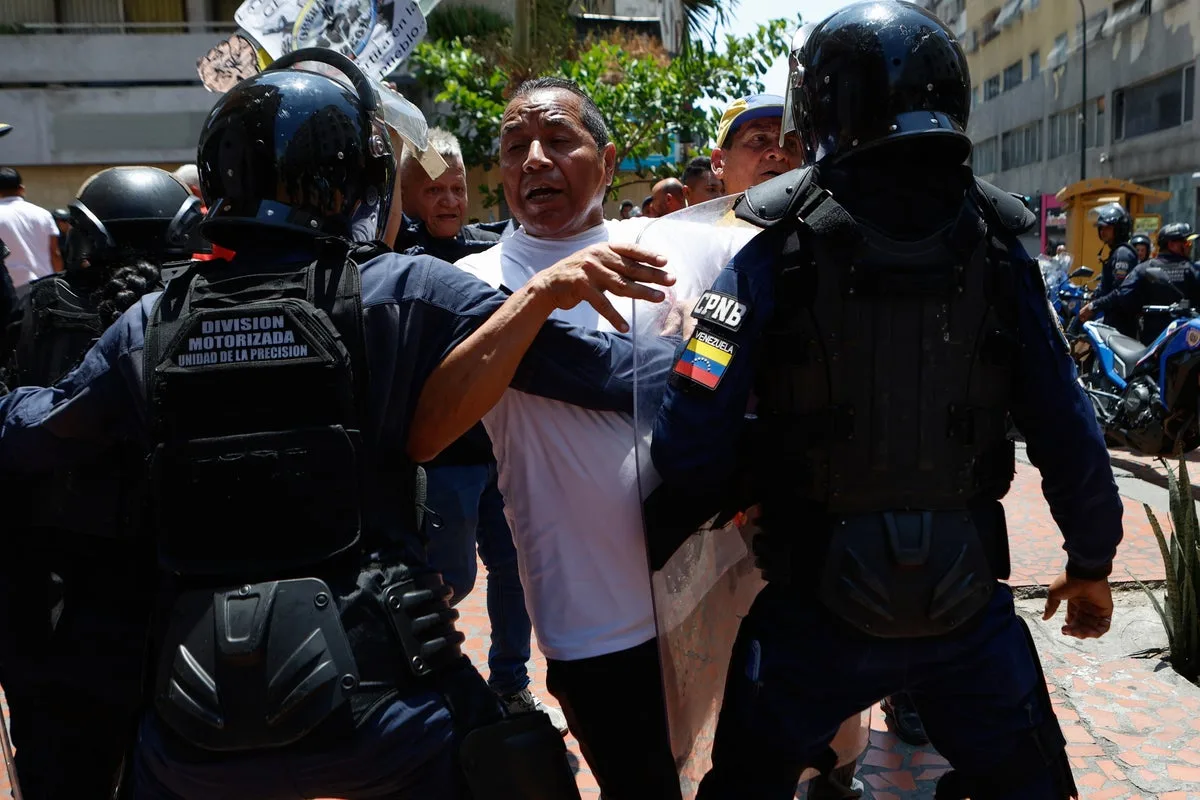
Union leaders, retirees and public sector workers in the Venezuelan capital marched on Thursday towards the presidential palace to demand higher wages and dignified pensions, only to be met by police blockades.
The protests came the day after acting President Delcy Rodríguez went on national television to ask public and private sector workers for patience as her government works to improve the country’s economy. Workers' wages for years have not allowed them to afford basic necessities. Many public sector workers survive on roughly $160 per month, while the average private sector employee earned about $237 last year.
National Police officers deployed early Thursday across downtown Caracas to intercept the march. Several times, demonstrators successfully breached initial barriers. Reinforced blockades eventually halted the crowd, leaving the majority of protesters roughly 2 kilometres (1.2 miles) from the Miraflores presidential palace. There were no immediate reports of injuries or arrests during the scuffles between police and protesters.
Rodríguez in her address promised workers a wage increase on May 1. She did not disclose the amount but said it would be done in a way meant to avoid the inflationary spike that followed the last minimum wage increase. Venezuela’s minimum wage of 130 bolivars, or $0.27 a month, has not increased since 2022, putting it well below the United Nations’ measure of extreme poverty of $3 a day.
“This increase, as we have indicated, will be a responsible increase,” Rodríguez said. “Likewise in the near future, as Venezuela enjoys more resources that allow for the sustainability of salary improvements and workers’ income, we will continue moving forward on this path.”