The United Nations human rights chief has issued a stark warning that perpetrators of human rights abuses are operating with near-total impunity worldwide, as his office struggles with severe funding cuts that have forced it into what he describes as "survival mode."
Funding Crisis Forces UN Rights Office into Survival Mode
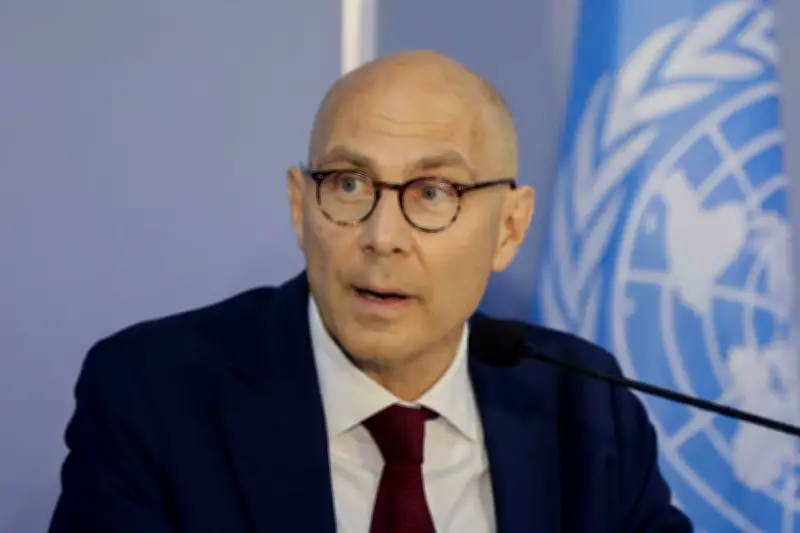
Volker Türk, the UN High Commissioner for Human Rights, presented an urgent appeal for $400 million in voluntary funding during a meeting with diplomats at his Geneva headquarters on Thursday. This comes after significant reductions from traditional Western donors have crippled the office's ability to monitor rights violations across the globe.
"These cuts and reductions untie perpetrators' hands everywhere, leaving them to do whatever they please," Türk told assembled diplomats. "With crises mounting, we cannot afford a human rights system in crisis."

Dramatic Reduction in Monitoring Capacity
The funding shortfall has resulted in devastating operational cuts. Türk revealed that his office undertook fewer than half the monitoring missions in 2025 compared to the previous year. Specific country programs have been particularly hard hit:
- Colombia: Three of eight country offices have closed, and engagement in the peace process has been significantly pared down
- Myanmar: The program has faced cuts of 60%
- Chad: Advocacy and assistance for nearly 600 detainees has been reduced
- Gender-based violence prevention: Work to prevent gender-based violence and protect LGBTIQ+ rights has suffered cuts of up to 75%
Donor Contributions: A Mixed Picture
The funding crisis stems from significant reductions by traditional Western donors. The United States, which was the top single donor in 2024 with $36 million under the Biden administration, halted all contributions in 2025 under the Trump administration. France provided no voluntary funding last year after contributing more than $5 million in 2024, while Britain also lowered its outlay.
Some donors increased their contributions, however. Sweden, Germany and the European Union all raised their funding from 2024 levels. Despite these increases, the overall funding picture remains bleak.
The Office of the High Commissioner for Human Rights initially appealed for $500 million in voluntary contributions for 2025 but received only $262 million. The office traditionally receives most of its funding through voluntary contributions from member countries, supplemented by the regular UN budget.
Critical Work Continues Despite Challenges
Despite the funding constraints, Türk highlighted several areas where his office continues to make important contributions:
- Ukraine: The monitoring mission has maintained surveillance of civilian casualties since 2014
- Occupied Palestinian areas: Over 320 staffers have been trained to identify people in need
- Colombia: Collaboration with the Defense Ministry to establish codes of conduct and training programs
"I am thankful to our 113 funding partners — including governments, private, and multilateral donors — for their vital contributions," Türk acknowledged. "But we are currently in survival mode, delivering under strain."
The human rights chief emphasized that the funding crisis comes at a time when global human rights challenges are escalating, making the work of his office more critical than ever. The $400 million appeal represents what Türk described as the minimum necessary to maintain essential monitoring and protection functions worldwide.