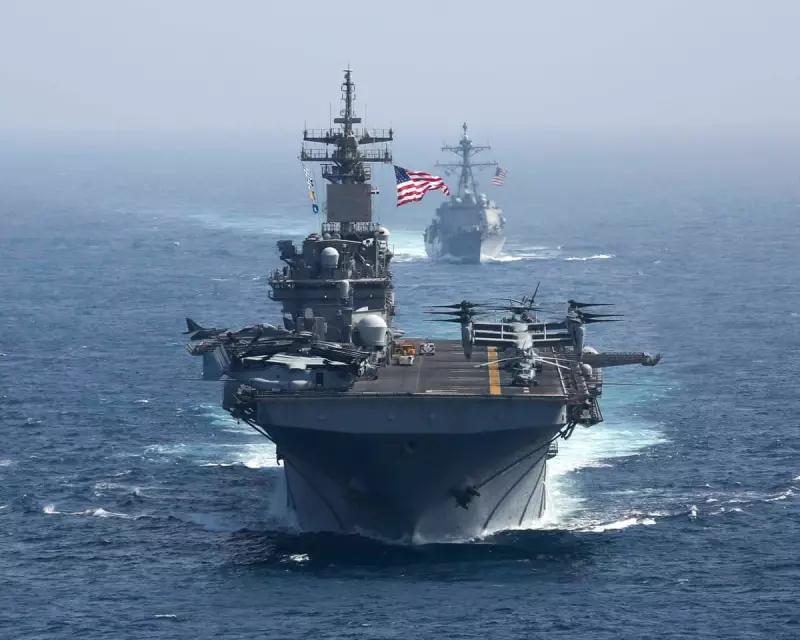
Trump Issues Stark Warning to Iran as US Naval Fleet Approaches Persian Gulf
Former US President Donald Trump has dramatically escalated tensions with Iran, warning that time is running out for Tehran to negotiate a nuclear deal while revealing that a substantial American naval armada is advancing towards the region with significant military capability.
Massive Naval Deployment Described as Larger Than Venezuela Operation
In a series of social media statements, Trump declared that the current US fleet movement towards Iran, spearheaded by the aircraft carrier USS Abraham Lincoln, represents a larger force than the naval contingent deployed to Venezuela earlier this month during the removal of President Nicolás Maduro. The former president emphasised that this substantial military presence stands "prepared to rapidly fulfil its missions with speed and violence if necessary", marking some of his most direct language regarding potential military action against Iran.
Ultimatum for Nuclear Negotiations
Trump issued a clear ultimatum to Iranian leadership, stating: "Hopefully Iran will quickly 'Come to the Table' and negotiate a fair and equitable deal – NO NUCLEAR WEAPONS – one that is good for all parties. Time is running out, it is truly of the essence!" He referenced previous military operations against Iran, warning that "the next attack will be far worse" if Tehran refuses to engage in negotiations regarding its nuclear programme.

European Diplomats Detect Growing Crisis
European diplomatic sources have reportedly been anticipating a significant escalation in US-Iran tensions over recent days, with particular concern about potential Israeli apprehensions regarding the scale of possible Iranian retaliatory measures should military conflict erupt. The situation represents the most explicit indication yet that Trump intends to authorise military strikes against Iran should diplomatic efforts fail to produce a satisfactory nuclear agreement.
Expanded US Demands Beyond Nuclear Programme
Recent developments suggest that American objectives extend beyond merely containing Iran's nuclear ambitions. Trump administration officials appear increasingly focused on restricting Iran's capacity to develop and deploy long-range missiles, which have traditionally formed a cornerstone of Iranian military strategy and regional influence projection. Furthermore, Trump has recently suggested that Iranian Supreme Leader Ali Khamenei should "leave the world stage" – a demand that Tehran authorities have categorically rejected as unacceptable interference in sovereign affairs.
Iranian Response and Diplomatic Manoeuvring
Iranian Foreign Minister Abbas Araghchi has responded to the escalating rhetoric by stating that Tehran remains unwilling to negotiate under explicit threats, though he indicated readiness for unconditional discussions. This position has reportedly been communicated through multiple intermediaries to Trump's special envoy Steve Witkoff. In the past twenty-four hours, Iranian officials including Araghchi and President Masoud Pezeshkian have engaged in diplomatic conversations with representatives from Saudi Arabia, Qatar, and Egypt.
Regional Mediation Efforts Intensify
These three Arab states are reportedly exploring potential pathways to restart negotiations without Iran being compelled to accept predetermined outcomes. Their diplomatic efforts proved instrumental three weeks ago in persuading the Trump administration to postpone potential military action. However, analysts suggest that Trump now possesses greater flexibility regarding military options and appears more singularly focused on achieving nuclear concessions rather than punishing Iran for domestic political suppression.
Historical Suspicion Complicates Negotiations
Substantial distrust persists within Tehran regarding engagement with American negotiators, particularly following events last June when discussions between the two nations were interrupted by an Israeli military operation against Iranian targets that received implicit US approval. That attack, which resulted in approximately one thousand casualties and significant damage to Iranian nuclear facilities, has created lasting diplomatic complications.

Turkish Diplomatic Intervention
Turkish Foreign Minister Hakan Fidan has urged American officials to separate broader demands concerning Iran's missile development and regional militia support from nuclear negotiations. He cautioned that insisting on addressing all contentious issues simultaneously would likely result in Iranian refusal to participate in meaningful dialogue.
Specific US Demands and Iranian Position
The Trump administration has consistently demanded that Iran:
- Completely abandon its domestic uranium enrichment programme
- Permit unrestricted access for United Nations nuclear inspectors
- Transfer its stockpile of highly enriched uranium to a third-party nation, likely Russia
Iranian authorities have historically resisted relinquishing domestic enrichment capacity while expressing willingness to establish strict limitations on uranium stockpiles. The nation's negotiating position has been substantially weakened by economic challenges including currency devaluation and rampant inflation following previous military strikes.
Regional Military Dynamics
Military analysts suggest that with Iranian nuclear facilities already damaged, potential American or Israeli strikes would likely target Iranian leadership and command structures. The June attack demonstrated Israel's near-total air superiority over Iranian territory, creating significant strategic advantages for potential future operations.
Gulf States Express Reluctance
Nearly all Gulf Cooperation Council member states, apprehensive about potential Iranian retaliation, have indicated unwillingness to permit American forces to utilise their airspace or military bases for launching attacks against Iran. This reluctance complicates potential military planning and underscores regional concerns about escalation.
Iranian Military Posture
Iranian military officials have stated: "We will target the same base and the same point from which air operations against us are launched, and we will not attack countries because we do not consider them to be enemy countries. We will increase our level of defence readiness against the US military buildup to the highest level. If the Americans want negotiations without pre-determined outcomes, Iran will accept it."
This declaration reflects Tehran's calibrated response – maintaining defensive military preparations while leaving diplomatic channels nominally open, provided negotiations occur without predetermined conclusions that would compromise Iranian sovereignty or strategic interests.