Mass Gathering for Gadhafi Heir's Funeral in Libya
Thousands of mourners converged on Friday in northwestern Libya to attend the funeral of Seif al-Islam Gadhafi, the son and one-time heir apparent of the late Libyan leader Moammar Gadhafi. The large-scale gathering took place in the town of Bani Walid, located approximately 146 kilometers southeast of the capital, Tripoli, as the nation grapples with the violent death of a controversial political figure.
Funeral Procession and Symbolic Displays
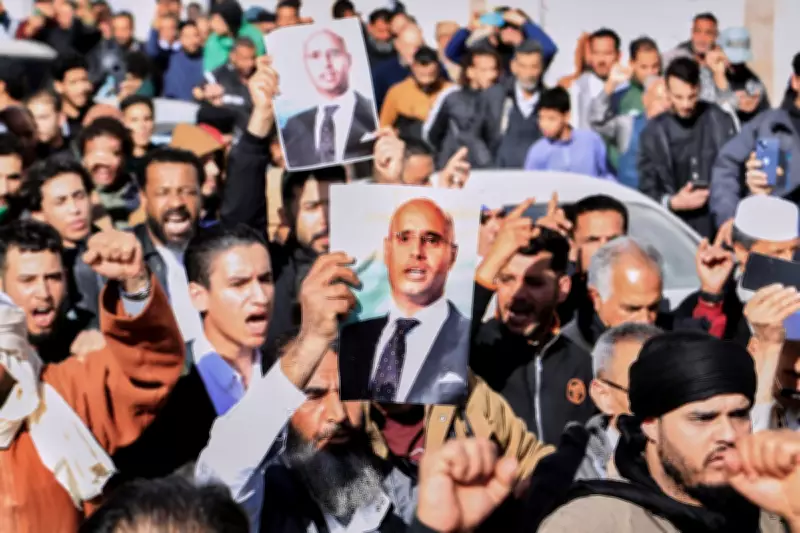
During the emotional ceremony, mourners carried the coffin of Seif al-Islam through the streets, accompanied by large photographs of both the deceased and his father. The crowd prominently waved plain green flags, which served as Libya's official flag from 1977 to 2011 under Gadhafi's lengthy rule. This symbolic display highlighted the enduring loyalty among some segments of the population to the former regime.
As the procession advanced and crowds swelled, a dedicated group of supporters took responsibility for transporting the coffin. They subsequently performed traditional funeral prayers and conducted the burial rites, ensuring Seif al-Islam was laid to rest with ceremonial respect.

Details of the Fatal Attack
Seif al-Islam, aged 53, was killed on Tuesday inside his residence in Zintan, a town situated 136 kilometers southwest of Tripoli. According to Libya's chief prosecutor's office, an initial investigation confirmed he died from gunshot wounds, though authorities have not released comprehensive details about the incident.
His political team issued a statement characterizing the event as a "cowardly and treacherous assassination," alleging that four masked assailants stormed his home after disabling security cameras. This violent act has reignited tensions in a country already fractured by years of conflict and political division.
Family Reaction and Historical Context
From exile, Seif al-Islam's brother, Mohamed Gadhafi, expressed profound grief on social media, writing: "The pain of loss weighs heavily on my heart, and it intensifies because I can't bid him farewell from within my homeland." He added, "But my solace lies in the fact that the loyal sons of the nation are fulfilling their duty and will give him a farewell befitting his stature." Mohamed's current whereabouts remain unknown, reflecting the dispersed nature of the Gadhafi family since the 2011 uprising.
Seif al-Islam's life was marked by dramatic shifts. Captured in late 2011 by fighters in Zintan as he attempted to flee to Niger, he was later released in June 2017 after receiving amnesty from one of Libya's rival governments. His father, Moammar Gadhafi, ruled for over four decades before being overthrown in a NATO-backed popular uprising in 2011 and killed later that same year in Sirte, events that plunged Libya into a protracted civil war.
Political Legacy and International Scrutiny
As Gadhafi's second-born son, Seif al-Islam was often viewed as the reformist face of the regime, engaging in diplomatic efforts to mend Libya's relations with Western nations prior to the 2011 revolt. However, his inflammatory statements during the uprising led the United Nations to impose sanctions, including a travel ban and asset freeze.
The International Criminal Court further charged him with crimes against humanity related to the 2011 conflict. In a notable interview with the New York Times in July 2021, Seif al-Islam indicated he was contemplating a political comeback, criticizing the country's current leadership by stating, "There's no life here. Go to the gas station — there's no diesel."
His announcement of candidacy in the November 2021 presidential election sparked controversy and outcry from anti-Gadhafi factions across Libya. Although the High National Elections Committee disqualified him, the election itself was never held due to disputes between rival administrations and armed groups, underscoring the deep-seated instability that continues to afflict the oil-rich nation.

Broader Implications for Libya
Since the uprising that toppled Moammar Gadhafi, Libya has descended into chaos, fragmenting into rival administrations in the east and west, each backed by various armed factions and foreign governments. The assassination of Seif al-Islam and the subsequent funeral gathering highlight the persistent divisions and unresolved conflicts that define contemporary Libyan society.
This event not only mourns the loss of a key figure but also serves as a poignant reminder of the ongoing struggle for unity and stability in a nation still grappling with the legacy of its past and the challenges of its future.