Taliban's Escalating War on Women Exposes Global Appeasement Failure
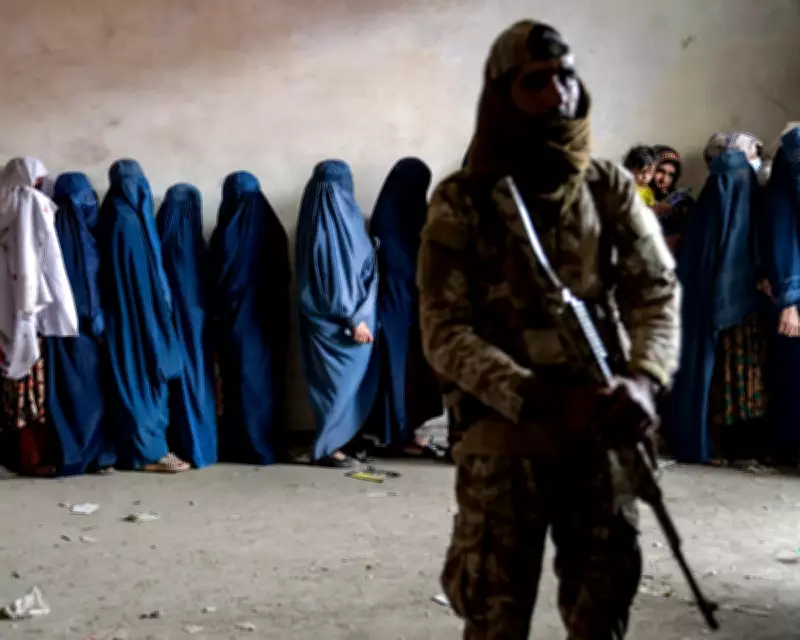
A stark scene unfolded in Kabul on 23 May 2023, where a Taliban fighter stood guard as women waited to receive food rations. This image encapsulates the deepening crisis as the regime intensifies its systematic repression of women and girls. It is increasingly clear that international strategies of appeasement have utterly failed to curb what is being condemned as "gender apartheid."
The Most Extreme Edict Yet
Afghanistan's Taliban government has now issued its most draconian decree to date. Already the sole regime globally to exclude girls from secondary education, it has now gone further, debarring all Afghan women from any contact with schools or educational institutions. This latest wave of repression, which United Nations legal authorities are likely to classify as a crime against humanity, marks the definitive victory of the extreme Kandahar clerical faction over more pragmatic, Kabul-based ministers.
It represents the latest step in Supreme Leader Hibatullah Akhundzada's plan to erase girls and women from public life entirely. The ruling also exposes the profound miscalculations of foreign governments that, even as the suppression escalates, have sought to rebuild diplomatic ties with the regime.

A Generation Denied Education
Four-and-a-half years into Taliban rule, the educational landscape is bleak. A staggering 2.2 million girls are now excluded from secondary education, with up to 2.3 million primary school-age children no longer attending lessons. The regime's successive edicts since 2021 have constructed a comprehensive cage of restrictions:
- Banning women from universities and most employment, including government and NGO roles.
- Mandating face coverings and requiring male relatives for long-distance travel.
- Threatening arrest for women seen in public spaces like parks, gyms, and beauty salons.
Diplomatic Engagement Without Concessions
This appeasement, led by nations including Russia, China, and India and followed by some European governments, has emboldened the Taliban, convincing them they can act with impunity. Russia became the first country to recognise the Taliban government and restore full diplomatic relations without securing any concessions on girls' and women's rights. China accepted the credentials of a Taliban ambassador in January 2024, while India upgraded ties and reopened its Kabul embassy, proclaiming a "very bright" future for relations.
European countries have increased engagement, partly to facilitate the deportation of failed Afghan asylum seekers, thereby lending credibility to the regime despite its persecution. This diplomatic normalisation occurs as repression on the ground intensifies. In December, female journalist Nazira Rashidi was arrested in Kunduz, and Khadija Ahmadzada was imprisoned for 13 days in Herat for running a women's sports gym until UN intervention secured her release.
Internal Rifts and Supreme Control
The latest crackdown signifies the triumph of Akhundzada, with key government functions redirected from Kabul to Kandahar. While the Kabul faction acknowledges the economy needs women's participation, Akhundzada is determined to impose a strict, isolated Islamic emirate. His ideology is so rigid he approved of his son becoming a suicide bomber. His power was only momentarily checked when, in late September, his order for a complete internet shutdown was defied by the Kabul telecommunications ministry. However, by December, a UN monitoring team noted his consolidation of power included "a continued buildup of security forces under the direct control of Kandahar."
Significant internal rifts exist. Evidence includes a tape of Akhundzada from January 2025 warning that divisions could cause the emirate to "collapse and end." Sher Mohammad Abbas Stanikzai, the then-deputy foreign minister, publicly warned the regime was "committing injustice against 20 million people" and that denying education was "straying from the path of God" before having to flee the country.

International Accountability and Resistance
At the 59th session of the UN Human Rights Council in June–July 2025, the situation was debated. UN Special Rapporteur Richard Bennett has persistently advocated making girls' rights a condition for engagement and devising accountability mechanisms, including referring the denial of education to the International Criminal Court (ICC). Efforts are underway to make gender apartheid an international crime, with the UN's legal committee advancing a draft global treaty.
In a significant move, the ICC's pre-trial chamber issued arrest warrants in July for Akhundzada and senior official Abdul Hakim Haqqani on charges of gender-based persecution. However, international negotiations in Doha, hosted by the UN and Qatar, have secured no concessions, as the Taliban refuses to discuss girls' rights and excludes women's organisations from talks.
Underground Education and a Precarious Future
Resistance persists. Underground schooling continues in areas like the Panjshir Valley, where radio broadcasts cover topics from breastfeeding to basic science. "Home schools" operate clandestinely, and some girls leave for Pakistan or Iran to study, despite those countries repatriating 2.6 million Afghan refugees in 2025. A few young women have recently reached Scotland on scholarships to train as doctors.
The regime's failure is ultimately self-defeating. Afghanistan's population has swelled to over 43 million and is growing, with 17.4 million people predicted to be food-insecure by March and 4.9 million mothers and children suffering malnutrition. Building an economy to lift millions from poverty is impossible while denying half the population education and workforce participation. If the world remains sanguine about this medieval repression, that failure will be ours as well.