Sudan's Devastating Conflict Enters Fourth Year with No End in Sight
The United Nations' top official in Sudan, Denise Brown, recently abandoned diplomatic language to condemn the ongoing three-year war as "bloody unacceptable." Her stark words highlight a conflict that has been overshadowed by crises in Ukraine, Gaza, and Iran, yet continues to inflict immense suffering on the Sudanese people.
A Humanitarian Catastrophe of Unprecedented Scale
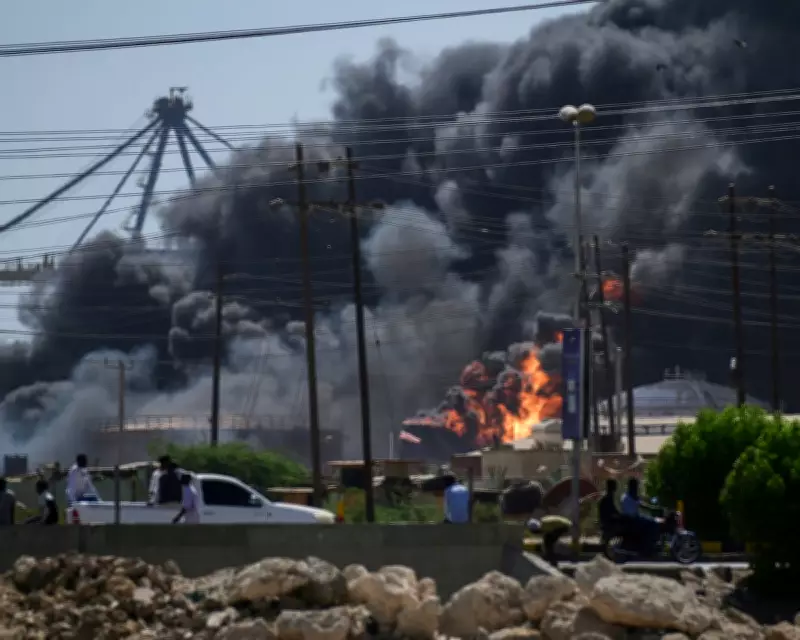
Since Sudan's generals turned against each other after overthrowing the civilian government, the human cost has been staggering. Tens, if not hundreds, of thousands have been killed, while four million people have fled abroad to other fragile nations. Millions more are displaced internally, and more than half the population—approaching 30 million individuals—are now acutely food insecure. Much of the capital, Khartoum, lies in ruins, with smoke still billowing from drone strikes like those that targeted Port Sudan last May.
Far from burning out, the conflict has intensified, with both sides hardening their positions. The paramilitary Rapid Support Forces (RSF), under General Mohamed Hamdan Dagalo, have established a rival government in the country's west. In a brutal siege in Darfur, up to 10,000 people were massacred in the city of El Fasher, an atrocity that a UN mission said bore "the hallmarks of genocide."

Atrocities and International Complicity
Investigators have documented that both the RSF and the Sudanese Armed Forces, led by General Abdel Fattah al-Burhan, have deliberately targeted civilians, carried out summary executions, and tortured detainees. This "war of atrocities" has seen hospitals shattered and drones increasingly used to wreak destruction.
The true scandal, however, lies in the role of outside interests. Diplomats, experts, and even RSF insiders assert that the United Arab Emirates is the main backer of the RSF, despite UAE denials. Saudi Arabia and Egypt support General Burhan, with tensions over the UAE's role reportedly catalysing a bitter rift between the UAE and Saudi Arabia. Recent reports from Yale University researchers provide strong evidence of Ethiopian collusion with the RSF, raising fears of a regional war escalation.
Longer-term responsibility also rests with Europe, which funded Sudan to crack down on migration, thereby strengthening the RSF, and produced weaponry now used on the battlefield.
Failed Peace Efforts and Urgent Needs
An international conference in Berlin aimed to inject urgency into peace efforts, but progress remains elusive. General Burhan insists the RSF must unilaterally withdraw and disarm before dialogue, while the RSF demands a new federal system and removal of Islamists from Burhan's coalition. A mediation group led by the US, including Saudi Arabia, the UAE, and Egypt, proposed a roadmap in September, but Sudan has not been a priority for Washington, barely figuring on its radar now.
Humanitarian efforts are faltering as the war obstructs essential relief and increases costs, with governments worldwide slashing aid budgets. Community kitchens that kept families alive are disappearing, with over two-fifths reportedly closing in the last six months. The UK, EU, and others must increase pressure on the UAE and all those seeking geopolitical advantage at the cost of Sudanese lives, as humanitarian aid cannot substitute for a lasting peace.