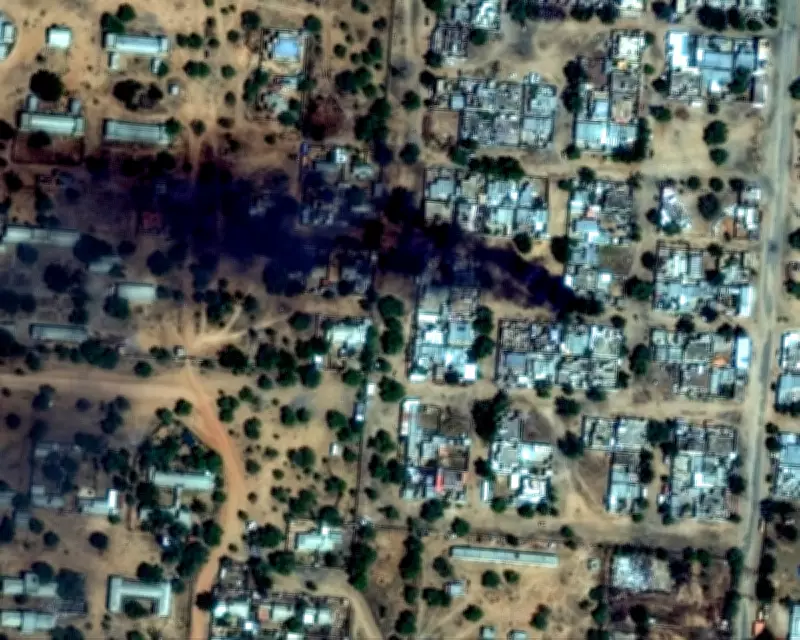
Satellite Imagery Reveals Devastation in El-Fasher After RSF Takeover
New satellite photographs have emerged showing the aftermath of the seizure of El-Fasher by Rapid Support Forces fighters in Sudan. The images, captured from space, reveal multiple fires and thick plumes of smoke billowing around the city's airport infrastructure, providing visual evidence of the destruction wrought during the military takeover.
Forensic Investigation Uncovers Warnings of Planned Massacre
A detailed forensic examination of the events surrounding the El-Fasher massacre has revealed that both UK and US governments received explicit warnings about the Rapid Support Forces' intentions. According to investigative reporting, after besieging Darfur's capital city for approximately five hundred days, the Sudanese militia communicated their plan to execute a widespread bloodbath against civilians once they finally overran the urban center.
The United Nations has subsequently declared that the situation in El-Fasher displays all the characteristic hallmarks of a systematic genocide against the civilian population. Despite these alarming developments, the humanitarian crisis in Sudan has been largely overshadowed in international consciousness by escalating conflicts elsewhere, particularly the United States' military assault on Iranian territory.

Digital Violence Surges Across African Continent
Meanwhile, across Africa, activists and legal professionals are raising urgent alarms about a dramatic increase in digital violence targeting vulnerable populations. The exponential growth of internet users under thirty years old has created fertile ground for online harassment and abuse, with particularly devastating real-world consequences for women, girls, and young boys throughout the continent.
This digital violence epidemic represents a new frontier in human rights challenges, as technological access expands while protective frameworks struggle to keep pace with emerging threats in virtual spaces.
Other Global Development Stories Demand Attention
Several other critical stories have emerged from conflict zones and marginalized communities worldwide:
- Tanzania: A woman with severe intellectual disabilities has had her death sentence overturned after spending more than a decade on death row. While Lemi Limbu remains incarcerated pending retrial for her daughter's murder, activists argue she should not be imprisoned at all given her mental condition.
- Myanmar: A group of dedicated nurses have completed three years of secret medical training in jungle hideouts, evading government airstrikes and surveillance drones. Their recent graduation prepares them to treat displaced populations and pro-democracy fighters who cannot risk seeking care at official hospitals.
- Iran: Heart-wrenching interviews with families of children killed in a US missile strike on a primary school in Minab reveal the human cost of international conflicts. Approximately 160 children and teachers perished in the attack, leaving bewildered parents to grapple with unimaginable loss.
Journalistic Access to Imprisoned Activists
In a significant journalistic achievement, communications have been established with Dr. Mahrang Baloch, a prominent human rights activist currently detained in Pakistan. The leader of the Baloch Yakjehti Committee is being held in a confined twenty-square-meter prison cell, but managed to convey her message through carefully transcribed communications facilitated by an anonymous intermediary who faces potential reprisals for their involvement.
These difficult stories represent just a fraction of the global crises requiring documentation and attention. As conflicts proliferate and suffering intensifies for millions worldwide, the work of bearing witness to these events becomes increasingly vital, particularly when such stories risk being overlooked amid competing international headlines and political developments.