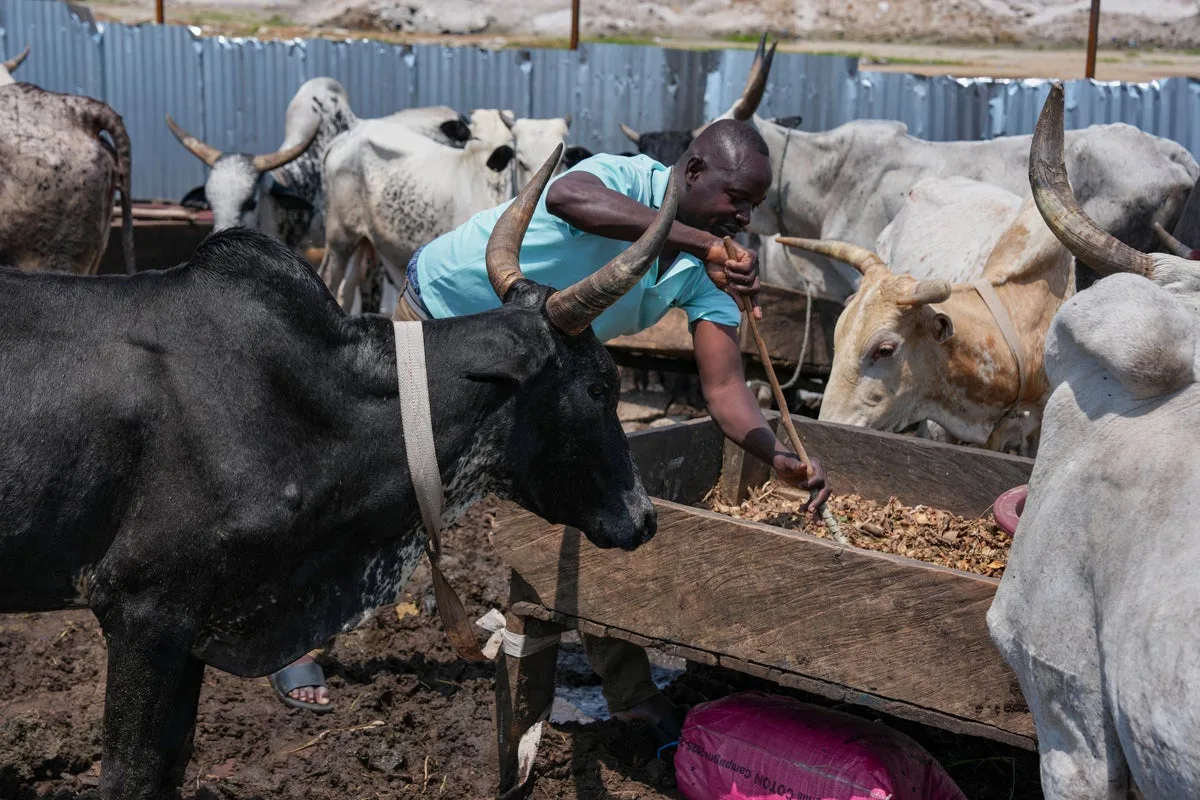
Thousands of herders from the Sahel region are fleeing to coastal cities like Abidjan as conflict and insecurity escalate in Burkina Faso, Mali, and Niger. Armed groups, some linked to al-Qaida, have seized livestock and forced pastoralists to abandon their traditional way of life.
Nouhoun Sidibè, a 49-year-old former herder from northern Burkina Faso, lost all his cattle to armed men in 2020. After years of searching for work in his homeland, he moved to Ivory Coast in 2023. He now lives in a cramped space on the outskirts of Abidjan and helps vaccinate cattle for a living. “I feel very, very lost. I was a chief, and now I have come here and I am working for someone else,” he told the Associated Press.
The conflict in the Sahel began with unrest in northern Mali in 2012 and has since spread to Burkina Faso and Niger. Military juntas have taken power in these countries, but attacks by armed groups continue. Experts say herders are targeted for their livestock, which fund militant operations. Climate change also exacerbates tensions between herders and farmers, driving further migration.
Ivory Coast, a regional economic hub, has seen a surge in arrivals. Between January and March 2024, over 72,000 people fled violence in Burkina Faso and Mali to Ivory Coast, according to UNICEF. This compares to 54,000 recorded by the International Organization for Migration between April 2021 and March 2024.
Many of the migrants are ethnic Fulani, who face accusations of sympathising with armed groups, though they deny this. “There is no Fulani without his cattle, that is his identity,” said Amadou Sonde, secretary general of the Federation of Burkinabè Fulani Associations in Ivory Coast. He helps newcomers find jobs as drivers, shop assistants, or factory workers.
Analysts warn the crisis is worsening. “The military juntas in the central Sahel states are becoming increasingly overwhelmed by assaults from multiple armed groups. The crisis is far from over,” said Oluwole Ojewale, a conflict expert based in Senegal. Many migrants, like Tanané Ibrahim who fled Burkina Faso three years ago, have no plans to return. “What is the point? The entire population has left for the city. The village is deserted,” he said.