Tens of thousands of Moldovans have been left without water after a Russian strike on a Ukrainian hydroelectric plant caused oil to pollute the Dniester River, which flows through both countries. The attack on Ukraine’s Novodnistrovsk hydropower plant on March 7 contaminated the river, threatening water supplies in Moldova, a European Union candidate country.
Moldovan President Maia Sandu directly blamed Russia for the pollution, stating it is “threatening Moldova’s water supply.” The Ukrainian facility, located about 15 kilometres upstream from Moldova’s northern border, supplies water to approximately 80 per cent of Moldova’s 2.5 million residents. This incident is part of Moscow’s repeated targeting of Ukraine’s civilian infrastructure since its full-scale invasion in 2022.
Moldova’s environment ministry declared a 15-day environmental state of alert on Sunday, enabling authorities to boost technical interventions and impose temporary water restrictions. The ministry said the decision was made to prevent health risks due to the continuous wave of oil pollution. The exact source of the pollutant remains unclear, but oil contaminants have been confirmed in the river.
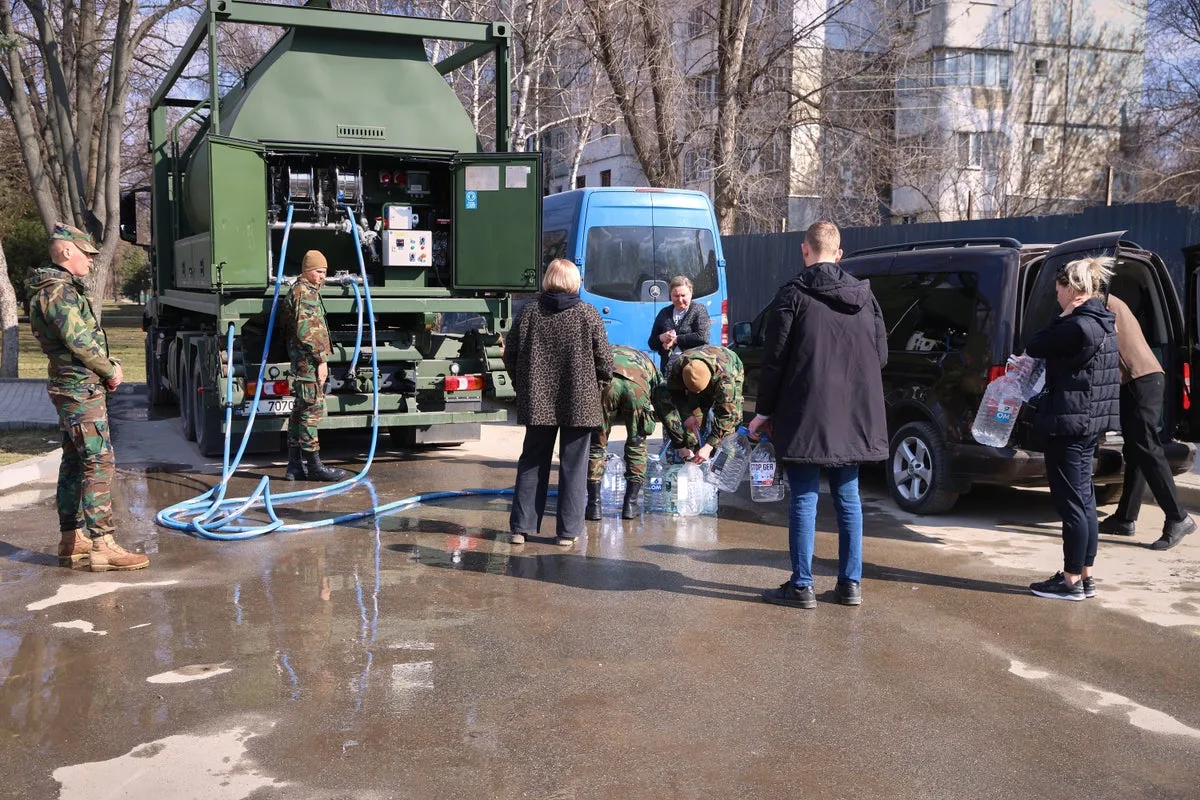
The water supply has been cut to several districts, including Moldova’s second-largest city, Balti, home to about 90,000 people. The military has been distributing drinking water from a 10-tonne tanker, and neighbouring Romania has provided humanitarian aid, including absorbent materials for dams. Some schools have closed and moved learning online.
Authorities are racing to clean up the pollution and monitor the river. Environment Minister Gheorghe Hajder said on Wednesday that three critical monitoring points had reached the admissible limit of oil pollution for the first time since the crisis began. If analyses show improvement in the next 48 hours, authorities may reopen a pumping station supplying Balti and other areas.
Moldova’s General Prosecutor’s Office has opened a criminal case, and the foreign ministry summoned Russia’s ambassador, presenting him with a bottle of brownish water. The Dniester River, which originates in Ukraine and spans over 1,300 kilometres, continues to pose challenges as pollution comes in waves, making it difficult to predict conditions.