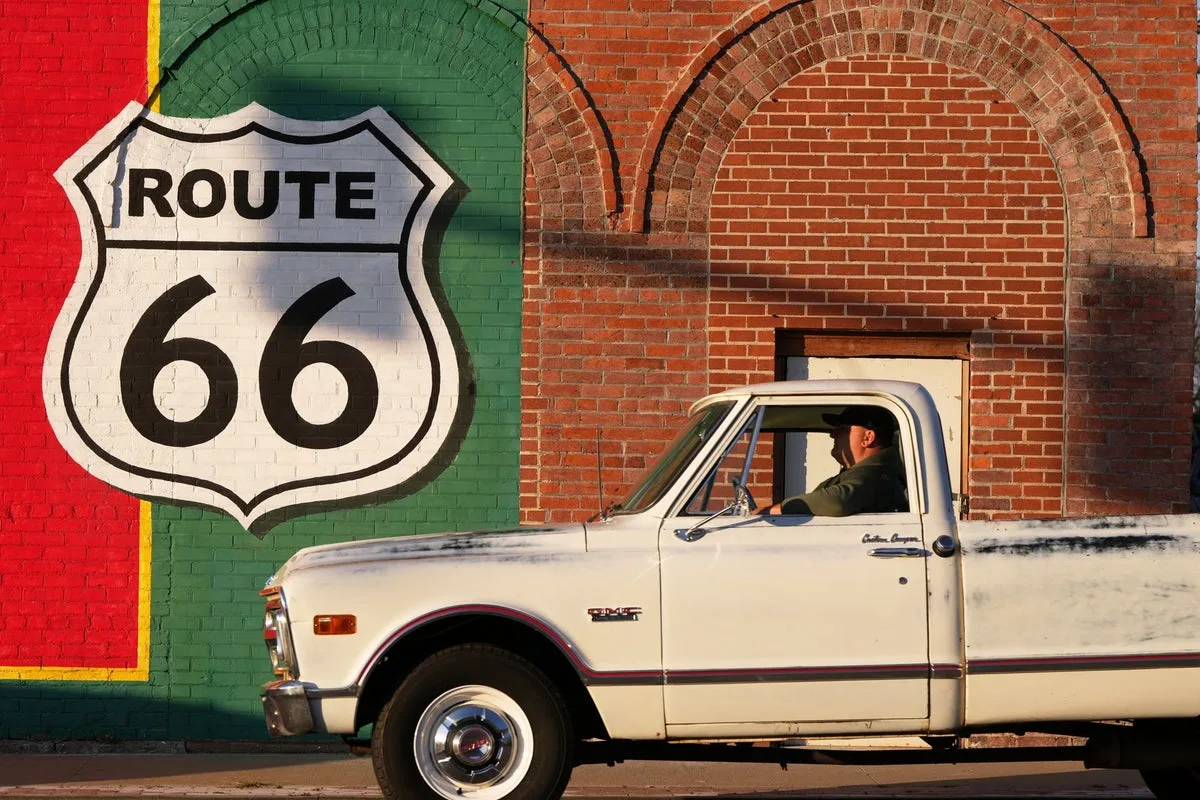
Route 66, the iconic highway stretching from Chicago to Santa Monica, marks its 100th anniversary this year. Though no longer a major artery, the road remains a magnet for travellers seeking a quintessential American road trip, with its neon lights, quirky motels and historic diners.
Conceived in November 1926 from Native American trading routes and dirt roads, Route 66 was championed by Oklahoma businessman Cyrus Avery as a way to link the industrial Midwest to the Pacific Coast. Its number was chosen for easy recall, and it soon became immortalised in John Steinbeck's The Grapes of Wrath, Jack Kerouac's On the Road and Bobby Troup's song '(Get Your Kicks on) Route 66'.
During the Dust Bowl and Great Depression, the highway offered hope to migrants fleeing poverty. In the postwar boom, it became a popular vacation route, with roadside attractions like rattlesnake pits and totem poles, and eateries such as the Cozy Dog Drive In in Springfield, Illinois, which has served breaded hot dogs on a stick since 1949.
For Native American tribes, Route 66 brought economic benefits but also hardships, including eminent domain and the perpetuation of stereotypes. More than half the highway crossed Indian Country, where vendor signs often appropriated symbols like tipis and feathered headdresses.
Today, preservation efforts keep the road's spirit alive. Sebastiaan de Boorder, a Dutch entrepreneur who restored the Aztec Motel in Seligman, Arizona, said: 'It's an essential part of American culture and history.' Author Jim Hinckley added: 'This is the road of dreams.'