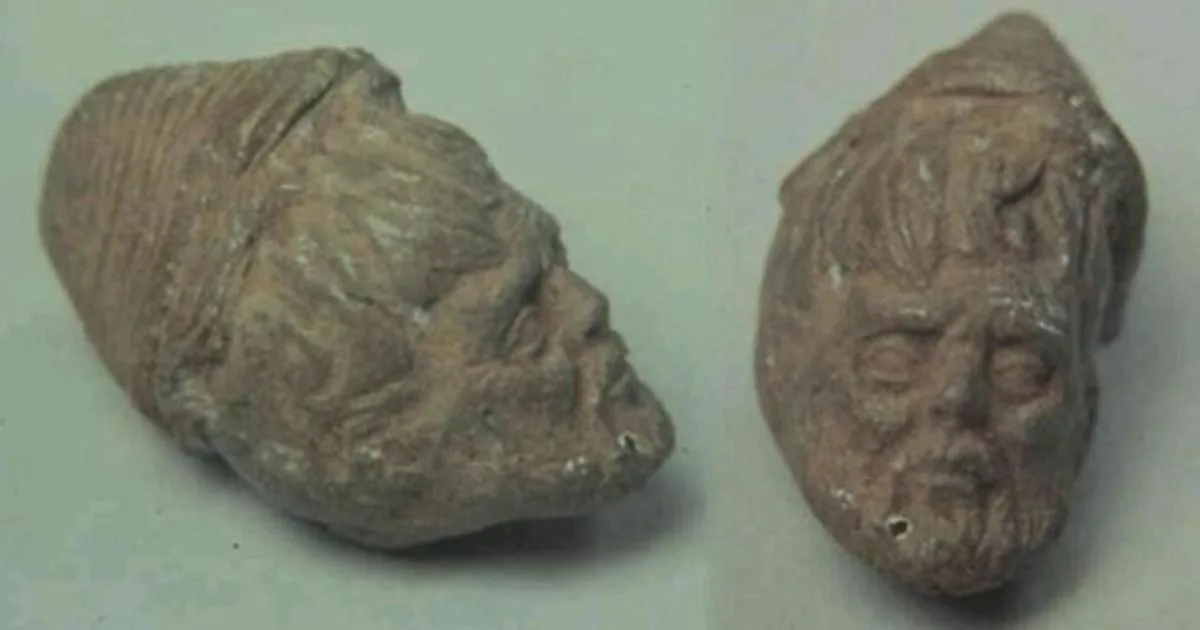
An 1,800-year-old terracotta head discovered near Mexico City in 1933 has reignited debate over whether Romans reached the Americas before Christopher Columbus. The artefact, known as the Tecaxic-Calixtlahuaca Head, was found in a sealed pre-Hispanic burial beneath several intact layers, suggesting it had not been disturbed since its deposition.
Experts have noted that the head's features closely resemble Roman styles from the 2nd century AD, particularly the hairstyle and beard typical of the Severan emperors' period (193–235 AD). Archaeologist Bernard Andreae declared in the 1960s that it was 'without any doubt Roman'. However, sceptics point to the lack of Roman ships or other artefacts in the region, and gaps in the 1933 excavation records have led to claims of a hoax.
Some researchers propose that ancient ships could have been swept across the Atlantic by currents such as the Canary Current and North Equatorial Current, potentially carrying Roman cargo that was later incorporated into local burial practices. This theory remains speculative, as no other Roman artefacts have been found in the Americas.
The find challenges the traditional narrative that Columbus was the first European to reach the New World, though the discovery of Norse settlements at L'Anse aux Meadows in Newfoundland has already proven earlier European contact. The true origins of the Tecaxic-Calixtlahuaca Head remain uncertain, but it continues to provoke discussion about how to interpret such anomalous artefacts.