A World Without Mistakes: Readers Imagine a Flawless Reality
Readers Imagine a World Without Mistakes

A World Without Mistakes: Readers Imagine a Flawless Reality

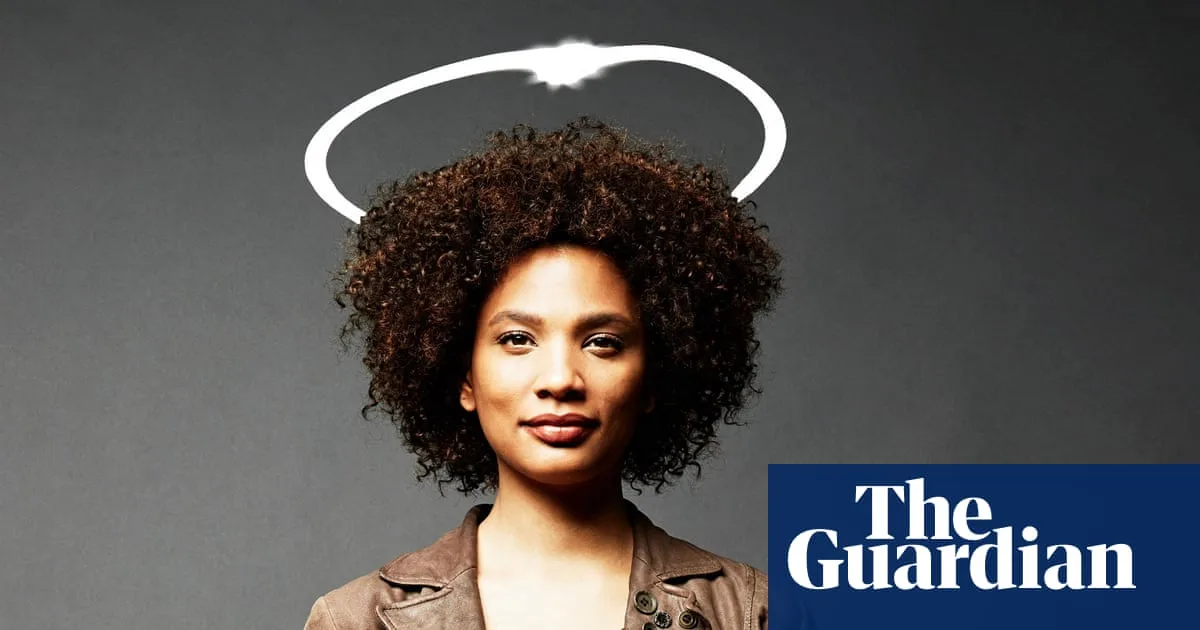
In a fascinating thought experiment, Guardian readers have delved into the profound question: What would the world look like if nobody ever made a mistake? This inquiry, part of the newspaper's long-running series where readers answer each other's questions on topics ranging from trivial whimsy to deep scientific and philosophical concepts, has sparked a vibrant and diverse array of responses.

The Evolutionary and Existential Impact

Many readers pointed to the fundamental role of errors in shaping existence. Boris Borcic argued that the world wouldn't exist at all, stating, "Mistakes are almighty: you can't ever guarantee that the next moment will host no manifestation of a mistake." He highlighted evolution theory, noting that the diversity of life on Earth emerges entirely from copying mistakes of DNA polymerase. Echoing this, unclestinky added, "If you're going to count mutations as mistakes, we'd have no evolution, so we'd all be primordial goo."

Jon Wyatt emphasised that failure is a natural part of life, suggesting that without mistakes, we'd lose the process of establishing the best ways of doing things. GrannieSal expanded on this, pondering whether a divine force allows free will so humans can make mistakes and learn, asking if the larger question is our capability to learn from errors.

Wide Pickt banner — collaborative shopping lists app for Telegram, phone mockup with grocery list

Innovation and Invention: The Accidental Triumphs

A significant theme was the loss of serendipitous discoveries. Troy_McClure listed numerous inventions born from errors, including Corn Flakes, Super Glue, dynamite, Post-it notes, Popsicles, penicillin, Teflon, X-rays, microwave ovens, and vulcanised rubber. He referenced an article on drugs discovered by accident, such as Viagra and Valium, underscoring how mistakes drive progress.

EddieChorepost offered a lighter take, noting that the world would sound very different without pitch-correction software like Auto-Tune, developed due to vocal mistakes.

Social, Political, and Cultural Consequences

Readers explored broader implications. poorprints questioned the definition of a "mistake," citing examples like unregulated AI or the Industrial Revolution, where opinions diverge. GhostieRidesAgain suggested a world without mistakes might mean barely any risk-taking, leading to more equality but limited opportunities.

David Hollinger imagined potential benefits, such as world peace from no speeding or drink-driving, allowing dedication to improvements. However, Innocent challenged the subjectivity of mistakes, citing debates over actions like bombing Iran or selling Britain's water providers, and humorously added that anything done by figures like Margaret Thatcher or Donald Trump is a mistake.

Everyday Life and Humorous Takes

Some responses injected humour and practicality. Sagarmatha1953 simply stated it would be "quite boring, to be honest." PeteTheBeat predicted every football match would end 0-0 without errors. jno50 recalled the adage, "A person who has never made a mistake has never made anything," while BaronOchs wryly noted, "Eventually, everyone makes a mistake. I'm dreading it!"

ThereisnoOwl quipped it would look "infinitely utopier than it does now. If I'm not mistaken, that is." d33pf1x reflected on learning from errors, suggesting it's time to improve social and emotional regulation skills.

Historical and Global Perspectives

GhostieRidesAgain also considered whether bad judgment counts as a mistake, pointing to examples of individuals, groups, countries, and civilizations choosing wrong options. They speculated that many wars, famines, and recessions might have been avoided with better choices, highlighting the profound impact of errors on history.

This discussion underscores the intricate role mistakes play in evolution, innovation, society, and personal growth, painting a picture of a world that, while potentially more orderly, might lack the richness and progress driven by human fallibility.

Pickt after-article banner — collaborative shopping lists app with family illustration